Ask ten Indian families where their most memorable trip was, and at least three will mention a temple town, not a beach or a hill station. That’s what makes a pilgrimage tour in India different from any other kind of travel: it’s less about sightseeing and more about slowing down.
The queue outside a 1,000-year-old shrine, the smell of camphor at dawn aarti, the shared silence of strangers waiting for darshan these are the moments people actually go back home talking about. India’s pilgrimage map is enormous, so most travellers do well to pick one region and go deep rather than try to cover the whole country in one trip. Here’s how the major circuits break down.
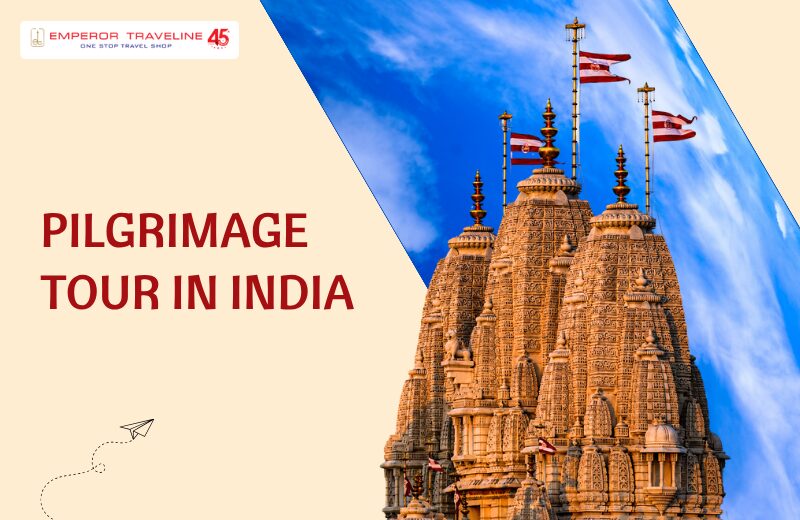
Pilgrimage Tour in India
- Tamil Nadu’s Temple Belt:
- Thanjavur
- Kumbakonam
- Trichy
- Kerala and the South Coast:
- Guruvayur
- Trivandrum
- Kanyakumari
- North India:
- Vaishno Devi
- Varanasi
- Haridwar
- Rishikesh
- Assam
- Kamakhya
- Astrology Connection
- Shirdi:
- The Sai Baba Circuit
Tamil Nadu’s Temple Belt: Thanjavur, Kumbakonam and Trichy
This stretch of the Kaveri delta is arguably the densest concentration of active, still-worshipped temples anywhere in India. Thanjavur’s Brihadeeswarar Temple, built by Raja Raja Chola I over a thousand years ago, remains one of the finest examples of Dravidian architecture on earth.
Trichy’s Rock Fort Temple and the sprawling Ranganathaswamy Temple at Srirangam sit close enough to cover in a single day, while Kumbakonam alone holds a cluster of shrines Kasi Viswanathar, Sarangapani, Kumbeswarar that could fill three.
Kerala and the South Coast: Guruvayur, Trivandrum and Kanyakumari
Further south and west, the Guruvayur Sri Krishna Temple draws pilgrims from across South India, while Trivandrum’s Padmanabhavaswamy Temple is famous both for its architecture and its history.
The route naturally ends at Kanyakumari, where three seas meet, a fitting final stop for any South Indian pilgrimage tour.
North India: Vaishno Devi, Varanasi, Haridwar and Rishikesh
Vaishno Devi, tucked into the Trikuta hills above the town of Katra in Jammu, is one of the most visited shrines in the country and reachable by foot, pony, palanquin or helicopter.
Meanwhile, Varanasi, Haridwar and Rishikesh along the Ganga form India’s most iconic spiritual triangle the river itself is the pilgrimage here as much as any single temple.
Assam: Kamakhya and the Astrology Connection
Guwahati’s Kamakhya Temple, dedicated to the goddess, is one of the most significant Shakti Peethas in India.
Nearby, the Navagraha Temple on Chitrachal Hill honours the nine planetary deities and has historically been linked to the study of astrology, worth combining with Emperor Traveline’s What is Astro Tourism in India? for travellers curious about that angle.
Shirdi: The Sai Baba Circuit
Shirdi remains one of Maharashtra’s busiest pilgrim towns, and prior reservation is genuinely worth the effort; queues on weekends and festival days can run for hours.
Circuits Comparison Matrix
| Circuit | Best For | Ideal Duration |
| Tamil Nadu temple belt | Dravidian architecture, Chola history | 4–5 days |
| Kerala & Kanyakumari | Coastal shrines, scenic finale | 3–4 days |
| Vaishno Devi | Trekking pilgrims, Durga devotees | 2–3 days |
| Varanasi–Haridwar–Rishikesh | Ganga rituals, yoga & spirituality | 5–6 days |
| Shirdi | Short, focused pilgrimage | 2 days |
However you shape your route, a well-planned Pilgrimage Package Domestic handles the logistics, transport between temples, accommodation near the shrines, and timing around aarti schedules so the trip stays about the temple, not the travel.
Travellers looking beyond India can also check our Pilgrimage Package International options.
Frequently Asked Questions
1. What are some popular pilgrimage trips in India?
Beyond the circuits above, popular multi-city pilgrimages include the Char Dham Yatra (Yamunotri, Gangotri, Kedarnath, Badrinath), the Jyotirlinga circuit across several states, and the Tirupati–Kanchipuram route in Andhra Pradesh and Tamil Nadu.
2. Which city is famous for pilgrim tourism?
Varanasi is generally considered India’s holiest city and its most famous pilgrim destination, though Tirupati receives the highest annual footfall of any single temple in the country.
3. Which place is best for a 3-day trip in India?
Shirdi or the Vaishno Devi–Katra route both work well for a focused 3-day pilgrimage, since travel time between temples is short and darshan can be completed without rushing.
4. Which is the biggest pilgrimage in India?
The Kumbh Mela is the largest pilgrimage gathering in the world, drawing tens to hundreds of millions of devotees to the Ganga over its multi-week duration, depending on the year and location among its four rotating sites.