All you Need to Know About the Stone House, the First Stone Bungalow in Ooty
The Stone House, fondly called “Kal Bangala” by the indigenous tribals of Ooty, Thodas, is the first bungalow constructed using Kal (Tamil for ‘stone’) to come up in this ravishing hill station of South India. It was built in 1822 by John Sullivan, one of the most revered personalities in Ooty, best known for establishing British settlement in this region. The British acquired the land from the local Thoda tribals at a measly price of one rupee per acre for the construction of the bungalow. Today, it stands majestically as the official residence of the Principal of Government Arts College, one of the finest buildings in South India, and a remarkable exhibition of progressive architecture and colonial relics.
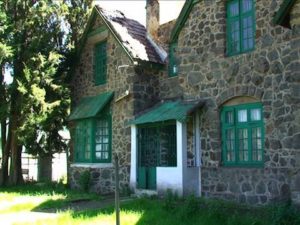
The history of ‘modern’ Ooty also begins here when John Sullivan, then the Collector of Coimbatore, commissioned Mc Mahon and Keys to explore and survey the place. The duo just went through the motions until Sullivan himself decided to unravel the true beauty that lies hidden deep in its heart. He took personal interest in the construction of the building, and chose a lush green area abound with orchids, lichens, ferns and pine trees for the same. The building features a sloping roof in green. With a simple architecture, the Stone House is more like a British Cottage. It is supposed the living room of the building has a cosy fireplace. The building today can be witnessed only from the outside.
Though not quite doted as the other tourist destinations in Ooty, the building is a brilliant example of British architecture and exquisite ‘Raj’ culture that characterizes a significant period of the region’s history.
Ooty that remained cut off from the rest of the country gained increased accessibility to the outside world owing to the numerous developmental activities undertaken by the British officials such as laying of roads and highways and systematic clearing of forests. But it was the Stone house, the citadel of British power in this region, from where it all started. You can also find a tree in front of the Stone House known as the ‘Sullivan’s Oak’ and a man-made, L-shaped lake also excavated by Sullivan. Definitely worth a visit.
To Visit Stone House Contact Emperor Traveline for Package Details.
All You Want to Know About the Popular Nilavoor Lake in Yelagiri
If you are done sight-seeing the Vellore Fort, the Golden Temple and the Jalakandeswarar Temple in Vellore, take a bus or cab through the beautiful winding hill roads of Yelagiri, and head straight to the scenic Nilavoor Lake without blinking an eye. Yelagiri, often dubbed ‘Poor man’s Ooty’ is a popular hill station next to the likes of Ooty, Kodaikanal and Yercaud in the South. Visit to the picturesque Nilavoor Lake will not cost you a dime. However, enjoying amusement rides and recreational activities here will incur additional charges. You can take a quiet and lazy walk around the lake and partake in what the nature has to offer.
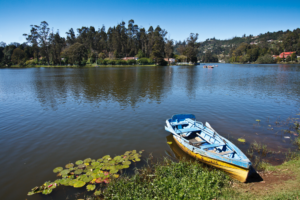
The Devi Temple, whose main deities are Kaduvu-Nachiyar, is a stone’s throw from the lake. Explore the splendid pink beauty of the Thambiran Lotus pond, an ongoing project, in the nearby village of Nilavoor. The Yellagiri Summer Festival is thronged by thousands of locals and tourists from all over during the summer month of May every year. Though Nilavoor Lake is not a huge water body, it still forms an excellent boating site and popular getaway destination in this part of the world. The lake, which would take no less than two hours to explore fully, forms an exhilarating sight when the sun is in all its glory and as dusk quietly unfolds. The climate is clement and salubrious all throughout the year.
Major attractions in and around the Nilavoor Lake include Velavan Temple, Punganur Lake, Murugan Temple, Jalagamparai Falls, Telescope Observatory, Swamimalai Hills and Nature Park.
The recommended time to visit this quant and charming station is between the month of April and December. Yelagiri is a municipality town well inter-connected by rail and road to major cities like Salem, Chennai and Bengaluru. Public transport here is efficient too. There are also a lot of busses plying from nearby towns like Ambur, Tirupattur, Vaniyambadi, Harur, Uthangarai, Natrampalli, etc to Yelagiri. Do check out the bus timings and routes though before making the trip.
All you must know about the Malapascua Island, Cebu in the Philippines
If you want to visit an undisturbed and unspoiled island for your vacation, your best option would be the Malapascua Island in the Philippines, the land of beach bum’s delight. The Malapascua is a tiny island located a few kilometres away from Cebu in the Philippines. You can reach the island by a ferry from Maya port.

History says first the Spanish landed here on a stormy Christmas day and hence the island received its name as Malapascua (Mal=Bad, Pasco=Christmas). However, Malapascua was first discovered 30 years ago when a Swiss national named Freddy bought land on this island. Years later, it turned out to be one of the perfect beach destinations in the Philippines.
The island has the most beautiful, sleepy and sandy beaches surrounded by clear blue waters. The greenish palm trees make you feel relaxed and never let you go out of the island even if you wanted to. The people here eke out a living doing fishing, boat making, and coconut farming. They are the friendliest souls with whom you can dine with daily (they never treat you as visitors!).
Peculiar highlights:
– There exist many secluded beaches for you to go for diving, snorkelling, and swimming. Bounty beach is the most favourite one among the other beaches (Lighthouse, Langob, Lapus, etc.)
– When you go for diving, if you’re lucky, you may spot Thresher Sharks. However, normally you can get to see a few Seahorses, Shrimps, Crabs, Coral fishes, and Sea Slugs.
– Basketball and Cockfighting is a regular here (mostly on Sundays) conducted all over the island, is a favourite pastime with the locals.
– Lose yourself for a little while. Be a part of different fiestas that happen throughout the year (Food/drink, Disco, pageant, and lots more.)
Please note: There are no ATM’s, pharmacies and paid laundry facilities on the island. So prepare yourself accordingly with enough cash in hand, clothes and medical kits. Also, there are no cars for you to take a pool drive or hire. It is better to walk along the beach and enjoy the paradise.
Both the warm (March- November) and the wet (December-April) seasons are recommended for visiting the island as there are no extreme weather conditions here.
All you must know about the Hippodrome of Constantinople in Istanbul
The word “hippodrome” comes from the Greek word meaning hippos (horse) and dromos (way). It was built for conducting chariot races, the most admired sports of the Byzantine region (ancient Constantinople). Beyond races, this social centre served as an arena for social events including official ceremonies, celebrations, protests, executions, parades, and coronations.
 Located in the historic region of Sultanahmet (also known as Istanbul), the Hippodrome was the seat of power in three consecutive empires. Between 203-330 CE (Roman), the emperor Septimius Severus got the first Hippodrome built which was small and unfinished. Between 330-1453 CE (Byzantine), the emperor Constantine I rebuilt the unfinished Hippodrome and extended it connecting it with the great palace of Constantinople. Between 1453-1922 (Ottoman), the Hippodrome was renamed as ‘Horse Square’, then mainly used for Chariot racing.
A few historic events:
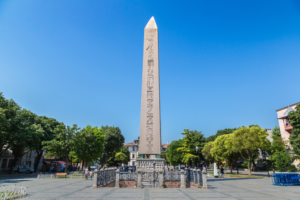
1. From Egypt, the Obelisk of Thutmosis III was brought to Constantinople by the emperor Theodosius I. This was erected inside the Hippodrome and got named as “Obelisk of Theodosius”. This obelisk aged 3500 years still remains good even today;
2. During the Nika Riots in 532 CE, Byzantine emperor Justinian I ordered the execution of 30,000 people locked in the Hippodrome;
3. Throughout the Byzantine empire, this arena held the lives of about 40,000 people;
4. A-15 day long circumcision ceremony of the sons of Ahmet III took place in the Hippodrome during the Ottoman period in 1720;
5. Good performing charioteers were celebrated as heroes in days of yore. A lot of statues of several Charioteer were erected throughout the walls of the Hippodrome
Fall of the Hippodrome:
During the fourth crusade attack in the city, all the monumental structures in the Hippodrome were stolen by the invaders. Later, when the Blue Mosque and Ibrahim Pasa palace was built in the 16th and 17th centuries respectively, the arena was pulled down and forgotten long since ravaged by invaders.
Today, the large arena has turned into a public park with a road running around marking the racing track. Only the two Obelisks: the base of the Charioteer Porphyrios statue and the serpentine column will live forever for the rest of us.
All about the Jungfraujoch – Top of Europe in Switzerland!
Whenever it comes to a holiday trip, the most striking continent that comes to our mind in Europe. Among the innumerable places in Europe Athens, Berlin, Paris, London, Zurich, etc the pick of the lot in Switzerland, also the land of skiing and trailing. Though it is known for its incredible watch manufacturing capabilities, its ice-capped landscape makes us dive deep into it and experience real bliss.
While touring Switzerland, you cannot afford to miss Jungfraujoch, one of the top touring destinations of Switzerland, if not Europe, also a popular UNESCO World Heritage Site. Factual data indicates that two million people a year make a lifetime trip to Jungfraujoch. The Jungfraujoch offers tourists an excellent panoramic view of the country.
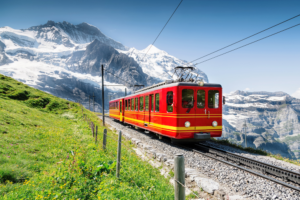
The Jungfraujoch is a 3454m high alpine located between the popular mountains -Jungfrau and Monch. Cogwheel train from Interlaken is the only mode of transportation, and it is the highest train station in Europe. Once you reach Jungfraujoch, you can find a plethora of activities to explore and experience.
Hiking and snowboarding across the glacier Mönchsjoch hut and adjacent mountains (suitable during summer) account for an unforgettable experience. The Sphinx Observatory is a viewpoint that gives a 360-degree view of the Aletsch glacier and snow-capped mountains. Ice Palace takes one to the enchanting world of ice with ice sculptures. The Snow Fun Park is recommended for those wanting to try out skiing, whether at the beginner or an advanced level. In addition, there are several immersive multimedia shows and glittering exhibitions.
For kids visiting Jungfraujoch, there lies the exciting Chocolate heaven called Lindt Swiss Chocolate Heaven where they can easily learn the process of chocolate-making (buying of chocolates is permitted too).
Essential preparations:
1. To match the frequent changes in the temperature, wear dresses in multiple layers that might help you to remove or add layers as and when needed.
2. Precaution and medical advisory are needed for children less than 2 years, pregnant women and the aged, as it is situated on the highest attitude.
3. If you are suffering from Altitude sickness, please think twice before making the trip, and do carry or exercise necessary safeguard measures.
4. Do carry warm clothing, solid shoes, sunglasses, hand gloves, sports hat, wool socks and the required winter wearable.
Interesting facts about the Kek Lok Si Temple in Malaysia
Buddhism is the second largest religion in Malaysia, Kek Lok Si temple stands as the symbol of Chinese Buddhism situated on top of the hill at Air Itam near Penang Island in Malaysia. It is the largest Buddhist temple in Southeast Asia and celebrated as the temple of supreme bliss for several reasons.
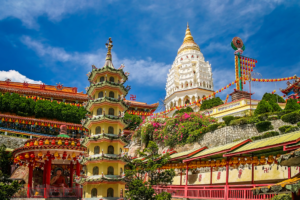 The temple was built in 1890 under the leadership of Below Lean, an immigrant Chinese Buddhist. Since its opening in 1905, the architecture is known for its magnificent monasteries, serene prayer halls, landscaped garden, beautiful carvings, and sculptures. Being the symbol of Chinese Buddhism, this temple harmonizes the Chinese culture and Buddhist teachings in every mural of the temple.
Various parts of the temple:
– The ground area comprises the hill entrance, food/drink offerings and a holy turtle pond. According to Chinese traditions, the turtle stands for strength, longevity and endurance. It is believed that freeing a turtle signifies the act of spiritual liberation, and hence the name “Liberation pond”.
– The mid area, the most important attraction of this temple, houses the pagoda and the pavilion. The 7-storey Pogada of Rama VI features 10,000 statues of Buddha that blend in its design the essence Mahayana and Theravada Buddhism with the Chinese octagonal base topped by a Burmese crown. The pavilion sites the statues of four kings: Kwang Mu, Tou Wen, Ch’i Kuo and Tseg Chang (Guardians from four directions).
– The apex area hosts the purpose of construction of this temple, the statue of Goddess of Mercy inspired from the temple at Pitt Street, Penang.
During the Chinese New year, the temple is decorated with numerous lantern hangings that offer a dazzling golden glow to the temple. These lights undoubtedly attract visitors to step into the temple and begin their celebrations.
Entry to the temple is free, except for a small fee collected for entering into the pagoda and the Sky Lift. The temple is open to the public between 7 am and 5:30 pm every day.
Interesting Facts on ‘Dev Diwali’, Varanasi’s Festival Of Lights
First, let’s not mix Dev Deepawali up with Diwali, despite the fact that both have lights or Deepa as the central theme in their rituals. The holy city of Varanasi plays host to Dev Deepawali or Dev Diwali every year, celebrated after 15 days of Deepawali. It is observed as a mark of Lord Shiva’s triumph over the mystic demon Tripurasura. So, this festival also goes by the name of Tripurotsav and falls every year on Kartik Purnima (the auspicious full moon day according to the Hindu beliefs).
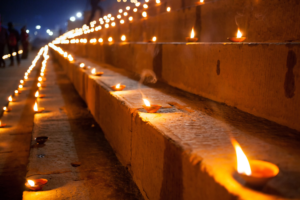 This auspicious day is swarmed by devotees turning up in large numbers to take a dip in the holy river of Ganga, also known as ‘kartik snan’. Prayers to Goddess Ganga are performed, flowers offered followed by the lightning of diyas or clay lamps known as ‘Deepdaan’ to the ‘Ganga Ma’ or ‘Mother Ganges’ in the shades of evening. As the sun descends at the Varanasi ghats glittering diyas galore in every single step on the stairs leading to the river’s edge. In fact, every time in the city of Varanasi is filled with brightly lit lamps, adding to the festive atmosphere of the city.
Glowing diyas and vivid colours in every corner of the ‘cultural capital of India’ manifest a sense of joy, divinity and awe. It is widely believed by the Hindus that Gods come down to Varanasi for bathing in the Ganga, something that makes this festival quite unique. Once you are in the Varanasi ghats in the evening, you shouldn’t miss out on the divine ‘Ganga aarti’ that takes place on the embankments of Ganga, amidst the sparkling waters and incessantly ringing bells – a truly breathtaking spectacle! Hindu pilgrims, tourists and travellers gather in large numbers to worship Ganga Ma, whilst also experience the spiritual bliss of the festival of lights.
Dev Diwali, religious festivities apart, is also an occasion when Varanasi goes into a patriotic mode and remembers all its martyrs by laying a wreath at the Amar Jawan Jyoti on the Dashashwamedh Ghat, the main ghat in the city. The event concludes with a closing ceremony conducted by the Indian armed forces followed by the conferring of the Bhagirath Shourya Samman. Also, patriotic songs, bhajans and hymns are performed on this occasion.
Must-Know facts on the Thirumalai Nayakkar Mahal in Madurai, TamilNadu
Just when the Muslim rulers were trying to impose control over the sovereignty of Madurai, the Nayaks of South India thwarted the advance of Muslim power in TamilNadu. Standing the test of times is the 17th century Thirumalai Nayakkar Mahal in Madurai, one of the most important touring destinations of Tamil Nadu, built by the Nayak rulers, who ruled from 1545 till 1740’s. This magnificent structure, erected in 1636 AD and continued till 1659, was the living palace of the Nayak Kings. The palace was constructed to mark the shift of capital from Trichy to Madurai for the administrative and strategic reason. The design of the palace was made by an Italian architect, and its construction was a confluence of several schools of architecture namely European, Dravidian as well as Islamic types, representing the Saracenic style of architecture.
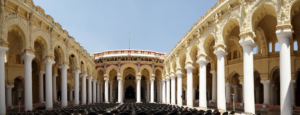 It is unfortunate that most original possessions of the Thirumalai Nayak Palace have been either ruined or usurped by its own rulers and what remains today is mostly a mere quarter of its chattels. It was Lord Napier, the governor of Madras (now Chennai) between 1866 and 1872, who restored the entire structure. The Indian Government, post-independence, declared Thirumalai Nayak Palace as a national monument and, to date, continues to be an important historical landmark of Tamilnadu.
With richly ornate exterior as well as the interiors, the palace, which is just 2km away from the Madurai Meenakshi temple, is famous for its “Stuccowork” on its impressive domes and grand arches. There is a wide range of architectural wonders from the imposing pillars to the overall splendid structure. There are totally 248 pillars in this lofty palace each measuring 82 feet high and 19 feet wide. The two main divisions of the palace include Swargavilasa & Rangavilasa. You will be able to find a lot of attractions in these two parts viz. a shrine, royal residence, apartments, royal bandstand, armoury, dancing hall, garden and pond.
On stepping into the palace a large central courtyard, surrounded by a circular garden and circular pillars, welcomes you. The palace’s entire structure is made of foliated brickwork, whilst the glossy and smooth texture of the stucco used shell lime or chunnam. The finial topped and gold covered pavilions on both sides of the courtyard make a beautiful sight. The place has also caught the attention of several renowned filmmakers including Mani Ratnam, who shot several scenes of his film “Iruvar” (1997). You also get to enjoy the enthralling sound and light show, which lasts for about 50 minutes, here – a real treat for history and culture lovers.
Facts to Know About the Kruger National Park in North Eastern South Africa
The Kruger National Park, the largest game reserve in South Africa, is synonymous with ‘safari’. Located in the North eastern region of South Africa, the Kruger is the country’s flagship national park. The area and South Africa safari have a lot to offer you; all you need to do is find a suitable accommodation to make the best use of the trip to the region. Here are a few intriguing things you would like to know about the Kruger National Park:
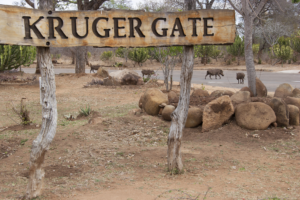
1.The Kruger National Park stretches across two of South African provinces: Limpopo and Mpumalanga provinces. Both these regions provide the opportunity to enjoy and experience South African Safari.
2.It stretches 350kms from the Limpopo River to the Sabie River in the north and south respectively.
3.The vast Kruger National Park covers about 2 million hectares of land.
4.The size of the park is estimated to be that of Wales.
5.The Kruger National Park was established in 1898, and is currently one of the largest wildlife sanctuaries/safari sanctuaries/game sanctuaries in the world.
6.There are three unique habitats within the expanse of the natural wildlife; the central savannah region, the deciduous trees and grassy southern region, and dry mopane scrub (Colophospermum mopane) land in the northern region.
7.You can find the famous Big Five in the Kruger park – leopard, lion, elephant, the rhino and buffalo.
8.There are speed limits for the visitors so as to not scare away the animals crossing the road and respect them in their natural surroundings. You will be instructed never to leave your vehicle for safety.
9.Things to see in the Kruger: The Big Five, Africa’s Small Five, The Big Six Birds, Big Five Trees, Africa’s Super Seven, Africa’s Elusive Eleven ,Jock of the Bushveld Route, Letaba Elephant Museum, Stevenson Hamilton Memorial Library and archaeological sites of Masorini, Thulamela and Albasini, Olifants camp, Nkumbe and Tshanga lookout points, Lake Panic bird hide and Sunset dam.
10.You can get to experience 5 wilderness trails, backpacking trails, night drives, mountain bike trails, 4×4 adventure trails, night drives, self-drive safaris, bush barbeques and busk walks. There are roughly nearly 3000 kms of game viewing roads, 14 picnic sites, 11 bird hides (such as are ‘sleep-over’ hides), restaurants, shops, swimming pools at all main camps. Skukuza, being the largest camp, encloses a bank, a library, a church, a doctor, a plant restaurant, an ATM machine, two swimming pools, golf course and a conference centre.
11.Usually, the best game viewing season is late winter as the vegetation turns out sparse and waster resides to water holes and river, though there is decent game viewing throughout all seasons of the year.
Five Best Shopping Malls in Bangalore
Bangalore (now Bengaluru) is a shopper’s paradise with a number of shopping malls spread in and around the city. The beauty of shopping in Bengaluru is that you can find traditional as well as modern shopping malls the best of both worlds. The shopping malls draw increased footfalls during the weekends. Here are five of the best shopping malls for shop alcoholics in Bengaluru:
1.The Forum Shopping Mall:
It is one of the biggest shopping malls in Bengaluru. Some of the popular available retail outlets include KFC, McDonald, PVR Cinemas, Pizza Hut and more. The shopping mall, which covers a total area of 780,000 Sq.mtrs, is located at Hosur Road in Koramangala and is open from 10 AM to 10 PM.
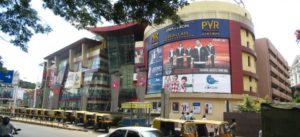
2.Garuda Mall:
Spread at an area of 126,000 Sq.mtrs, the Garuda Mall, located at Magrath Road in Ashok Nagar, is a multi-level shopping mall. Some of the popular retail outlets here include Provogue, Sony, Adidas, Marks and Spencer, Fab India, etc.
3.Esteem Mall:
One of the most popular malls in Northern Bengaluru, located at Hebbal Kempapura, the Esteem Mall has a number of retail outlets such as Mc Donald’s, Peter England, Monte Carlo, eZone, Nike and much more! Built in area of 125,000 square feet, the Esteem mall has everything that it takes to give you an enjoyable shopping experience.
4.UB City Mall:
One of the most luxurious shopping malls in Bengaluru, situated at Vittal Mallya Road. You can find a number of expensive retail brand outlets such as Etro, Café Noir, Estee Lauder, Burberry and many more.
5.Mantri Square:
One of the largest shopping malls in the city and probably one of the largest malls in the country. Covering an area of 1.7 million square feet, you will be required to spend an entire day to explore the mall. It has everything in for you to hang out with your family and friends including entertainment zone, food courts, hypermarket, multiplex and many more.