Interesting facts about the Hidimba (Hidamba) Devi Temple in Manali
The Hidimba Devi, or Hadmiba temple, also known as the Dhungiri temple, is one of the most popular temples in Manali. The temple is a four-storied structure located amidst a forest known as Dhungri Van Vihar. The locals gave the temple the name of the surrounding forest area. The temple, built in 1553, is dedicated to Goddess Hadimbi, wife of Bheem, one of the five Pandavas in the Mahabharata. The top conical construction is made of metal, whilst the other three square-shaped floors sport timber tile roofing. You can also find a high tower that is 24m tall.
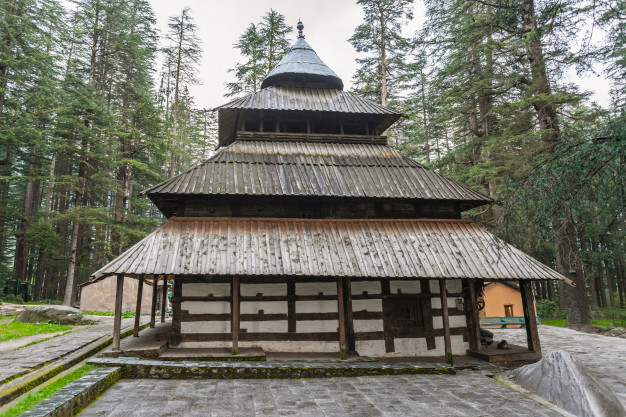
Popular Hindu legend has it that Hadmiba did tapasya (medidation) in the region of Dhungri near Manali and attained supernatural powers after meditation. Her kindness towards the Dhungri locals made her immensely popular and thus a ‘pagoda’ style temple was erected to worship her. About 70 m from this temple, you will find another shrine dedicated to the warrior-ruler Ghatotkachh, who was born to Bheem and Hadimba.
The Hidimba Devi temple houses a wooden doorway and mud walls adorned with stonework. The door contains intricate miniature paintings of the Goddess and other animate objects. The beam of the doorway features the Navgrahas and female dancers from the mythical tales of Lord Krishna. The temple does not house any idol of the Goddess, but a large stone sporting her footprint is placed inside it.
The temple hosts an annual festival with great favour and zest, during the Hindi month of Shravan, in the memory of Raja Bahadur Singh, who constructed this temple. This fair is called as ‘Bahadur Singh Re Jatar’ by the locals. There is another fair that is held annually on the 14th of every May falling on the birthday of Hadimba Devi. This festival is marked by musical celebration and dance performed by the local womenfolk who visit the Dungri forest area.
This temple that is about five centuries old organizes a fair on the day the temple was originally raised known as the ‘Sarrohni Mela’ in the first Shravan month. This fair coincides with the completion of paddy grafted into the land.
Viceregal Lodge in Shimla
This week’s blog will cover one of Shimla’s most impressive colonial-era buildings. Located on a hilltop, it offers delightfully stunning views of the vicinity. The sight of the finely manicured lawns of the Viceregal Lodge and spectacular architecture of this magnificent structure is a throwback to the days of the colonial days.
This week’s blog will cover one of Shimla’s most impressive colonial-era buildings. Located on a hilltop, it offers delightfully stunning views of the vicinity. The sight of the finely manicured lawns of the Viceregal Lodge and spectacular architecture of this magnificent structure is a throwback to the days of the colonial days. If the stunningly rich interior is a cynosure of attention, then the defining talks that unfolded here leading up to the independence of the country will be forever etched in history.
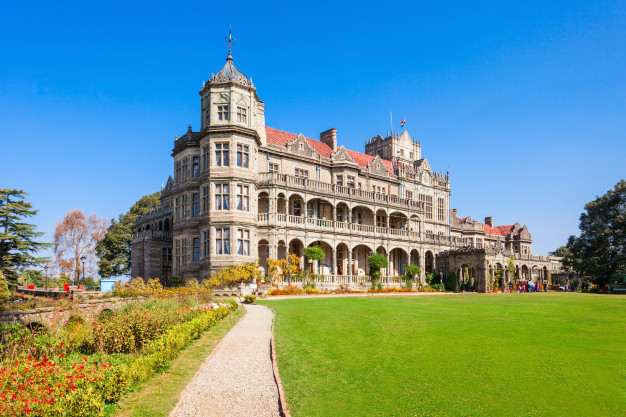
Take a stroll up nearby Prospect Hill to experience the tranquil beauty of the high lofty mountains, the second tallest in the region. Serving as a summer residence for Lord Dufferin, the Viceroy of India, the Viceregal Lodge was constructed between 1886 and 1888. It was the famous architect Henry Irwin who designed the lodge, adopting the Jacobethan style, which was constructed from local sandstone. It housed all the subsequent viceroys until independence in 1947, following which it was made into a summer palace for the country’s elite. Later in the 1960’s, it became the centre of Indian Institute of Advanced Study, and continue to remain so to this day.
The grand scale of the structure is an impressive sight. A group of high columned arches fronted by decorated balconies is a stark reminder of the finer lines of Scottish architecture. The interior of the grand old lodge is equally imposing featuring a teak-panelled main hall, a cosy guest room and an original fireplace, in addition to the unique colonial furniture. Take a look at some of the earliest photos of the British Raj, including that of Gandhiji and other historical leaders, in the library and all conference halls. The colourful gardens and the sprawling lawns surrounding the lodge are a welcome sight. You can enjoy the afternoon tea in the nearby cafeteria, as you witness the misty high-standing mountain. The lodge is open for public view every day, and is separated by 2.5 kilometres (1.5 miles) from the Shimla Mall.
All about the Marine Drive in South Mumbai
Mumbai’s most iconic destination, a cinematic location par excellence without which no Mumbai-based Bollywood movie is ever complete, the Marine Drive, also known as Netaji Subhash Chandra Bose Road is a 3-km long, six lane road in southern Mumbai. Because it stretches north all along the coastline, it forms a nice natural bay. This C-shaped road connects the famous Nariman Point to Babulnath, and is located at the foot of the famous Malabar Hill. The locales, or Mumbaikars, take great pride in calling the Marine Drive as Sonapur. Mumbaikars hangout in large numbers just to stride along the gorgeous walkway, and witness the dazzling beauty of the sun set in the evening. The Marine Drive is also known as the ‘Queen’s necklace’ as the bright street lights, constructed like a string of pearls, throw an illusion of a necklace from an aerial view along the pathway of the road, when the moon shines alone at night.
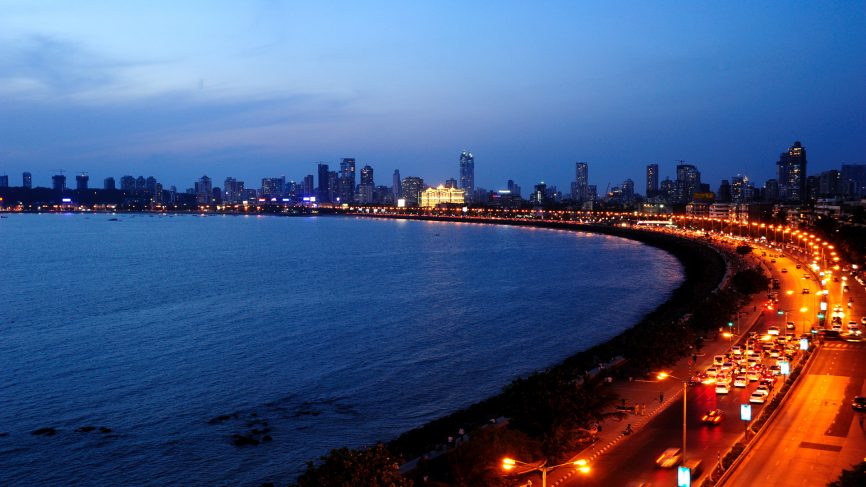
Chowpatty Beach, which is popular for its meals and bazaars, is one of the oldest seafronts located on the northern end of the Marine Drive. You can find a mouth-watery range of snacks and fast-foods from Bhel Puri, Paav Bhaji to Vada Paav, etc from hundreds of stalls set up here daily. Walkeshwar, an affluent society of Mumbai, is located nearby the Marine Drive. The Marine Drive is the best pathway in the city for a casual evening stride.
The Nana-Nani Park is frequented mostly by senior citizens from the neighbourhood areas, who spend time contemplating the past. The Marine Drive forms a part of the famous skyline of the city as it houses important corporate offices and entertainment centres, while most Bollywood stars reside here. The mega five-star hotel Oberoi and other numerous restaurants dot this walkway. The Marine Drive is also the biggest viewing gallery of the world, hosting several events over the years including IAF Airshow, French Festival, Bombay Marathon, International Fleet Review, among others. There are also several open air galleries and make-shift promenade at the Nariman Point. The most recommended time to visit the place is during Ganesh Chathurthi, celebrated fervently by all Hindus.
How to enjoy Chai and Chocolates in Ooty (Nilgiris) in Tamilnadu?
If you’re in Ooty, there are a few things that instantaneously pop up in one’s mind: chai (tea) and chocolates top the list of must-buy in this lovely hill station of Tamilnadu, dubbed as the queen of the hills. Ooty was once the summer capital of the British, and it continued to remain so until independence in 1947. It has a delightfully salubrious weather that the English camp enjoyed to escape from the torrid heat of Chennai (formerly Madras or the Madras presidency). The lush green grassy pines dotted with the medicinally valuable eucalyptus trees and the heritage of the British Raj made Ooty a highly popular tourist destination since the days of the colonial empire.

The strikingly scenic beauty of the place apart, Ooty remains a shopper’s destination for tea leaves and dust and chocolates. Surprised, or not yet? Ooty lies at a height of 2214m above sea level and its climate is always warm and temperate, with an annual temperature of around 14°C. The rainfall is much less in winter than summer which makes it highly conducive for growing tea and making hand-crafted chocolates.
In fact, there are a lot of shops in Ooty and other nearby hill stations like Coonor and Cuddalore that sell both tea and home-made chocolates all at one place. The English camp is believed to be the first tea growers and produced the finest tea including green, black and white in the region. To get a first-hand feel of sprawling tea estates, Ooty is where you should head; thanks to our erstwhile colonial imperialists. The Doddabetta Tea Museum and Factory is a must-visit place if you’re a tea lover. And finally, gifting a few boxes of Ooty handmade chocolates will definitely bring a smile to your partner or spouse’s face. Check out all the chocolate varieties available as every confectionery in Ooty has more than 40 delicious flavours (including free samples to make an informed buying decision).
All about the Baga Beach in Goa
- Baga is a popular beach destination in North India that pulls in a lot of tourists and watersports freaks from all over. The beach shares its coastline from Sinquerim, Candolim, and Baga, with the later being more alluring and lively for fun, frolic and festivities.
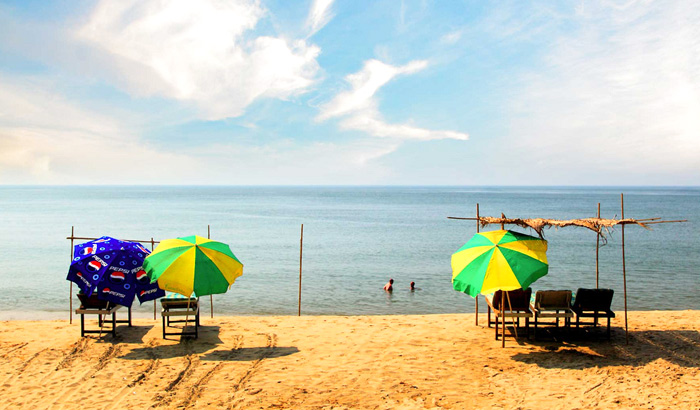
- Dubbed as the “The Hometown of Nightlife”, Baga never sleeps at night, and is famous for its scintillating musical nights, delectable local cuisines, gripping water sports and must-visit designer shops.
- It is to be noted that Tourism in Goa got a facelift in the 1960’s when the hippies from San Francisco started gathering in the beaches during the summers. Baga gradually turned out to be a preferred destination amongst foreigners with the introduction of night clubs, discos, fishing paddleboarding and tattoo shops established in the mainland.
- The name ‘Baga’ is derived from Baga Creek, the tidal residuary channel that empties into the Arabian Sea in Goa. Baga has well-maintained parking facilities under the control of the local governing authorities, in addition to a number of clubs in and around this electrifying beach.
- The Baga River flows into the town, and meets the sea at a point which is truly a delight to the eyes. Dolphins and other aquatic marines can be spotted deeper in the blue waters.
- There are local ship owners that organize spotting trips to watch these playful sea creatures in action.
- You can also involve in a range of water sports at the Baga Beach including Parasailing or parakiting, Jet Ski, Banana riding, Bumper ride, Bodyboarding, Kayaking, Paddleboarding, Kneeboarding, Speed boat rides and Wakeboarding. The nightlife at Baga Beach too is as exciting as it could get.
- There are several destinations near the Baga Beach which you shouldn’t afford to miss such as Casa de Retiros hills, Our Lady of Piety, Chapora Fort and the famous Dr. Salim Ali Bird Sanctuary.
All about the Ambalapuzha Sree Krishna Temple in Alleppey
- The Ambalapuzha Sree Krishna Temple is a Hindu Temple believed to have been constructed by the local ruler Chembakassery Pooradam Thirunal-Devanarayanan Thampuran (Alleppey) between the 15th and 17th centuries AD in Alappuzha (Alleppey).
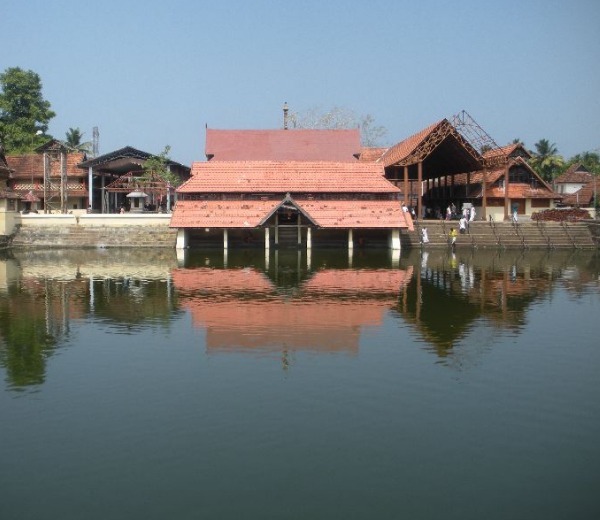
- The temple is linked to the famous Sri Krishna Temple in Guruvayoor. The idol of the temple is held sacred on a par with Parthasarthi that is posing with a whip in the right hand and a sacred Shanku (conch) in the other hand.
- The Palpayasa Nedyam or Payasam, in the form of a sweet pudding prepared of rice and milk, served in this temple is delectable and highly popular amongst devotees. Legend has it that Lord Guruvayoorappan himself visits this temple everyday to have Payasam.
- It is widely believed by the locals that Lord Krishna showed up in the form of a sage and played chess with the king, a chess enthusiast, who ruled that time. The king was challenged by the sage to offer him a grain of rice if he emerges victorious, with the condition that each square would double the grain of rice. The king having lost the game was happy to donate the grain of rice but he soon realized this vicious game of doubling the grain of rice on each square as he ran short of the food grain stock. However Lord Krishna, benevolent in his name, grants him a favour to pay him in part and serve paal payasam until and unless he clears his debt.
- Adopting Kerala style architecture, the temple boasts of a splendid construction displaying a beautiful painting of different avatars of Lord Vishnu in its premises, a centre-piece of attraction.
- Most of all, Ambalapuzha Sri Krishna Temple is notoriously famous for its magical acts and the annual Ottanthullal ritual.
- The main festival of this shrine is Chambakulam Moolam celebrated on the Moolam Day every year. This place is always buzzing with pilgrims and tourists to receive the blessings from Lord Krishna. The popular Aaraattu festival during the months of March and April begins with the flag hoisting on the Atham star. Pallipana is celebrated in the temple once in every 12 years.
Things to know on the Tomb of Imam Zamin in New Delhi
- New Delhi, the capital of India, is full of tombs and standalone monuments belonging to various dynasties, especially of the Medieval period, scattered all over the place. This is because many rulers and saints chose to build their own monuments.
- The Qutub complex houses relics that date all the way back to the Gupta Dynasty, cohabiting with monuments of the rulers and saints of the early Delhi Sultanate period as well as the Mughal Empire. Thus, the complex represents different epochs of the bygone era separated in time by no less than 12,000 years!
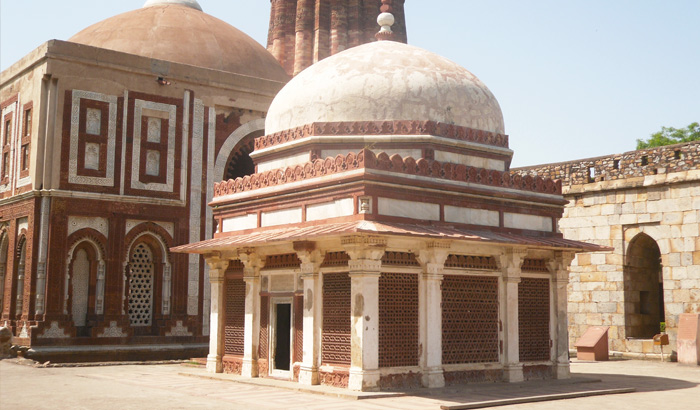
- Standing alongside the Qutub Minar and the Iron Pillar, the Tomb of Imam Zamin, though a lesser-known monument, hasn’t whittled away with time. The resting place of Imam Zamin, a Muslim saint of repute and a direct descendant of Islamic Prophet Mohammed, it is located on a slightly elevated platform adjoining the Alai Darwaza.
- This small structure, built in the early Mughal period, mostly of sandstone, has an octagonal-shaped base, so typical of the Islamic architectural style, and supports a small dome that is erected over the grave of the pious Islamic cleric.
- The tomb’s interior features an elaborate white plastic finish. Generally, Islamic tombs are enclosed within perforated marble screens or jalis that are intricately carved, forming the walls of the entire structure, through which one can view the inside of it, and so is the tomb of Imam Zamin.
- Imam Zamin, as recorded by many early historians, is said to have arrived in India around 1500 AD, during the reign of Sikandar Lodi, the last of the Delhi Sultans. He travelled all the way from Turkestan, the regions of Central Asia, to Delhi where he spent his last days as a Sufi saint.
- Zamin was also believed to have lived during the early days of Babur, who became the first Mughal Emperor of India in 1526, and breathed his last during the reign of Emperor Humayun, the successor of Babur.
- Zamin, the Sufi mystic of the Chisti order, himself commissioned the construction of his tomb, and was laid to eternal rest in the small, but aureate shrine.
All about the Albert Hall Museum in Jaipur
- The beauty of Jaipur in Rajasthan, as a tourist destination, is simply unrivalled. The best way to study the culture of a region is to visit the local museum. The Albert Hall Museum in Jaipur serves as the gateway to learning the cultural traditions and various art forms of the “Pink city”.
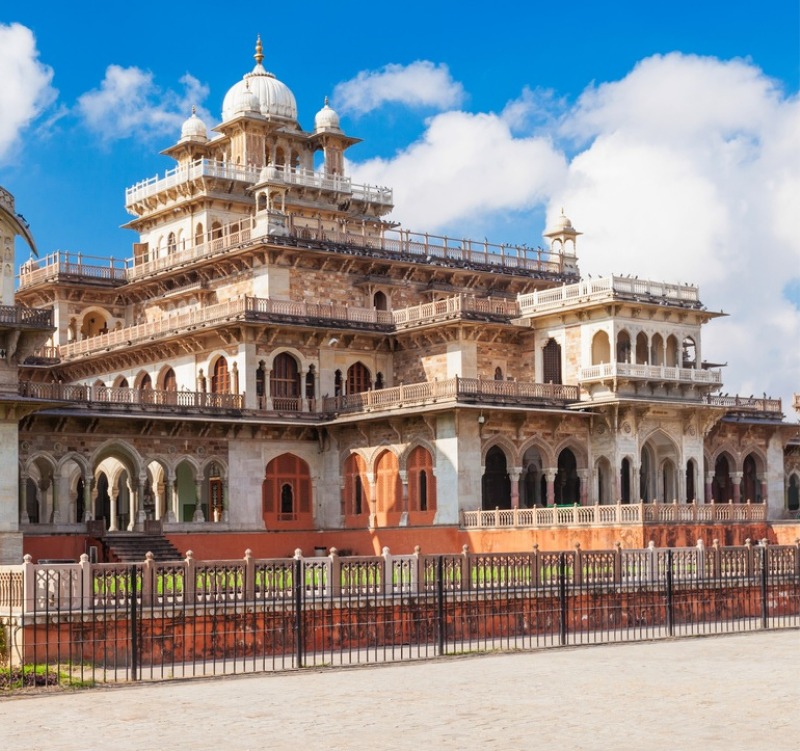
- Built in 1876, first as a concert hall and later as Town hall in 1880, the Albert Hall got its name from London’s Victoria and Albert Museum because of its strikingly similar architecture. The building’s foundation was laid out in 1876, when the Prince of Wales visited the city.
- It was Maharaja Sawai Madho Singh II, the ruler of Jaipur, who suggested that Albert Hall be used as a museum for industrial arts.
- The hall was later used for exhibiting masterpieces of local craftsmen and artisans. The museum, by 1881, was opened to public that even bought artwork, handicrafts and other masterpieces on display. However, the museum wasn’t fully constructed until 1887. Later, valuable antiques were added to the modern artefacts collection.
- The architecture of the building is Indo-Saracenic in style and holds unique stone ornamentation. The museum’s corridors stock Persian paintings, mural paintings, among others. The murals on view vividly express the ancient civilizations of Babylonians, Chinese, Greek and others.
- The museum houses 16 galleries in total that display a spectacular collection of antiques, artefacts and artworks in the following categories: Arms & Armour, Pottery, Sculptures, Miniature Paintings, Clay Works, Marble Art, International Art, Ivory, Jewellery, Woodwork & Furniture, Coins, Musical Instruments, Garments, Carpet, and other miscellaneous collections. In addition to these, there is an exclusive ‘gallery of the month’ which displays unique collections.
- The museum, which is open from 9AM to 5PM on all days, is well connected with all the other parts of the city. Located nearby the Merta Road Junction Railway Station, the Albert Hall Museum can be reached via local train, cab or public transportation.
Things to know about the famous Naulakha Bazaar in Agra
- The city of Agra in Uttar Pradesh is a potpourri of the diverse Indo-Islamic culture, whilst also conforming to the modern society. While there are several places to explore in Agra, the Naulakha Bazaar, meaning ‘a market worth nine lakhs’ in English, offers a wholesome shopping experience for Indian fashion and food lovers.
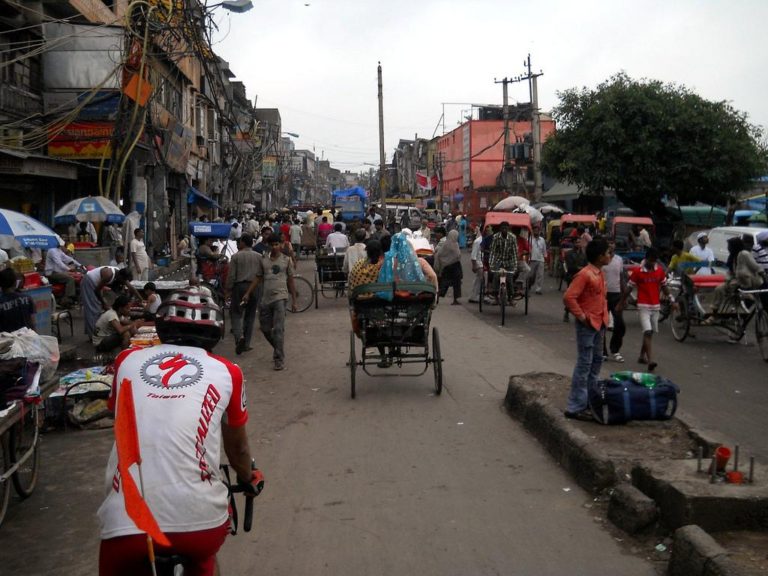
- This ever-bustling bazaar is located near Sadar Bazaar, another popular marketplace in Agra. Though tourists gather in large numbers in Naulakha Bazaar, its streets and bylanes are quite narrow like Delhi’s Chandni Chowk, so typical of Indian Bazaars.
- The market’s speciality items include a range of imitation jewellery and ornamental showpieces which you can find in Loha Mandi, an area located within the Naulakha Bazaar. In addition to metal goods, you can find a number of shops that specialize in ethnic wear manufactured locally in Uttar Pradesh.
- The Naulakha Bazaar is also popular for items made of timber. Besides, the local people purchase sundry items such as stationary and toys here.
- Buying cosmetics in the market would require careful consideration, as most items are either fake or counterfeit of popular international brands. Because these cosmetics contain toxic chemicals, they can easily harm the skin. Shoppers here also look for sport shoes, mojris and leather slippers and sandals that come in attractive designs for all ages.
- Bargaining for the right price is very much important at Naulakha Bazaar, which remains crowded from late morning hours (later than 10am) to even midnight during festival and peak season times.
- The mouth-watering local street foods including chats, milkshakes, desserts, kebabs, et al are guaranteed to satiate your hunger pangs after you’re done wandering the narrow lanes of the bazaar.
- The Naulakha Bazaar overall is a true reflection of the rich local culture and traditions of the city. Visiting the market can be an amazing experience, rest assured never to leave you disappointed.
All about the Birla Mandir in Hyderabad
- Birla Mandir is a gleaming white structure adorning the skyline of the city of Hyderabad
- It is located to the south of Hussain Sagar Lake in Hyderabad, atop the Kala Pahar, a twin hummock of Naubath Pahad.
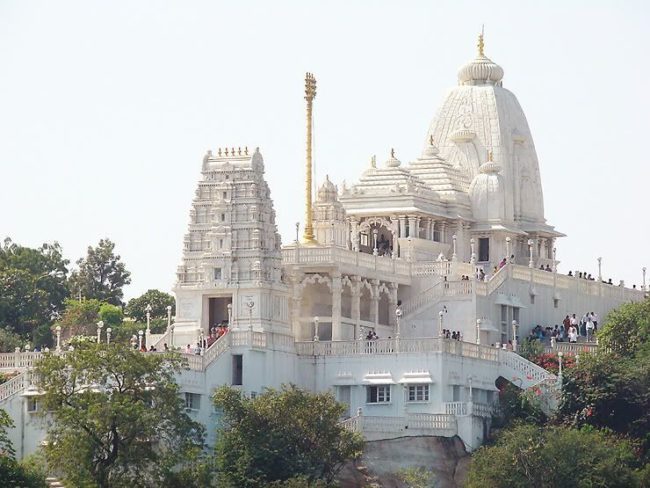
- Birla Mandir, situated at a height of 280-feet above sea level, was built by the Birlas in 1976 on a 13-acre land; the glistening white marbles used in the construction of the temple were sourced from Rajasthan.
- The construction, which took nearly a decade to complete, was later sanctified by Swami Ranganathanda, a Hindu swami of the Ramakrishna Math order. There are similar temples constructed all across the country by the Birla Foundation, patron of Birla Temple at Hyderabad too.
- The main deity of the temple is Lord Vishnu or Sri Venkateswara, made of granite, and is 11-feet tall. The temple plays kirtanas of Annamayya, Tyagaraja and Ramadasu every day bringing in a strong spiritual vibration.
- The temple’s architectural style is a combination of South Indian and Utkal (Oriya): the main shrine also known as the Jagadananda Vimanam depicts the Oriyan style, whilst the Rajagopuram is reflective of the South Indian architectural style.
- The two great Indian epics of Ramayana and Mahabharata are depicted in the intricately carved marbles. The design of Garbha Gudi (sanctum sanctorum) which is 42-feet high was inspired by the world-famous Venkateshwara temple at Tirumala.
- The temple has separate shrines for the consorts of Swami Venkateswara: Padmavati and Andal. Interestingly, the Birla Mandir complex is also built with a temple dedicated to Lord Buddha, with his life events portrayed through fresco paintings. The temple complex also houses separate shrines for worshipping other Hindu gods including Hanuman, Ganesh, Shiva, Brahma, Saraswati and Saibaba.
- Birla Mandir, which is open from 7AM -12AM and 3PM – 9PM on weekdays and weekend respectively, is a truly spectacular sight when illuminated at night
- The temple is highly accessible from all parts of the city, thanks to the State transportation facilities. You can take a bus, and get down near Ravindra Bharathi, which is only 200m away from the temple.