Everything you need know about the Meiji-jingu Shrine in Tokyo
- The Meiji-Jingu Shrine in Tokyo, the capital city of Japan, is enveloped by lush green woods located right in the heart of the city.
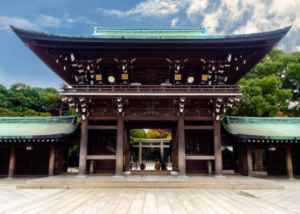
- The Shinto grand shrine is built in the memory of Emperor Meiji (1852-1912) and Empress Shoken, first emperor and empress of modern-day Japan.
- You can well put Meiji-Jingu at the top of your bucket list, in addition to visiting the busy Shibuya or Harajuku with a calm walk down the well-trodden pathway to the front gate of the shrine.
- Major attractions include the Treasure House filled with royal artifacts and antiques of the past; the traditional Inner Garden, a spiritual spot and the Spring Grand Festival of the shrine held during April – May.
- Come 2020, the shrine will commemorate its 100th anniversary, just before the Tokyo Olympics.
- You can find over 1,20,000 trees in the forest bordering the Meiji Jingu and Yoyogi Park. They cover a range of different species, which came as donations from all over the country.
- You can find English signage all over the place to help you take part in traditional Shinto rituals including giving offerings and doing prayers at the main hall, writing down your wishes on an ema amulet, and picking a protective charm or fortune.
- There are the iris gardens which were a favorite spot among emperors and empresses, and this tells you why Meiji-Jingu was constructed here.
- Although the garden involves an entrance fee, it’s well maintained comprising a lovely labyrinth of picturesque forest walks, traditional iris flowerbeds and there is that ritual Japanese tea house too.
- Kiyomasa’s Well got its name after the military general who dug it 400 years ago. Today, it is regarded by many as a ‘power spot’, a site visited by people to receive positive vibes and healing energy.
- The Meiji-Jingu Shrine grounds are a host to several festivals all along the year including Nikku-sai beginning on New Year, considered a ritual of good fortune, concluding as Joya-sai or ‘end-of-the-year-ritual’ on December 31st. The Spring Grand Festival is celebrated during April-May. Not to mention the traditional Shinto weddings happening during the same period, food fairs, modern fests, and traditional music and cultural performances.
To Visit Meiji-Jingu Shrine in Tokyo contact Emperor Traveline for Cost-Effective Tour Package.
All you need to know about the Shitennō-ji Temple in Osaka, Japan
- If you visit the Tennoji area, you shouldn’t miss out on seeing the Shitenno-Ji Temple at Tennoji-Koen Park in Osaka.
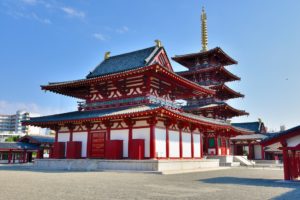
- Though the concrete reconstructions may present a different story altogether, this Buddhist temple is one of the oldest in the country.
- If you’re looking to revive your spiritual vibes, then the Shitenno-Ji Temple is the place to be.
- This temple, which dates back to 593AD, lies a tad north-east of JR Tennoji Station and nearby the Shitennoji-Mae Yuhigaoka Station on the Tanimachi subway line.
- The temple underwent concrete reconstructions after it was ravaged by the wars.
- All said it is still a quaint place to hang out and establish spiritual connect with the divine power.
- There’s a lot that this place has to offer. You can view the outer temple grounds, besides the inner precincts that house a lovely garden, a pagoda, and a treasure house.
- The design of the garden was inspired by the description of Amitabha, identified as the Buddha of the Western Paradise, and differs strikingly from the urban landscape of Osaka.
- It is stunningly beautiful and worth every cent visiting the place during spring when the entire cherry blossom flutter to the cool breeze. The rest of Tennoji-Koen park is also a visual treat.
- If you’re someone who loves trying your luck out in antique fair or flea markets, then you are in the right place!
- Shitenno-Ji puts up large antique fairs or flea markets on the 21st and 22nd of every month and houses about 300 stalls selling pre-loved antiques, clothes, old kimonos, and handicrafts. If you’re hooked to something old or antique, you won’t be disappointed here. You can go for some takoyaki and immerse yourself in the usually vivacious atmosphere here.
Everything you need to know about Waikiki in Honululu, USA
- In the bygone days of the Hawaiian Monarchy and before, the Hawaiian Royalty was maintaining beach house along the narrow, gently sloping strip of beach on Oahu called the Waikiki or Spouting Water.
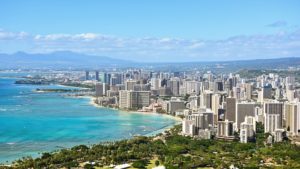
- However, most part of the land was marsh and wetlands were flooding often when heavy rains hit the Manoa and Palolo streams. It was only in the 1920s when the Ala Wai Canal was subjected to dredging and the ponds, springs, and marshes made up what is today’s Waikiki.
- Only a few would realize that the Waikiki we see today is originally a peninsula jutting out from Kapi’olani Park located on the east end of Waikiki with the Kuhio Beach Park and Waikiki residential neighborhood on the far side.
- Waikiki is about two miles in length and a little over a half-mile where it is the widest. Waikiki is surrounded by the Kapiʻolani Park and Diamond Head Crater on the south-eastern side.
- Waikiki Beach is popular the world over as it is the most filmed beach. It has nine separately named beaches that run along the two miles from Kahanamoku Beach nearby the Hawaiian village of Hilton to the Outrigger Canoe Club Beach close to the foot of Diamond Head.
- The beach that you see today is almost artificial, as in order to avoid erosion new sand has been put in place.
- If you want to share a few private moments, then Waikiki Beach is not the one for you it is undoubtedly one of the crowded beaches you can get to see.
- Waikiki Beach is a popular beach for surfing sport, dining and entertainment. There are over 100 lodges with more than 30,000 units. These include about 60 hotels and 25 condominium hotels.
- Other attractions include the Diamond Head, the Honolulu Zoo and Waikiki Aquarium.
All about the Rotary Convention 2020 in Honolulu
Honolulu, the largest city of the U.S. state of Hawaii in the USA, will play host to the Rotary International Convention 2020 where people from all across the world will convene to connect, collaborate and celebrate for a better tomorrow. The convention begins on 30th May 2020 and ends on 12th June 2020. It is the place to be if you need to hear out world leaders, eminent personalities and philanthropists speak on several thought-provoking topics, in-depth seminars, panel discussions, workshops and more.
 The House of Friendship is an interesting place where the Rotary world gathers to share tips, ideas and project successes.
The House of Friendship is a special place where the Rotary world comes together to share ideas, tips, and project successes. Here the office bearers from various nations, districts, and clubs display their projects. Rotary-licensed merchandise such as banners, shirts, and pins are available for sales. Participants can also meet rotary staff to know more on their various services and programs.
Honolulu offers you some exotic touring destinations including Diamond Head, the only royal palace in the US; Iolani Palace; Bishop Museum and Luau of Hawaii and exciting activities such as building sandcastles on Waikiki Beach; snorkeling with stunning fish; participating in Hawaii Luau musical and cultural fest; observing the traditional dance, hula, and mele, or song; tasting the different local cuisines and exploring the different adventure sports and leisure activities the island has to offer or viewing the state’s biggest collection of Hawaiian artifacts.
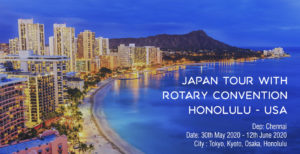
In addition to the touring Rotary Convention in Honolulu, Emperor Traveline is organizing a trip that will cover the important cities of Japan, Tokyo, Kyoto, Osaka, and Honolulu. The trip operated from Chennai is from the 30th of May to 12th June 2020. Find your own unique experience with Emperor Traveline’s trip to Honululu and major cities in Japan.
Discover Japan’s New Golden Route with Emperor Traveline
If you’re a first-time traveller who wanted to experience the multitude of fabulous sights that Japan, the land of the rising sun, has to offer, then the New Golden Route of Japan is all you can ask for. The Golden Route of Japan runs from the capital city of Tokyo and Kyoto taking through bustling cities, ancient historic sites and quaint, scenic destinations. Following this truly fabulous route is nothing short of the holiday of a lifetime as it supposedly promises travellers. Here is all you need to make the perfect plan for the Golden Route Japan trip.
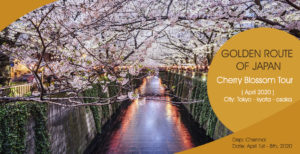 It is recommended to spend at least 10 days to 2 weeks to discover some exotic destinations on the trip. But if time is of the essence, you can afford to spend one week and skip a few places by the way and visit the top destinations alone. But that would be just like, kind of hustling a little bit. The best time to make the Golden Route of Japan trip is between April and May, especially when the cherry blossoms flutter and the temperature is nice and warm.
The old Tokaido road which links the city of Tokyo and Kyoto is several centuries old used by samurais, merchants and pilgrims to move from city to the next. Today it’s one of the most popular touring destinations. The Golden Route of Japan covers some of the best exotic sites including Greater Tokyo Area; Mount Fuji, a UNESCO World Heritage Site; mountainous area of Hakone; temple city of Nara; Osaka, the third-largest city of Japan and Kyoto, the cultural centre of the country. The trip, if properly planned, should help you visit the hot springs of Hakone and Kyoto’s geisha district among several other touring attractions.
Emperor Traveline provides you with an excellent opportunity to tour Japan’s New Golden Route from the 1st of April to 8th April 2020 with All Nippon Airways (ANA) scheduled to leave from Chennai. Hurry, as the seats are fast filling!
All about the Swami Vivekanand Park in Haridwar, Uttarakhand
- Haridwar is the state of Uttarakhand has numerous tourist attractions, one of which is the Swami Vivekanand Park.
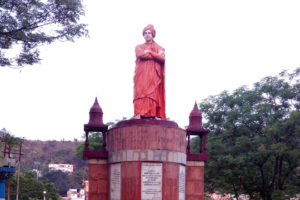
- The Swami Vivekanand Park, placed at a distance of about 3km from the Haridwar bus stand, is one of the most beautiful and serene parks in the region, situated on the banks of River Ganges near Hari Ka Pauri.
- This park triangular in shape is covered by lush fertile greenery and houses a huge statue of Swami Vivekananda, one of India’s most important spiritual reformers of the bygone era. His teachings and philosophy have left an indelible impression on the Indian masses, reviving the ancient Hindu culture and traditions.
- There is also a huge statue of Hindu God Shiva, the main deity of Haridwar, that is nearly 30 meters high, the cynosure of attraction in this park. The statue can be easily viewed from a good distance from the park.
- The sculpture depicts Lord Shiva in standing pose carrying a trident in his left hand and conferring blessings to his devotees with the right hand. A giant king cobra is seen atop the statue, while two smaller serpents are coiled over the arms.
- There’s no entry fee to visit the park. You can enjoy a few moments of tranquillity and stillness in the park with your loved one whilst also watching the Har Ki Pauri from the park.
- You can also view the incessant flow of River Ganga and the surrounding celestial mountains that stand majestically.
- The Swami Vivekanand Park is located just adjacent to the National Highway bypass road. Remember there’s no enough parking space for vehicles, so you need to make your own parking arrangement.
- The nearest railway station is Haridwar; the nearest airport is the Jolly Grant Airport in Dehradun, separated by 38km from Haridwar.
Everything you need to know about the Japanese Temple & Peace Pagoda in Darjeeling
Here’s a trivia for you: Do you know where India’s only Japanese temple is located? Not many knew that the quaint hill station of Darjeeling houses a Japanese Temple & Peace Pagoda. 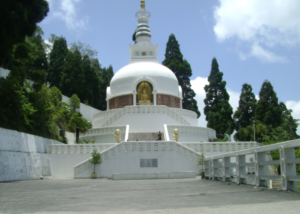
- The Japanese Temple & Peace Pagoda is a 10-minute drive from the heart of the Darjeeling town.
- A two-storied construction that was built in 1972, this temple sports a traditional Japanese style architectural design.
- There is a peace pagoda just adjacent to this temple which displays the four avatars of the founder of Buddhism, the Lord Buddha.
- The town of Darjeeling helps unify people irrespective of faith, creed, and race to attain peace and solace. Nichidatsu Fujii, a Buddhist Monk from Japan, espoused the ideals of Buddhism and helped construct the temple here.
- Temple visitors while leaving will be provided a small sweet ball as ‘prasad’
- Though photography is allowed inside the temple premises, it is prohibited while the prayer is chanted inside the main prayer hall.
- There’s a peace pagoda separated by 100 yards away from the temple that exhibits the four different avatars of Lord Buddha.
- The tallest structure in Darjeeling, the Japanese temple is 28.5m high.
- You can find two concrete models of lions as you ascend upstairs. There are large wall sculptures in polished gold (color finish) depicting the various avatars of Lord Buddha.
- It took three years for Dr M Okha of Japan to construct the temple.
- Take a stroll around the pagoda to witness a fabulous artwork engraved on sandstone that depicts Buddha’s life and some of his relics.
- When the weather is bright and sunny, you can enjoy a spectacular view of the snow-capped peaks and tall mountain ranges.
- A popular destination in Darjeeling, the temple is open to public view from 4:30 AM to 7 PM; there is no entry fee.
If you looking for a cheap tour package to Darjeeling contact Emperor Traveline.
All about the College Street in Kolkatta
- The College Street is a landmark place in the history of Bengal. Located in the heart of Kolkata, it’s the nerve centre of the city’s literary crowd.
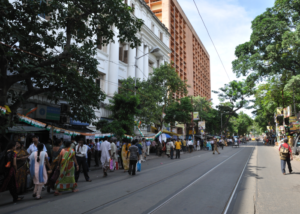
- Situated between Bowbazar and Mahatma Gandhi Road, the College Street is the world’s largest second hand or pre-owned book market and the country’s largest book market.
- The credit for establishing the ‘College Street’ goes to David Hare, who founded the Hindu College in 1817. His mission was to form an institution for providing liberal education and studies to the family of the members of the Hindu community. But it was only under Lord Wellesley, the then governor of Bengal, under whose auspices the street on which the Hindu college is situated was named the College Street.
- Also dubbed as the ‘Boi Para’ meaning ‘book mart’, it is the melting pot of intellectuals, students, academicians, book lovers and scholars of the city.
- It also houses some of Bengal’s most prestigious and acclaimed academic institutions such as the Calcutta Medical College, Sanskrit College, Presidency College, University Of Calcutta, Hindu School and Hare School.
- This place lends a distinct charm that’s very endearing. Most stalls sport a makeshift arrangement with wood, bamboo, canvas and tin sheet on either sides of the road.
- A haven for bookworms as well as bibliophiles, it is a unique book market place that draws both locals as well as tourists who come here just to enjoy the charm of the place.
- If you’re a book lover, you can’t go disappointed if you come here searching for a specific book. Now, what if you don’t get the book you were looking for? Shopkeepers here would ensure you get it at a later date.
- The College Street is the home to popular Indian publishers including Abhijan Publishers, Ananda Publishers and Dey’s publishing.
- It’s also the site of the famous Coffee House part of a chain of the Indian Coffee House restaurant that is run by a group of worker co-operative societies.
All about the Rotorua on New Zealand’s North Island
Rotorua is famous for bubbling mud pools, natural hot springs and shooting geysers, a true reflection of the fabulous Māori culture
- Rotorua is famous for bubbling mud pools, natural hot springs and shooting geysers, a true reflection of the fabulous Māori culture.
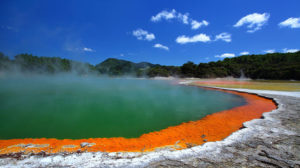
- It is a land of truly enchanting forests and dazzling streams, thermal mud pools and adventurous biking trails.
- The city provides a potpourri of experiences and attractions, one for everyone—from the casual traveler to the hardcore adventure-seeker.
- The popular Pacific Rim of Fire is a geothermal marvel with hot springs, clouds of steam and mudpot for a relaxing bath.
- If reveling at the sight of the unique landscapes and volcanic eruptions all inside a geothermal park isn’t enough, you can take a dip in a natural hot stream or spoil yourself in a local wellness retreat.
- Next, purge your hunger pan with a Maori cultural style hangi feast cooked in the simmering ground or experience the mild vivacity of a pre-European village.
- Or make a perfect date with nature: the city has 18 freshwater lakes and several rivers, peaks and native forests; it’s your call.
- Rotorua is a cut above the rest when it comes to world-class mountain biking trails.
- Horse riding, walking, fishing and swimming in the rivers and lakes offer an instant connect with nature and wildlife, and also help unravel some of the hidden mysteries of the region.
- There’s also a large trout fishing area that allows fishing on the tributaries and lakes. Lucky for you if you can get to see big trout at the Fairy Springs and Rainbow, though not quite catch them.
- If your adrenaline switch turns on, indulge in extreme sports ranging from bungy jumping and luging to ziplining and zorbing. Not to mention that Rotorua has the highest commercially rafted waterfall in the world, the Tutea Falls.
- There are a range of activities for kids including wildlife and leisure parks around the region.
- Rotorua has you food and drink needs well covered in Eat Streat, one of the coolest hot spots in the city having major restaurants, cafés, bars and craft markets, with enhanced lighting and thermally heated footpath.
- As Rotorua is situated in the heart of the North Island, it is easy to reach Mt Ruapehu ski fields (under two hours travel time) and the nearest beach town in no more than an hour.
Things to know about the Fiordland National Park at Queenstown in Newzealand
- The Fiordland National Park at Queenstown in Newzealand is an amazing natural environment featuring awesome fiords, stunning snow-capped peaks and waterfalls.
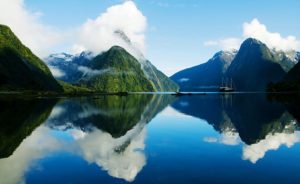
- The ancient rainforest is another highlight; they cling ceremoniously to the mountains; the waterfalls drop hundreds of meters down into huge fords; iridescent lakes and granite peaks aren’t different from what they were several centuries ago.
- The fourteen fiords that tassel this south west corner of New Zealand’s south island is widely believed to be 1,00,000 years old, tagging the final details along during the most recent ice age some 10,000 years ago.
- The Maori cite the evolution of the fords to a giant stonemason known as ‘Tute Rakiwhanoa’ who hued out the gorge with his adzes.
- Magnificent waterfalls surround every side of the fiords and fall incessantly as the abundant rainfall of this region makes its way into the sea.
- The great English author Rudyard Kipling described the Fiordland National Park as the ‘Eight wonder of the world’—and rightly so!
- Milford Sound is always fabulous—everyday scenic cruises and flights truly reflect the beauty of the region. You can avail of the eco-cruises in Manapouri or Te Anau to access harder to reach fiords
- Doubtful Sound, located at 421 metres, is the deepest of all fiords in the region. It’s the most happening place for nature freaks, abounding in fur seals, dolphins and penguins.
- Almost two-thirds of the Fiordland National Park is swathed by pod carp and virgin beech woods.
- There’s a 500km stretch of walking tracks that enable you to unravel the primordial world of alpine lakes, mountain peaks and moss-carpet covered valleys.
- Fiordland was recognized as a UN World Heritage site and named ‘Te Wahipounamu’ or the ‘place of greenstone’ after the abundance of mineral resources available in the area.
- There are three ‘Great Walks’ in the Fiordland National Park: the Milford Track, the Kepler Track and the Routeburn.
- Main activities include kayaking and diving for viewing the deep-water sea plants and organisms.