How to plan a safe honeymoon trip during COVID-19?
The big fat Indian wedding season is underway, and with the COVID-19 having done the damage already this year, we’re going to see an extended summer wedding season later next year. Indian weddings are all about fun, food and frolic, and you just can’t take travel out of it. Planned honeymoon trips are very much part of the nuptial process. So how should the newlywed plan a safe and memorable honeymoon even with COVID-19 doing the rounds? Read on…

Do your homework:
Before travelling to the place, it is important for the honeymooners to know the scale of COVID-19 and existing number of cases. A reliable travel operator may know the ground situation and advice for or against travelling to a particular destination. Also, public places including historical monuments, parks, zoos, museums, palaces, forts, mausoleums, etc have been locked up from public access for the most part during the pandemic. Work with a travel agent who can help you prepare the right travel itinerary of accessible locations to stay safe throughout the trip.
Open communication:
A safe travel for honeymooners during the pandemic may require an open communication with their travel agency. It is pertinent to ask the right questions everything from travel itinerary, booking, accommodation, insurance (if required) among others. Most restaurants and hotels post lockdown relaxation have come up with offers of up to 50 percent discount as incentives for travellers. Some even offer waiver on normal fees for cancellation or postponement. The key is right communication to get as many answers you will want.
Stay local:
Travel as locally as possible to avoid exposure to virus. Embrace the familiar and don’t take chances by travelling outside of the country until the COVID is finally over. This is probably the best piece of advice for honeymooners travelling during the pandemic marked by an uncertain timeline. This said go and stay outdoors where nature is at its purest. This is to avoid mixing with the crowd and increasing your chances of getting COVID infected.
Use technology to the maximum:
Use payment apps that facilitate contactless payments. Check for hotels and restaurants that encourage the same. Furthermore hotels adopting innovative technologies including robotic cleaning, contact tracing, sanitization, and health screening are preferable compared to those that don’t.
Health safety protocols for Tour Operators
A growing travel trend that is fast catching up post-COVI9-19 is private trips and hotel stay and experience that puts isolation above everything else. For those who cannot afford to buy such experiences, travel and tour operators are coming up with novel ways, in addition to the usual social distancing and advanced cleaning and hygiene procedures, that are actually much safer than you imagine. This said it is important that guests, suppliers and staff follow the strict guidelines and modalities as laid down in the COVID-19 safety guidelines.
Group travel when done right actually offers travellers with their own bubble, where they can relax and leave the rest to their guide. Emperor Traveline is a trusted travel brand, and that is the biggest advantage in this new world gripped by the COVID-19 marked by stringent safety and hygiene standards. We offer great assurance for our customers and the pandemic proved to be an opportunity to differentiate ourselves from the rest. We have also developed COVID-19 health and sanitizing guidelines to show that we are compliant.
Guidelines are in place for social distancing, staff training on sanitization and the use of hand sanitizer and masks by guests and staff. We also oversee the safety and health practises of restaurants, hotels and other suppliers to assure our customers that they are fully compliant with the protocols and all local health regulations. We developed these guidelines in collaboration with member companies and build upon our resources and standards from the WHO, IMRC, CDC and protocols of the state government.
We have had an open eyes and ears to the growing concerns of our customers on the health and safety guidelines for tour and travel post-pandemic. With the support of our member organizations and partners, we ensure our customers a safe and secure travel in compliance with the safety policies and all local health rules.
Travel will live on…From the founder’s desk of Emperor Traveline – Part 5
It has been quite an extended series of posts. But I rather enjoy writing these as I strongly believe the travel sector will revive, and, as believed by most travel experts and analysts, in a more explosive way only if the post COVID-19 security measures and protocol are in place. Technology, as we discussed in the previous posts, is the vital cog in the wheel. In the concluding part of the blog series, let me touch upon another important factor that of collaboration.
The travel world is undergoing a sea of changes at the moment and consequently, it has redefined travel space characterized by sustainability, agility and resilience. Collaboration holds the license to the future and rightly so.
The use of digital technology will see new heights than ever before. Next, the development of a cohesive policy and legal regime surrounding the use of digital technologies in place should strike a balance between the protection of civil rights and public health. Finally, the travel ecosystem should ensure the integration of different digital identity solutions. The role played by organizations including International Air Transport Association (IATA), the International Civil Aviation Organization (ICAO) and the World Health Organization (WHO) will be vital to bring aviation and health priorities, policies and guidelines together. Paper-based passports are still the primary form of identity for travelers. A contactless world would demand the deployment of standardized digital travel credentials and initiatives such as IATA’s ONE ID concept, which espouses biometrics for a seamless journey, must be adapted and accelerated to this novel context.
Ultimately, the pandemic has set off two trends that have been in the offing for some time. One is seamless travel, where the body and face is the passport. The idea of decentralized identity has been floating for a while which allows the individual possess and control identity attributes including the place and date of birth and physical characteristics, in addition to health info, details of travel history, and other data. Pooled together, these trends will ensure travel is efficient, enjoyable and safe.
Travel will live on….From the founder’s desk of Emperor Traveline – Part 4
I am really pumped up this week and all the more excited as the COVID-19 lockdown witnesses’ some form of relaxation in several parts of the country. However, wearing a proper mask, using hand sanitizers regularly and maintaining social distancing at home and office can keep the effects of COVID-19 at bay. There is something interesting coming up on the technology front; this week let us discuss digital traveller and how it can change or perhaps even enhance the travel experience.
Many organisations are well on their way to digital transformation. Businesses in the travel sector should push this harder so as to adapt to the new normal, change customer behaviour and rebuild the trust factor. Built-in digital identification solutions are the future of touchless travel. They also enable organizations to plot multiple data points to efficiently make an individual’s risk profile assessment. If anything, this can improve risk management in real time.
The Word Economics’ Forum Known Traveller Digital Identity initiative is one such initiative to unify a global ecosystem of individuals, authorities, governments, and the travel industry enabling safe and seamless journeys. All the verifiable claims of a traveller’s identity data can be accessed by the ecosystem partners to enhance passenger processing and lower risk. Travellers can customize their own profile, collect digital ‘attestation’ of their ID data, and decide what all is required to be shared.
In a COVID-19 backdrop, a traveller would be able to securely receive and store confidential, verifiable health credentials including immunizations or their health status in their digital identification wallets. This can be integrated with several other trusted, verifiable identification data from private or public entities.
If you think testing and health screening at airports is easy on a wider scale, give it another thought. Under schemes such as Known Traveller Digital Identity, travellers would show consent to sharing their health information and identity before the start of the journey, allowing border officials to carry out the needed risk assessments before the scheduled journey, whilst avoiding queuing and congestion at airports.
What are the ways by which the travel sector can revive its prospects post COVID-19 pandemic?
The world has been reeling down under the deadly effects of COVID-19 or Corona virus. Lives lost, hopes shattered, jobs axed and businesses in the doldrums, the world is going through the motions. The travel sector, of all business sectors, has taken the most punches left, right and centre. And it seems as if there will be no respite from it. But there are ways by which travel sector can revive itself and emerge stronger.

The need of the hour is a standard travel policy to facilitate travel by air, sea or road. It is imperative that travellers and tourists follow the guidelines and travel policies religiously to safeguard themselves from the effects of COVID-19 in future. The guidelines must cover social distancing, hygiene and protocol followed in public places such as airports, railway stations, bus stops, travel booking and support centres, etc.
Next comes hygiene, the protocol must stress the importance of hygiene as only proper personal and public hygiene, in addition to cleanliness can keep COVID-19 and other infections at bay. Is wearing a face mask essential at all times? Should travellers carry hand sanitizers with them? What should the COVID-19 travel kit contain? What are the safety and precautionary medical tests that will be in place at public places? What are the medical tests that the traveller has to undergo to ensure travel permit? What are the documents that are required for travel permit from a COVID-19 perspective? Do kids require special permit to travel? If so, what are the regulations that will be in place? These are some of the questions and more that the travel policy should encompass for future travel prospects post COVID-19 crisis.
Finally, what are the safety and hygiene standards to be followed by hotels and restaurants? What are the standards to be adopted by the hotel staff and employees? What are the standards to be followed in the commercial kitchen of hotels and restaurants? Does the hotel or the restaurant need to adopt takeaway as a mandatory feature and more. Online/Mobile booking and digital payment modes must be promoted by the Government for public to stay away from infection.
Things to know in Anna Park, Yercaud | Yercaud Tourism
- Anna Park is separated by 1km from the Yercaud Bus Stand next to the Big Lake in Yercaud.

- The park, which is maintained by the Horticulture department, should be on your bucket list of places to visit in this delightfully green hill station.
- Like the popular Botanical Garden in Ooty (Nilgiris), the Anna Park in Yercaud is well preserved and encloses four small parks: Deer Park, Lake Park, Children’s Park, and Gandhi Park.
- The park is known for its exquisite collection of trees and natural plants around the famous Shevaroy hills.
- There is also a separate park that features Japanese-style gardens with plants. In addition, you can find an awesome Horticulture farm enclosing a rose garden.
- The Rose Garden is home to a wide variety of roses, from the button rose to larger roses.
- The park offers a spectacular sight of a red-colored carpet,t with one part of it nicely covered with red grass.
- The fountain in Anna Park is a major attraction where visitors thoroughly enjoy splashing the water randomly, spurting out.
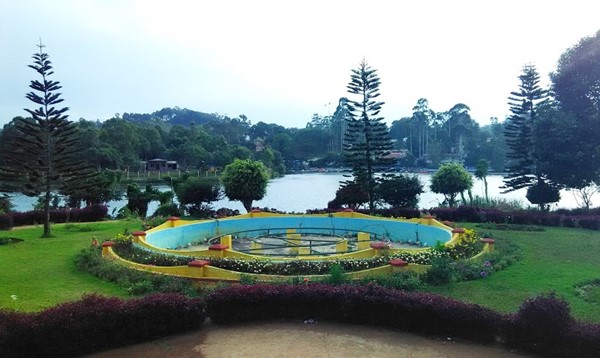
- The park has a few slides for kids where they can climb up a cage-like ladder and come sliding down. Multi-colored sea-saws and other play items in the park completely engage the kids.
- It is a different experience altogether to take a stroll in the park and enjoy a few quiet moments in the lap of nature.
- The nursery in the park houses orange, red and yellow flowering plants, native only to this hilly region. They can also be purchased at affordable rates.
- The recommended time to visit the hill station is during the summer months, starting from May. The famous annual Flower Show held during May attracts visitors in large numbers.
What Can You See On The Golden Triangle or The Delhi-Agra-Jaipur Route ?
The Delhi-Agra-Jaipur route (or the Golden Triangle) is one of the most popular routes in India that gives one several spectacular sights all along the way. New Delhi, the capital of India, is one of the major metropolitan cities of India, with a bustling population of 2.18 crores (Source: Wikipedia.com). It’s a unique city which is embedded within Old Delhi, once the capital of India’s rich and composite culture and heritage. However, New Delhi, today, has changed radically through the years.
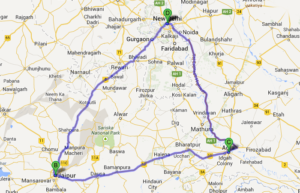 Next, venture into the ChandiniChowk Market, the busiest market of Old Delhi and Paharganj, a neighbourhood of Central Delhi, which sells almost everything you want; a paradise for budget shoppers as well.
The 17th century Red Fort, a UNESCO World Heritage Site, built by the great Mughal emperor Shahjahan, is a must–see historical monument, in addition to its two famous entrances: the Delhi Gate and Lahori Gate. The India Gate, a war memorial dedicated to 82,000 soldiers of the undivided Indian Army who laid down their lives during the First World War in the period between 1914 and 1921, is also a major tourist attraction.
If you are in Agra, travel to the Tomb of Mirza Ghiyas-Ud-din or Ghiyas Beg or Itimad–Ud–Daulah, another mausoleum similar to the famous Taj Mahal. Another UNESCO World Heritage Site, the Itimad-Ud-Daulah is also called as ‘jewel box’ and ‘Baby Taj’.
The Taj Mahal in Agra is no dearth of wonders. A classical example of Mughal architecture, the Taj is a colossal mausoleum complex built by Emperor Shahjahan to house the remains of his favourite wife Mumtaz Mahal. The construction work that started in 1632 took 25 years to complete with the help of 20,000 artisans.
Jaipur, popularly known as the ‘pink city’ of India, is the capital of the state of Rajasthan. You can find that almost every building in the walled historic city sports the colour of terracotta pink. Major attractions that you couldn’t afford to miss out include the Hawa Mahal, the Observatory and the City Palace. Next in the list of must–see places is the Amber Fort, nestled in the Aravalli Hills. The fortress that is honey–coloured lends a panoramic view of the adjoining areas. Also, Sheesh Mahal in Jaipur, the fabulous glass palace in Amber Fort, is a reflection of the elegant and regal lifestyle of the Rajput Kuchwada.
The Vivekananda Rock Memorial in Kanyakumari
If you are in Kanyakumari or Cape Comorin, the lovely scenic coastal town in TamilNadu on India’s southernmost tip, you get to visit the world-famous Vivekananda Rock Memorial, considered to be one of the country’s most sacred rock monuments. The Vivekananda Rock Memorial or the Vivekananda Mandapam has a grand structure and an impressive entrance that would remind one of Sri Ramakrishna Temple of Belur. The only way to reach the Vivekananda Mandapam is to use the ferry service operated by the Tamil Nadu Department of Tourism which provides leisure Cruises into the sea at affordable charges.
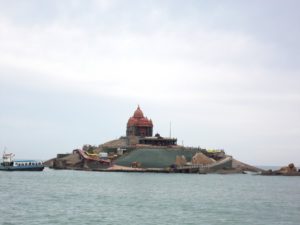
The Vivekananda Rock Memorial is built on the top of two rocks that are about 500 metres off the island. It was constructed in 1970 by the Vivekananda Rock Memorial Committee to honour the visit of the great spiritual sage and philosopher Swami Vivekananda to Shripada Parai on December 24 1892, prior to his taking part in the 1893 ‘World Religious Conference’ in Chicago. It is said that he did intense spiritual meditation on the rock for two days to attain enlightenment.
The infinite love for the motherland made Vivekananda, the greatest patriot monk ever, tour all over the country. His three-day meditation on the mid-sea rock or Vivekananda Paarai proved a turning point in his life, for it is here he contemplated on the past, present and future of the country, and put forth the idea of the glorious Bharatvarsha. Later, Vivekananda became the country’s most illustrious Hindu spiritual reformer and philosopher.

The Vivekananda Rock Memorial houses two main structures namely Vivekananda Mandapam and Shripada Mandapam, turning out to be small coastal town’s main attraction. It was the late Eknath Ramkrishna Ranade, the social activist and leader, who mobilized support in the construction of the rock memorial that today is an embodiment of India’s rich cultural ethos and values. The Vivekananda Rock is generally open to the public on all days and draws tourists in large numbers every day. This place is also known as Best Road trip in South India, Where we could see a lot of tourists coming in bikes & cars just to explore the Ocean views.