
20 Interesting things about PM Modi and Chinese President Xi Jinping 2-day summit at Mahabalipuram
1. PM Modi welcomed the Chinese President Xi Jinping at Mahabalipuram wearing Veshti and Dhoti, Tamil Nadu’s traditional dress, which was appreciated by the political leaders and public of Tamilnadu. 
2. The Veshti had high-toned Karai (dhoti sporting a border in green colours), half sleeve white shirt and classy Angavastram (a shawl).
3. Xi took delight in watching a dozen of Tamil cultural performances by both Bharatnatyam artistes and folk dancers, while hundreds of school children welcomed him waving Indian and Chinese flags on the streets as he arrived at the venue of the summit.
4. There were about 500 Tamil folk artists that performed numerous folk dances including ‘poi kal kuthirai’ and ‘tapattam’ whilst brightly coloured traditional sari draped women performed the Bharatnatyam dance to the accompaniment of ‘nadaswaram’ and ‘ thavil’, both traditional South Indian musical instruments.
5. The Chinese premier Xi was treated to a sumptuous meal of varied South Indian dishes covering an assortment of curries, fried and cooked vegetarian and non-vegetarian dishes.
6. The PM offered tender coconut to the Chinese premier and other officials considering its host of health benefits.

7. Modi was seen receiving Xi near Arjuna’s Penance and taking him inside the popular rock-cut temple explaining to him its various specialities.
8. There was a statue of Buddha strategically placed outside the Shore Temple for instant cultural connect.
9. The site for the two-day informal summit, Mahabalipuram, as reported by the media sources, was chosen by Modi himself after considering several other places in India.
10. The reason cited for preferring Mammalapuram over other places is the interest of President Xi in history and tradition, and notably the region’s age-old cultural and economic ties with China.
11. On the second day, Modi hosted a one-on-one meet with Xi Jinping at the famous Fisherman’s Cove resort following which there was delegation-level talks.
12. Modi himself took President Xi Jinping on a guided tour at Mammalapuram, a UNESCO declared heritage site.
13. The tour started at Arjuna’s Penance where Xi Jinping was received by the Indian Prime Minister following which the duo visited Krishna’s Butter Ball, Five Rathas and Shore Temple.
 14. Modi won the hearts of millions of people across the country and abroad when he plogged for over 30 minutes during his morning walk on the Mahabalipuram beach where he collected plastic litter, water bottles and thrash using a plastic bag and handing it over to a hotel staff later.
15. The objective of this exercise is to promote his popular ‘Clean India’ campaign started in 2014 as well as ‘Fit India’ campaign initiated earlier this year.
16. Modi was also seen carrying an acupressure roller while plogging on the beach, and later tweeted on it when an intrigued Twitterati raised questions about it.
17. Modi also penned a poem in English experiencing the bliss and freshness of the sea waves and breeze which he later released online.
18. A Tamil rendition of the poem was recently released much to the excitement and delight of the people of Tamilnadu.
19. Modi and Xi Jinping exchanged traditional gifts with each other. Modi presented Xi with an intricately hand-woven portrait in exquisite red silk of the latter , 6-feet high Annam lamp finely coated with gold and a 3-feet high Thanjavur painting of dancing Goddess Saraswathi to Chinese President Xi Jinping, while Xi reciprocated with a porcelain memento carrying the Indian PM’s image.
20. Tourists who were earlier blocked from visiting the temple monument flocked to visit the place post the Modi-Xi summit most of them seen trying to locate the places where the two powerful Asian leaders conducted bilateral discussion.
Why is Kumbakonam Degree Coffee Special?
- When you are in Kumbakonam, one of the major towns of Tanjavur, in Tamilnadu, it’s a shame if you miss out on the world-famous Kumbakonam degree coffee, native to this region, particularly if you’re a coffee lover.

- Locals would tell you that the secret to sizzling, hot Kumbakonam Degree Coffee is the pure milk, the aroma of the coffee and the traditional brass vessel.
- Kumbakonam degree coffee is popular owing to its tangy aroma and flavor. As the name implies, it comes from Kumbakonam, also known as the ‘temple town of South India’.
- The chicory added to the coffee is locally pronounced like ‘tikeri’, but eventually became popular as ‘degree’.
- The milk that’s certified as pure is called degree milk; therefore, the coffee made out of it is termed degree coffee.
- The first decoction is known as first degree this is an alternative explanation for the name’s origin.
- The coffee beans for Kumbakonam coffee is Robusta and Arabica, mostly found in the hills of Kerala, Tamilnadu, and Karnataka.
- There is a special preparation method involved in making this coffee powder, in addition to the high quality of milk that goes into preparing Kumbakonam coffee.
- The quality of the coffee powder is a top-class because less quantity of chicory is used in its preparation. The decoction is prepared out of carefully picked chicory and coffee beans.
- The ratio of coffee beans and chicory blend is 70:20. When 100gm of coffee beans is used for grinding into 80gm of coffee powder, it is rated as a good coffee bean.
- The milk used is quite pure and has no adulterants. Because milk is nicely heated up in the double boiler, it usually remains super hot. A dubra is used for serving the coffee, a traditional South Indian way of entertaining guests with coffee or tea.
- Though Kumbakonam degree coffee is available everywhere these days, it’s only at the name level most of them aren’t authentic like the Kancheepuram Sarees. You get to experience the real aroma and favor of the coffee only at Kumbakonam.
All about the Nishani Motte Wildlife Circuit Trek in Coorg, Karnataka
- The Nishani Motte Wildlife is a low-profile weekend trek destination compared to other trekking areas in and around Coorg in the state of Karnataka.

- It is located in the range of Bhagamandala (Talakaveri) in Coorg at a distance of more than 300km from Bengaluru. You need to cover a distance of 13-14km from base point Talakaveri for trekking.Home to exotic flora and fauna, the trekking route to the Nishani Motte is not well marked.
- Planning a trip to Nishani Motte requires proper permission from the Tala Cauvery Forest Department.
- Coorg is known for its awesome history and cultural traditions which makes it a must-visit slope in the state.
- It is world-famous for its coffee plantation slopes and estates. It has wonderful weather all round the year and sociable people.
- Talakaveri is generally considered as the wellspring of the stream Cauvery.
- A kundike or tank has been set up on a hillside by the local Kodavas, the very place believed to be the genesis.
- The waterway starts as a spring topping up this tank, regarded as a highly blessed spot to wash on auspicious days.
- The starting point of Nishanimotte is the thickly covered Shola forests and open lands; the trail goes along a splendid ridge walk to the top.
- The mountaintop lends a wonderful view of the layers of the Brahmagiri Hill.
- Only a professional guide from the Talakaveri Forest Department, fully aware of the wild animal zones and route, can provide a well-guided tour of the trekking zone.
- With the trekking belt still and quiet at an altitude of 4167 ft, only with the clouds hovering above, you will be amazed at hearing your own heartbeat loud and clear.
- The demanding challenge, picturesque view, delightful location, and overnight journey from Bengaluru makes it a perfect place to cuddle up with your partner during the weekends.
- With fresh coffee, green therapy, lively Kodavas, the Nishani Motte gives you all these and more!
Why is Bleisure on the Rise as a Concept?
Bleisure is a combination of two words: Business and Pleasure that companies, organizations and enterprises adopt as a strategy to mix business with pleasure and improve overall productivity and boost staff or employee morale. Bleisure applies to all core business areas though travel is one area where it is gaining significance because of its ability to improve global business ties and explore new geographic locations for marketing business.
 Though considered expensive by many companies, bleisure has its own benefits that can outweigh the risk factors that come along with it. Therefore, enterprises don’t hesitate to take the plunge, though cap it with a suitable travel policy that covers travel booking, accommodation, rentals, travel expense and employee safety policies. So here are the benefits of bleisure, and why it is gaining in significance:
– There has been a considerable increase in the attitude of companies considering bleisure as a boon than a bane as it offers business travellers to take a breather off the humdrum of corporate life and contribute positively extended bleisure trips helps to achieve the same.
– Global business is all about creating new ties and maintaining existing client relationships. Any better way than bleisure in servicing offsite clients particularly when it involves technology? Therefore, it deepens the client relationship and also helps maintain their goodwill.
– Bleisure can prove effective in retaining top talents in a firm. The opportunity to explore new destinations can even attract new talents and retain the existing ones, especially new millennial employees.
– Bleisure at best should be managed by a travel manager who can help cut down travel expenses. He or she should frame the travel policy around which the business travellers should operate. There are travel management tools, software and apps that are available to monitor business travel operation and reduce travel spends. More importantly, they help enhance the safety of travelling staff while on the trip.
All about the Nature Park in Yelagiri
- The Nature Park or the Government Herbal Farm is situated near the Punganoor Lake, 750m away from the Athanvur bus stop in Yelagiri, a charming and quiet hill station, in the Vellore district of Tamilnadu.

- Formed in 2008, it is spread on a sprawling area of 12 acres and, though not quite as popular as the Botanical Park in Ooty or the Anna Park in Kodaikanal it doesn’t fail to attract tourists on weekends and during summer vacation.
- The Punganoor Lake that is about 25m deep provides recreational boating services.
- There are a few activities here, including the musical fountain with colorful lightings, which keeps the visitors to this park engaged. The musical fountain comes live only when a minimum of 25 people turn up for the show which starts at around 7 PM.
- You can also find bathing facilities inside the cascaded fountains for a bit of indulgence. Trekking is another major activity carried out by adventure freaks.
- The multitude of flowers grown in this park is a true delight and makes the place truly special when they flutter to the breeze in full bloom. The well-manicured garden is lush and green.
- There are some bamboo houses along with poly houses for public view.
- The aquarium puts up tortoises besides some species of marine life.
- The backdrop offers a lot of room for photography for the visitors.
- Visitors can take food inside the park; however, care should be taken to keep the park clean.
- Manual ride for kids inside a small park keeps children on their toes.
- The nearest railway station is Jolarpettai, located at a distance of 20km from Yelagiri. There are regular buses plying to this hill station from main cities like Vellore, Kanchipuram, Chengalpet, Chennai, etc, in addition to cabs, taxis and private cars from the railway station.
- There are totally 14 hairpin bends leading to this quaint hill station.
All about the Manu Temple of Navagraha in Manali, Himachal Pradesh
- Manu Temple is situated in old Manali separated by 3km from the main market

- The temple is dedicated to Manu, the great Indian sage, who is believed to have created this world and written the Manusmriti, an ancient legal text among the several Dharmaśāstras of the Hindu religion.
- The temple, though located in a busy area, is swarmed by thousands of visitors from across the country.
- The picturesque location of Manu Temple, on the banks of river Beas, adds to its ever-growing beauty and popularity.
- The temple underwent major reconstruction work in 1992 marble floors and vaulted ceiling were added to the temple’s structure.
- Travelers should wear full dresses that give coverage to the knees and shoulders once inside the temple
- One has to pass through the slippery stone paths leading to its premises.
- The temple is a major place of worship for the locals here, who turn out in large numbers every day to pray the deity, as visiting the temple regularly is considered very auspicious and sacred.
- People cite its popularity to the fact that it’s the only temple in the country that is dedicated to the Indian sage Manu.
- Manu Temple in Manali has remained to this day one of the most important touring destinations among others, as it is widely believed that the sage performed meditation after his descent on earth.
- Hindu mythology has it that the sage created the world and the human race.
- Manali also boasts of a unique historical and cultural background that makes this temple a popular pilgrim center for the Hindus, and a must-visit if you are a tourist to this place.
Things to know about the Bryant Park in Kodaikanal
- Nestled in the quaint and quiet hill station of Kodaikanal is Bryant Park, a botanical park and nature’s boon to the students of botany.

- Located on the eastern side of the popular Kodaikanal Lake, the park houses a plethora of flowers, grafts and hybrids.
- Cut flowers from the Bryant Park are famous for their export variety and wide range.
- The park, which is located in the Lower Shola Road, also has a glasshouse containing exquisite varieties of flowers, an instant attention grabber among locals and visitors.
- The famous flower show organized in the park, part of the grand summer festival, pulls in tourists in large numbers, in addition to those interested in learning botanical sciences.
- The annual show is organized by the Department of Horticulture and displays several varieties of flowers and vegetables which are sourced from nearby hamlets.
- Prizes are awarded to the best contributors and exhibitors in different categories in the various contests held during the annual flower show.
- The Bryant Park is considered as one of the best practical centres for learning and education in Tamilnadu on Ornamental Horticulture, and also serves as a demonstration centre.
- Here students who pursue Horticulture are taught various methods of pruning, training, grating, budding and potting seed collection, among others.
- The park is a great place to hang out, stroll along and relax at the backdrop of lush ravishing green.
- There are many places to swing by in the gorgeous hill station of Kodaikanal including Berijam Lake, Kurinjiandavar Temple, Coaker’s Walk, Kodaikanal Lake, Pillar Rocks, Green Valley View/Suicide Point, Devil’s Kitchen, Silent Valley View, Pine Forest, Guna Caves, Silver Cascade, Shanthi Valley, Kukal Cave, Shenbaganur Museum, Telescope House and many others.
- While you’re in Kodaikanal, avoid visiting the Bryant Park at your own risk.
The Tea Factory and the Tea Museum at Ooty in Tamilnadu
“Tea makes everything better “- Bindi Irwin
- As rightly said so, a visit to the Tea factory and the Tea Museum located at the Dodabetta Road in Ooty (Nilgiris) can make your trip to the mesmerizing hill station of Ooty even better.

- Not just tea lovers, even those tea-shunners who abstain from having tea can view here riveting snippets on how tea, as a beverage and an important trade commodity has had an impact on the economic, social and cultural history of the world, thereby influencing the growth of Tea.
- The Tea Factory, established in 2005 by Mr. N.K.Krishnamoorthy, former Member of Tea Board, manages to produce 30 tonnes of tea every month. With an experience of over 35 years in Tea field operations, it was a dream come true for him.
- The factory is spread over an area of 1 acre in the lap of nature, surrounded by green tea plantations, at a height of 1839m above sea level.
- Once at the factory you can see the entire ‘Leaf to Tea’ cycle right from when the tea leaves picked in the tea plantations are brought to the factory for withering, to the drying, rolling and shifting phases…until the tea grains are packed into jute bags and shipped for delivery.
- Next, you can watch the machines in operation. The tea passes over several machines maintaining the tea in motion, giving it a liquid state look. Thus the name ‘Fluid bed drier’. For the tea leaves to dry, it takes 16 minutes. One of the machines, the Rotorvane, then crushes the leaves and extracts the juices before they enter into the CTC machines.
- At the Tea Museum, you will get to learn about how tea originated in the world, its history in India and how it evolved in Ooty.
- Here you can also shop garden fresh tea in various packs, Homewood teas, different varieties of oils, spices, homemade chocolates, specially crafted Tea souvenirs including Teacups carrying the museum’s logo and souvenir plates with snippets of the history of Tea engraved on them.
- A lot happens over a cup of tea, and so does where the tea leaves are picked and tea has produced a visit to the Ooty’s Tea Factory and the Tea Museum is worthwhile.
Things to know about the Anna Park at Yercaud in TamilNadu
- The Anna Park is separated by 1km from the Yercaud Bus Stand next to the Big Lake in Yercaud.
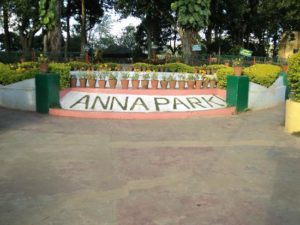
- The park, which is maintained by the Horticulture department, should be on your bucket list of places to visit in this delightfully green hill station.
- Like the popular Botanical garden in Ooty (Nilgiris), the Anna Park in Yercaud is well preserved and encloses four small parks: Deer Park, Lake Park, Children’s Park, and Gandhi Park.
- The park is known for its exquisite collection of trees and natural plants around the famous Shevaroy hills.
- There is also a separate park that features Japanese style gardens with plants. In addition, you can find an awesome Horticulture farm enclosing a rose garden.
- The Rose Garden is the home to a wide variety of roses from the button rose to larger roses.
- The park offers a spectacular sight of a red-colored carpet with one part of it nicely covered with red grass.
- The fountain in the Anna Park is a major attraction where visitors thoroughly enjoy splashing the water randomly spurting out.
- The park has a few slides for kids where they can climb up a cage-like ladder and come sliding down. Multi-colored sea-saws and other play items in the park completely engage the kids.
- It is a different experience altogether to take a stroll in the park, and enjoy a few quiet moments in the lap of nature.
- The nursery in the park houses orange, red and yellow flowering plants, native only to this hilly region. They can also be purchased at affordable rates.
- The recommended time to visit the hill station is during the summer months starting from May. The famous annual Flower Show held during the month of May attracts visitors in large numbers.
Everything you Need to know about the Tashi View Point in Gangtok, Sikkim
1. Separated by 8kms from central Gangtok, Tashi Viewpoint is a ravishing beauty from where travelers can view the famous Mount Sinilochu and Kanchenjunga, the third highest mountain range in the world.
 2. It was Tashi Namgyal, the monarch of Sikkim between 1914 and 1963, who built the Tashi View Point, and thus got the name.
3. Maintained by the Tourism Department of Sikkim, and coiled in a perfect location, the Tashi Viewpoint allows one to capture a splendid view of the mountains wearing snowcaps.
4. The Tashi Viewpoint is frequented by locals as well as foreign tourists all round the year. There are basic amenities in and around the place such as sheds and cafeteria for the convenience of tourists.
5. The imposing Tashi Viewpoint is almost pollution-free owing to the efforts of the state government and local environmental groups and organizations.
6. The scenic ambience and serene beauty sparkling into it help travelers devour a 360-degree view of the Labrang Monastery and Phodong Monastery from here.
7. It doesn’t fail to attract the locals and young who throng the place in large numbers, especially during the weekends, to partake in the incredible sightseeing that it offers wholesale.
8. It is advisable for overseas travelers to visit the place during the morning hours to hear the sound of the whispering snow-capped mountains against the backdrop of the red rising sun.
9. So, when you are in Gangtok, it’ll be a shame if you miss out on visiting the Tashi Viewpoint, and take a breather off your daily humdrum in a milieu that embraces peace and serenity.
