
Why You’ll Love Visiting the Rüstem Pasha Mosque at Istanbul in Turkey?
1. The Rüstem Pasha Mosque is one of the most popular mosques at Istanbul in Turkey. The 16th-century mosque is situated to the right of the Spice Market, below the grand Suleymaniye Mosque.
 2. Walk to the Hasircilar Çarşısı out of the Spice Market alley, which is parallel to the water, up to the corner of Mahkeme Sk where the mosque is located. The entrance of the mosque is kept out of sight by stalls lining the streets of the local bazaar.
3. The mosque, built in 1561, is a sheer beauty with the stunning blue iznik tiles adorning it, inside and out.
4. It was the famous Ottoman architect Mimar Sinan who designed the mosque for the sake of Devshirmeh Croation Rustem Pasha, one of the grand viziers of the Ottoman Empire. He was also married off to one of the daughters of Sultan Suleiman.
5. Interestingly, the tiles used in the construction of the mosque were sourced from Iznik, a town in the province of Bursa, which is famous for the manufacture of ceramics even today.
6. Only turquoise and cobalt blue colours were initially used during the construction, but later pale purple and sage green were introduced in the 16th century. Again, these gave place to a brighter emerald green and red colour. By the turn of the 17th century, poor quality of tiles and pottery affected the architecture of the mosque. The aforementioned colours feature prominently both inside as well as on the facade of the striking structure.
7. This mosque is overcrowded every Friday at Jummah prayers such that the worshippers flow out on to the terrace and the Quibla of the mosque, which indicates the direction of Mecca.
8. The inside of the mosque is a visual treat as the centre of the room is bejewelled with low-hanging lanterns. This extends up to a large central dome, very typical of Islamic mosques, from where it hangs. One can find four semi-domes, all surrounded by low hanging lanterns, which support this. The tiles found on the walls glisten and glitter brightly under this light.
9. Visitors to the mosque found the Rüstem Pasha Mosque to be magical in its own away, while appreciating the multifarious hues and patterns decorating the titles, including the highly imposing red colour on the walls. People also flock to this mosque seeking spirituality and tranquillity, gently all-pervasive in this place.
Brief Note on the Whakarewarewa in New Zealand
Blending the splendours of the geothermal landscape and the unique experience that a traditional Maori village has to offer, Whakarewarewa can satisfy every sense of you while taking in breathtaking views of the region. The Whakarewarewa Thermal Valley is made up of 65 geyser vents and 500 hot springs that are among the sprawling uniquely vivid sinter terraces and pools. Separated by three kilometres from Rotorua, the Whakarewarewa is a highly popular tourism destination.

Pohutu Geyser
Whakarewarewa is the home to the largest geyser in New Zealand; the mighty Pohutu Geyser becomes active, erupts up to 15 times a day, and spews hot water about 30 metres (100 feet) upwards. The word ‘Pohutu’ means “explosion” or “big splash”. Each geyser in the Whakarewarewa has a name of its own.
This splendid exhibition of nature’s power came under threat as its geothermal resource was tapped into for commercial and domestic heating purposes. But as the influx of local and international tourists to the place increased year after year, the local government decided to close these drains in the late 1980’s; and due to continuous conservation efforts, the geysers had been restored of their marvellous past.
Te Puia
Dubbed as the Living Thermal Village, the Whakarewarewa is the site to the Maori people who are the original inhabitants for more than 700 years. Today, it also houses the New Zealand Maori Arts and Crafts Institute, opened in 1963, to conserve the outstanding attainments of Māori, and promote all aspects of its culture. At the core of the Whakarewarewa is the Pa, a Maori hamlet where you may be one with the whares (traditional carved houses) and watch in awe how the everyday lifestyle of indigenous peoples of New Zealand unfolds. Take a peep into how the Maori of this region lived in complete harmony with the geothermal environment abounding with natural resources.
The Whakarewarewa Experience
Have a gala time with the timeless Maori custom cultural performances blending mellifluous voices, piquant movement and respect of the land and their forebears. True to its cultural and spiritual roots, the Whakarewarewa experience is something not to be missed. If your are done treating your senses to the delights of Whakarewarewa’s sights and sounds, then why not expose your taste buds to the jouissance of the palate and aromas that their cuisine masterfully proposes? Just close your eyes and soak in the old traditional Hangi meal prepared in a pit of hot stones and multiple layers of earth and flax and corn on the cob cooked fresh in the steaming hot water springs? Nothing can come closer to an original Maori experience!
A Brief Note on the Bolgatty Palace in Kochi (Cochin) in Kerala
1. The Bolgatty Island is located off the Kochi Marine Drive. It is an island situated right in the midst of Kerala’s most happening city, ‘Queen of Arabian Sea’, Kochi.
2. Coming as a major source of attraction is Bolgatty Palace and Island Resort, property operated and managed by KTDC. Other centres of attraction here include the Bolgatty Event Centre and Kochi Internal Marina.
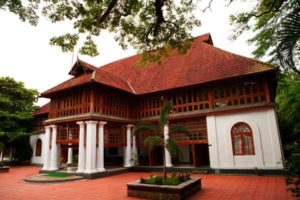 3. The Bolgatty Palace is a delightful mansion comprising four palatial room offering travelers state-of-the-art facilities and excellent holidaying options.
4. Originally constructed by the Dutch traders in 1744, the Bolgatty palace is the oldest and a unique structure next only to the one in Holland.
5. Popularly dubbed as the Honeymooners’ paradise, the resort is quietly nestled amid lush green nature, and guaranteed to give incredible islandic experience to the tourists.
6. The resort houses a mansion block and a main block. The mansion block has the palace room and a marine block facing the marina. You can find the Marina block on one side; on the other side there is a golf course. The resort also offers six resort lake views in the resort. Surrounding the resort is a 9-hole golf course started in 1925.
7. Facing the Cochin seaport and the backwater and the Arabian Sea and the Vallarpadam container terminal and the Arabian Sea is the Bolgatty Event, easily accessible from anywhere in Cochin. Offering an exotic ambience, the venue is great for organizing Conventions, International conferences, Meetings, Exhibitions, Theme dinners and Wedding receptions.
Kochi International Marina:
Situated on the eastern coast of Bolgatty Island is the ‘Kochi International Marina’ – the full fledged marina of global standards in the country. Constructed in the Kerala traditional style, the marina offers berthing facility for 34 yachts and provides basic facilities including electricity, water and sewage pump-outs etc; here, vessels refresh and top up their stores too.
Tourists Turn in Large Numbers at the Flower Show Venues at Yercaud – News
With the poll code in place, the official announcement of date for one of South India’s most popular Annual summer flower showers has been deferred to a future date. The charming and scenic hill station of Yercaud, also known as the “poor man’s Ooty”, is witnessing an increased influx of tourists. Though the dates for the annual summer festival haven’t been officially announced, the main venues of the festival are already thronged by thousands of locals and visitors from all across the country.
 The officials have said that the flower show venues including Lake Park, Anna Park, Rose Park and Botanical Garden are crowded with tourists from the neighbouring states of Andhra Pradesh, Karnataka and Kerala.
The officials have also said that the dates for the annual summer festival are being put off as the Model Code of Conduct is in place. Nevertheless, the Horticulture Department has kept the flower beds and lawns ready with the festival in mind.
Floral Formation
The Horticultural Department’s officials said that about 10 varieties of flowers will be arranged, and already readied for exhibition this year, and more varieties may be considered depending upon the floral formation to be put in place this year.
Flower varieties including Dahlia, Salvia, Balsam, Chrysanthemum, Hydrangea, and Marigold among others have been installed in about 10,000 pots. Officials have also tended 15,000 flower saplings preparing for the flower beds here.
For Yercaud Tour Package Contact Emperor Traveline.
Interesting facts on the Paradesi Synagogue
The Paradesi Synagogue in Kochi is a symbol of one of the great civilizations of antiquity. By far the oldest synagogue, built in 1568, it stands tall in terms of communal harmony and religious co-existence existing in the region, besides adding a sense of quant charm to one of the important sea ports of Kerala. ‘Paradesi’ literally translates to an outsider or foreigner in several Indian languages including Malayalam and Tamil. This is because many of the original members of the Jewish community have their roots in Kodungalloor, Europe and the Middle East.

A walk through the divine halls leaves anyone spellbound with the rare antiques and artefacts on display. The lamps and chandeliers leave out a sparkle alongside natural sunlight that penetrates through the large glass windows. The Belgium-imported glass chandeliers were first brought here in the 19th century. You will be fascinated by the hand-painted blue willow patterned tiles. The Jewish businessman Ezekiel Rahabi imported them from the city of Canton in China in the 18th century. The striking aspect is that each tile is distinct, and one can almost get carried away by the mystical surroundings and the transcendent beauty of the place.
There is a pulpit having brass rails in the centre of the room. The carve teak ark can leave you completely dazzled. It comprises four scrolls of the Torah (the Old Testament’s first five books) that have silver and gold encasings. Two gold crowns, special gifts from the King of Travancore and Cochin are featured here as well. There is a 4th century old copper plates bestowed as gifts by the King of Cochin. They feature inscriptions in Malayalam that detail out the special privileges granted by the ruler to the Jewish community. Another intriguing artefact is a rare oriental rug bestowed as gift to the community by Haile Selassie, the last ruler of Ethiopia.
Services, as such, are becoming a rarity due to the sharp fall in the community strength in Cochin. They are conducted only when the minimum number of ten members of an assembly is met.
Hundred Years of Jallianwala Bagh – Things to Know About the Famous Memorial
On the 13th April of 1919, one of the worst events in the history of freedom struggle unfolded when British Brig-Gen Dyer fired continuously at a mob gathered in Jallianwala Bagh in Amristar in the Indian state of Punjab. British sources mentioned that Jallianwala Bagh massacre left 379 dead and more than 1200 mortally wounded.

The Jallianwala Bagh isn’t a garden or park, but just an unused, irregularly-shaped rectangular ground which is about 200 yards wide and 250 yards long. Houses constructed with their back walls to the area had covered it on three sides. The fourth side comprises a boundary that is about 5 feet high, with several lanes narrow lanes that were used as exits. As General Dyer couldn’t get his armored cars through these intricate, narrow lanes, Dyer decided to employ his troops, 25 on either side of him and charged the mob on foot. Today, the site has been converted into a memorial that holds immense national significance in the memory of those who were brutally killed by the British forces on that fatal day in history.
The land which has a total area of 6.5 acres was acquired by the nation in 1920, converted into a memorial which was finally inaugurated by the first President of free India Dr. Rajendra Prasad in 1961. Some of the highlights of the Jallianwala Bagh memorial include Eternal Flame of Liberty, a lamp burning to pay tribute to the martyrs that is found at the entrance; a pylon having stone lanterns on four sides situated at the centre of a shallow tank in the garden; the Martyr’s well in which tens and thousands of men and women jumped in order to save their lives (now covered with a roof and walls); gallery which displays portraits of freedom fighters and several other historically significant events and historical evidences, and finally the bullet-laden walls—all symbolizing the great struggle for Indian Independence.
Things to do in the Trivandrum Zoo in Kerala
1. Trivandrum Zoo (or Thiruvananthapuram Zoo) is one of the oldest zoos in the country. The Maharaja of Travancore, Sri Swathi Thirunal Rama Varma (1830 -1847), established the zoo in 1857 in Thiruvananthapuram, the capital city of Kerala, as an annex to the Napier Museum, a famous art and natural history museum in the city.

2. However in 1995, major renovation works took place, and the zoo underwent a lot of innovative changes with its old enclosures replaced by open naturalistic enclosures.
3. This zoo in the ‘temple city of Kerala’ is the home to nearly 82 species of exotic animals including Indian rhinoceros, lion-tailed macaque, Nilgiri langur, Asiatic lion, royal Bengal tiger, Asian elephants, white tiger, leopard, hippos, giraffes, Cape buffalos and zebras and rare birds.
4. Animals in this zoo are usually released in an open enclosure from their century-old cages, and can be easily viewed at a close distance.
5. With rich natural vegetation, breath taking landscapes and green habitat, the zoo also encloses a reptile farm and snake farm – an exhibition of both venomous and non-venomous snakes, besides 7 anacondas.
6. It is also rated as one of the cleanest and beautiful in zoos in South East Asia, on a sprawling 55 acres of land offering a regal look of towering bamboos, tall trees and beautiful milieu.
7. It also serves as the perfecting getaway spot for the locals and a must-see destination for tourists from outside of Kerala and overseas.
8. A new hospital with state-of-the-art equipment has also been established here.
9. The zoo is located at a distance of 3km from Thampanoor Bus Station. You can take a bus from the K.S.R.T.C bus enroute to Museum, Peroorkada, Vellayambalam, Museum, Sasthamangalam, and Nedumangadu. In addition to public transportation, cabs, autos and busses are readily available at affordable charges.
10. The recommended time to visit the Thiruvananthapuram Zoo is during the winter months, when the weather is relatively pleasant and balmy to come out in the sun.
Amazing facts about the Srirangam Sri Ranganatha Swamy Temple in Trichy (Tiruchirappali)
The Sri Ranganatha Swamy temple located at Srirangam in Trichy (or Tiruchirapali) in Tamilnadu is one of the most famous temples in South India. Built in the Dravidian architectural style, the temple is spread across a total area of 156 acres, and is dedicated to the Hindu deity, Lord Vishnu or Ranganatha. There are many other Sannnathis and 53 upa-sannathis alongside the main diety or Moolavar. This temple is one among the 108 Vishnu temples in the country, out of which 105 temples are found in India, one in the neighbouring country of Nepal and two are believed to exist outside the Earthly walls. The River Kaveri (also spelled Cauvery) flows on one side of the temple; there is a distributary of the river running on the other side called the Kollidam. Here are some intriguing facts on the temple:

1. Sri Ranganathaswamy temple is also called by other names like Periyakoil, Thiruvaranga Tirupati, Bhoologa Vaikundam and Bhogamandabam.
2. This temple is the largest Hindu temple and the largest working temple in India.
3. The temple’s Gopuram is made of gold that is well protected by an electric fence.
4. There are totally seven concentric prakaras or enclosures or walls. These walls, which measure 32,592 feet in length, enclose the entire sanctum’s sanctorum. It is the only temple in this part of the world to have seven enclosures. Seven is believed to be an auspicious number by most Vaishnava believers. According to the Vaishnava traditions, seven signifies the seven Yogic centres of consciousness (chakras) of the body located at the base of the spin.
5. There are 21 towers (gopurams) in the temple. In addition, it also houses 50 shrines and 39 pavilions.
6. The entry of non-hindus is restricted at the gold-topped sanctum sanctorum and second prakaram.
7. There is a shrine located above the sanctum sanctorum designed in the shape of the Hindu symbol ‘Om’ which is fully gold plated.
8. The second enclosure has the Ranganayaki shrine, actually the Goddess of Lakshmi. Therefore, during festival times the deity remains inside the shrine, but is called on by Ranganthar.
9. Inside the temple there is a hall having 953 pillars made of granite. The most intriguing, yet fascinating feature of the hall is the intricate sculptures. This hall was constructed by the Vijanagara rulers who ruled between 1336 and 1565.
10. The Sri Ranganathaswamy Temple contains 21 tower gateways. The shrine has a main gateway which measures 236 feet in height. Not surprisingly, it is Asia’s second tallest temple tower.
Must-Know Facts about the Asiatic Society in Mumbai
1. The Asiatic Library, situated in South Mumbai, is one of the most famous and oldest libraries of the city dubbed the ‘Maya Nagari’ or ‘City of Dreams’.
2. Invigorating the imagination of millions of readers of all ages, the library is stocked with over 100000 books, and has had a huge impact in the intellectual development of Mumbaikars over several decades.
 3. You can also find a great collection of books, manuscripts, periodicals, books, coins, maps, prints and painted folios. There is also the German translation of Rigveda and the History of the world, a rare set of books, soon to be digitalized by a select committee. This will greatly benefit millions of readers online who usually read books using their laptop, mobile or iPad. You can also find another gem of a collection well preserved in this library – a unique Italian manuscript of the famous Italian poet Dante’s work ‘Divine Comedy’. There is a wide range of books written in several European languages such as German, Latin, Greek and French.
4. Another intriguing collection of old coins belonging to the era of the 5th century Mughal ruler Akbar and famous Maratha ruler Chatrapathi Shivaji. Several seminars and lectures are also organized by the committees which are helpful for the researchers and the scholars.
5. The Asiatic Society of Bombay Library, in addition to the Literary Society of Bombay, was started by Sir James Mackintosh in 1804. One of its unique aspects is the construction of a dust-free air conditioned laboratory in 1991 for the preservation of old and rare books in the library. The collection of rare old books and manuscripts here makes it one of its kinds in the country.
6. You can also find numerous manuscripts written in classical languages including Sanskrit, Urdu, Arabic and Persian. There are several manuscripts that reflect calligraphy and fine paintings, a truly visual treat for the history freaks. The collection also houses the famous Sopara relics unearthed at Nala Sopara near Mumbai. The stone coffer which was excavated has been exhibited in a vestibule and its relics have been neatly preserved under watchful eyes. This priceless antique collection attracts visitors in large numbers.
Must know Facts about the Haji Ali’s Mosque (Dargah) in Mumbai
1. The majestic Masjid (mosque) stands in the middle of the Arabian Sea, and can be reached walking through a narrow path that leads all the way to the mosque.
 2. The Mosque was constructed in reverence and memory of the Muslim Sufi Saint Haji Ali, who was instrumental in the propagation of Islamic Sufi principles of love, peace and tolerance cutting across people of various faiths, castes and languages.
3. The Mosque that is set at 500 yards into the Arabian Sea is accessible only in low tide. The Haji Ali Dhargah (mausoleum) is situated offshore, facing opposite the famous horse racing track, the Mahalaxmi racecourse. When the tide is high, the connecting causeway is submerged into the waters giving one the impression that the mosque and the tomb are afloat on water.
4. A causeway connects the structure, a minaret, to the mainland. The entrance of the mosque is designed in the typical Islamic style of architecture, in fact, a fusion of Indo-Islamic type. The holy saint’s mausoleum lays on a silver frame which is supported by pillars on all four sides, adorned with mirrors of green, yellow and blue colours inscribed in a unique kaleidoscopic pattern with Arabic patterns edged in which spells the 99 names of Allah. Once every year the tomb is cleaned with rose water, believed to posses healing properties.
5. The saint Haji Ali is believed by the locals here to have been an affluent businessman who relinquished everything that was his old life in his single-minded quest of becoming one with God. He started doing Zikr (meditation) on a headland close by, and set on a Haj pilgrimage to the holy land of Mecca in Saudi Arabia. It is believed that he died on his way to Mecca, but verily a man of miracles, he was, had his casket float back to Mumbai — the land he cherished the most.
6. A note was found on his dead body stating that he be buried at the place it lands. The body miraculously came to rest at the rock island. His devotees wasted no time in building a tomb to pay their respect to the great saint.
7. One can reach the mosque only during low tides, as crossing the causeway during high tides can spell risk.
