
Five Best Shopping Malls in Bangalore
Bangalore (now Bengaluru) is a shopper’s paradise with a number of shopping malls spread in and around the city. The beauty of shopping in Bengaluru is that you can find traditional as well as modern shopping malls the best of both worlds. The shopping malls draw increased footfalls during the weekends. Here are five of the best shopping malls for shop alcoholics in Bengaluru:
1.The Forum Shopping Mall:
It is one of the biggest shopping malls in Bengaluru. Some of the popular available retail outlets include KFC, McDonald, PVR Cinemas, Pizza Hut and more. The shopping mall, which covers a total area of 780,000 Sq.mtrs, is located at Hosur Road in Koramangala and is open from 10 AM to 10 PM.

2.Garuda Mall:
Spread at an area of 126,000 Sq.mtrs, the Garuda Mall, located at Magrath Road in Ashok Nagar, is a multi-level shopping mall. Some of the popular retail outlets here include Provogue, Sony, Adidas, Marks and Spencer, Fab India, etc.
3.Esteem Mall:
One of the most popular malls in Northern Bengaluru, located at Hebbal Kempapura, the Esteem Mall has a number of retail outlets such as Mc Donald’s, Peter England, Monte Carlo, eZone, Nike and much more! Built in area of 125,000 square feet, the Esteem mall has everything that it takes to give you an enjoyable shopping experience.
4.UB City Mall:
One of the most luxurious shopping malls in Bengaluru, situated at Vittal Mallya Road. You can find a number of expensive retail brand outlets such as Etro, Café Noir, Estee Lauder, Burberry and many more.
5.Mantri Square:
One of the largest shopping malls in the city and probably one of the largest malls in the country. Covering an area of 1.7 million square feet, you will be required to spend an entire day to explore the mall. It has everything in for you to hang out with your family and friends including entertainment zone, food courts, hypermarket, multiplex and many more.
All About the Kaziranga National Park in Assam
Situated on the banks of the great Brahmaputra River in Assam, the far North Eastern part of India, the Kaziranga National Park that covers a total area of about 430-sq-km with its vast swamps and tall undergrowths of elephant grass makes it a perfect habitat for the Indian One-Horned Rhino, an endangered species. Once a place known for free poaching, the Kaziranga National Park was made a wildlife sanctuary in 1940.

If you want to catch a glimpse of the Indian one-horned rhinoceros, then Kaziranga is the place to be. The Kaziranga National park’s 430 square kilometer area abounds with swampy lagoons, elephant-grass meadows, thickly populated forests and is abode to over 2200 Indian one-horned rhinoceros, roughly 2/3rd of their total world population.
Fauna:
Besides the symbolic greater one-horned rhinoceros, this park is a natural habit for elephants, Hoolock Gibbon, Tiger, Leopard, Sloth Bear, swamp deer, wild water buffalo, Hog Badgers, Capped Langurs, Monitor Lizards, Leopard Cats, Jungle Cats, Otters, Jackal, Wild Boar, Capped Langurs, Hog Deer, Indian Bison, etc. Over the time, the popularity of tiger has also increased manifold in Kaziranga, and therefore Kaziranga, in 2006, was declared as Tiger Reserve. Furthermore, the park is given the status of ‘Important Bird Area’ by BirdLife International for the preservation of avifaunal species. Birds such as ferruginous duck, lesser white-fronted goose, greater adjutant, lesser adjutant, Baer’s Pochard duck, Asian Openbill stork and black-necked stork particularly migrate from Central Asia during the winter period.
Flora:
Because of the differences in altitude between the western and eastern areas of the park, you can get to see four vegetation types: alluvial savanna woodlands, alluvial inundated grasslands, tropical semi-evergreen trees, and tropical moist mixed deciduous woods. Some of the popular trees that can be found in the park include Indian gooseberry, Kumbhi, elephant Apple and the cotton tree. There is also an excellent range of aquatic flora seen in ponds, lakes and along the river beds.
Some of the major tourist attractions in and around the park include Hoollongapar Gibbon Sanctuary, Orang National Park, Kakochang fall, Addabarie Tea Estate, and Deopahar. An extended tour schedule must be useful to visit Dibru-Saikhowa National Park, Manas National Park, Guwahati, Nameri National Park, and Shillong.
The park, undoubtedly, is renowned for its excellent wildlife conservations efforts and its vast expanse of marshlands, forests and elephant grass makes it all the more beautiful when the River Brahmaputra is in full flow. The month November to April is the recommended time to visit the Kaziranga National Park.
Facts About Sultan Bathery in Wayanad, Kerala
Sultan Bathery, previously called Ganapativatom, is a historical town nestled in the Wayanad district of the state of Kerala. Situated on the Karnataka–Kerala border, this can be the perfect spot for a one–day outing any time. It is separated by 4 km from the centre of Mangalore city. This calm and quaint town was, at one time, invaded by the famous ruler of Mysuru Tipu Sultan, who made use of the famous Jain Temple there like a bathery, and thus the name. Sultan Bathery, therefore, isn’t just a historical town but also ravishingly picturesque for it is surrounded by green hills with vast stretches of grasslands and meadows interlaced with the gentle terrain.
 Sultan Bathery, today, is an important town and a centre of commercial activities in the region of Wayanad. The chief source of income is through agriculture and tourism. The invasion of Tipu Sultan gave Sultan Bathery a unique flavour as it embraced the self–imposed Muslim culture and retained the local flavour of the place as well. It is said that the ruler Tipu Sultan raised a magnificent fort here, the remnants of, which fails to exist today.
Tourist attractions in and around Sultan Bathery:
There are quite a number of places to explore in and around Sultan Bathery. However, the best-known places include the Wayanad Wildlife Sanctuary and the Edakkal Caves. Known for its aromatic hills and scenic splendour, Sultan Bathery is a lovely hamlet with a rural setting. You can find exquisite spice gardens scattered around the region. The rich flavour and aroma of spices stay in the air as you pass through this rustic historic town. The weather is calm and balmy all throughout the year owing to its high altitude, just like any other town in Wayanad.
Sultan Bathery has excellent connectivity by road from Mysore, Bengaluru, Kannur, Mangalore, Calicut and many other South Indian cities. Its charming, calm and picturesque vibe makes make Sultan Bathery a must visit tourist destination once you are in Wayanad.
Facts About The Singapore Ducktour
There is no better way to explore the city of Singapore than going on a ride on the Singapore Duck tour. An hour-long journey, the original Ducktours takes you an inch closer to some of Singapore’s historical landmarks, popular skyline and beautiful bay view. This award-winning tourist destination houses Asia’s very first amphibious themed attraction and has covered 1 million passengers to date with 14 years of complete safety and best in tour experience record. While you are in Singapore, you shouldn’t miss out on the one-of-its-kind Ducktour making harbour and city sightseeing a joyful experience.
 The 60–minute Singapore Ducktour, above all, is the link between the past and present and, perhaps, the future. You can easily capture some of Singapore major monuments around the Bay area and Central Business area while you are onboard the car. These ‘ducks’, in fact, are from the Vietnam war.
Popular Landmarks you will see:
The Singapore Ducktours lends you an amazing view of the famous Civic District – where you’ll find important landmarks like the Padang, City Hall and the Civil War Memorial.
Upon getting down into the river, you’ll get a closer view of Marina Bay Sands, the ArtScience Museum, the Esplanade and the Merlion whilst cruising on the beautiful Marina Bay the point where the popular Singapore River converges with the open sea.
You can easily capture Singapore’s popular touring destinations including Singapore Flyer, Fountain of Wealth, Esplanade, the Singapore Cricket Club and Civic District. The Ducktours, which runs hourly, is open from 10 am to 6 pm daily while there are also Mandarin–guided tours available on selected timings every day. The booking of the tours can be made online on their website. Alternatively, phone reservations and counter-purchase facilities are also available to purchase tickets.
To Enjoy a Singapore duck tour contact Emperor Traveline For Tour Packages
Nightlife In Coorg
Nightlife in Coorg is not something we hear it often, but it does exist. We have presented in this rather short blog what nightlife is all about in Coorg and where you can find a few good bars in the hill station to spend the night out with your family and buddies that is when the sun is down and the lights flicker on. Though the bars and pubs don’t hoot in the wilderness of the night nor do they dance up to ear–splitting music; they aren’t too unexciting either.
 Hive Bar:
The Taj Madikeri Resort & Spa, Coorg brings you exotic drinks available at the Hive Bar which lends a beautiful and comfy seating with a variety of food to gently smack on. A sparsely crowded bar, it has decent live music and presents a stunning view of the gorgeous hills. Things to try: chilli infused vodka at the bar.
Planter’s Club – The Bar:
An amazing place to stare at the skies at night, The Planter’s Club Bar boasts of a classy decor and a great vibe embracing a myriad of cultures. You will be mighty pleased by the exceptional service at Planter’s Club Bar making it a top–rated bar in the hill station.
The Lost Horizon:
Situated near St. Joseph’s Convent, The Lost Horizon is another great bar to chill out, when in Coorg, with a range of drinks and beverages including warm and sparkling wine. The warm interiors give a ‘Victorian’ pub feel to it. This bar is gaining popularity with foreign tourists who come here for a chilled beer and to experience the nightlife.
The Deck:
Nestled snugly on the lap of The Tamara Coorg resort, this is a peach of a place, one that can almost guarantee extraordinary comfort and luxury. The Deck can be best described as ‘tranquillity in the centre of wildernesses’. The lovely high–end decor is slightly inconsistent but, maybe, that is its selling point. It has an assortment of drinks to offer, and you are assured of a decent nightlife experience here. Well, it’s time to hang out for the night in Coorg!
All About the Famous San Agustin Church at Intramurous in Manila
The San Agustin Church, located on General Luna Drive at Intramuros in the capital city of Philippines, Manila, is one of the most beautiful places to ring your wedding bell. It is the country’s last surviving church, and UNESCO, rightly so, formally announced it as a World Heritage site in the year 1994. The design of the church is based on Spanish architecture and Baroque style of art. The San Agustin Church is usually open between 8:00am–12:00 and 1:00pm–6:00 pm daily for a congregation and public view. Next to the church is the San Agustin Museum. Though the entry to both the church as well as the museum is free, you are required to donate once you’re at the museum.
 The oldest surviving church:
Originally called the Church of St Paul, the San Agustin was constructed in 1571 and is the oldest surviving church of the Augustinian Order. A series of disasters struck the church first, an invasion by Chinese pirates in 1574 and then when fire, unfortunately, broke out in 1583 and 1586. The safest bet back then was to reconstruct the church in stone, which happened between 1587 and 1604. Disasters followed one after another, this time in the form of earthquakes that rocked the church in 1645, 1754, 1863 and 1880, and a brutal ransacking of it in 1762 by the British. In 1945, the church was again battered in the battle of Manila following World War II. However, it stood the test of times in Intramuros, even when natural calamities brought about the destruction of the Manila Cathedral, another admired church in the Philippines.
You will be awed by the interior of the church with its ceiling and walls covered by splendid trompe l’oeil murals. If you climb upstairs through the museum, you can have a 360–degree view of the interiors from the choir loft. Chandeliers dating to the early 14th century adorn the interiors of the church. The architectural style gives you the best of both worlds medieval charm and European modernity.
The 60–odd benches or seats in the choir loft will remind you of the 17th-century furniture style, the hand carvings, in particular, crafted out of Molave, a tropical hardwood, which was in vogue. It is refreshing to see ethnic style from the bygone era managing to survive and pull through. The San Agustin Church also houses the remains of Spanish Conquistadors including Lavezares, Juan de Salcedo, Goiti and Miguel Lopez de Legazpi. The San Agustin Church and Museum, should, undoubtedly, be on your bucket list when you fly to Manila. You will be glad you did!
Why is Konya One Of The Culturally Rich Centres of Turkey? – Part 1
This week we will see Turkey’s oldest and culturally rich cities – Konya, known in the Roman times as Iconium. The city of Konya served as the capital city of the Seljuk Turks between the 12th and 13th centuries and emerged as the cultural destination of the country.
The period between the 12th and 13th centuries saw tremendous political, religious and political growth thanks to the Islamic mystic Maulana Jalaluddin Rumi, the founder of a Sufi order known popularly as the ‘Whirling Dervishes’ in the West or ‘Mevlevi’ Order in the East. One of the most outstanding architectural buildings is the remarkably green–mausoleum that of Rumi. Also part of the mausoleum is an area that was once the dervish seminary which now is a museum containing manuscripts of Mawlana’s work and several artefacts of the teachings of the Mevlevi order.
There is an annual ceremony or ‘Urs’ held here, during the month of December, to commemorate Maulana Rumi and the Mevlevi order where mystics of the order, clad in a white robe, whirl around the hall in a trance–like state or ‘Sema’ to the traditional tune of the Sufi musicians, symbolizing their infinite love for the creator. The Sema is now a huge spectacle in Konya, attracting thousands of tourists every year.
The Alaeddin Mosque (also spelt as ‘Alaettin’) is the biggest and oldest mosque in Konya, built by the great Seljuk ruler Sultan Alaeddin Keykubat in 1221, atop the Alaettin hills. You will find the remnants of the Seljuk Imperial Palace on one side of the Alaeddin Mosque. There is also a museum, the Karatay Madrasah, which exhibits the strikingly bold Seljuk ceramics. The İnce Minareli Madrasah, constructed in 1264, found on the other end of the mosque, is visited for its eye–dazzling ornate Seljuk portal. Take a few steps on around the mosque to find the Sahip Ata Complex and the Sırçalı Madrasah. If archaeology fascinates you, then Konya’s Archaeological Museum is a must see. At the Koyunoğlu Museum, you can find an assortment of collection from old kilim rugs to natural history. Inside the museum complex, the İzzettin Koyunoğlu house that has been restored represents the stylish and opulent way of life of the Konya family of the bygone era.
There is more to come on the medieval city of Konya in the concluding part of the blog.
Are You a Shopaholic? Here is What The Dubai Shopping Festival Offers To Shoppers?
You will be taken aback to find that only 7 per cent of Dubai’s fortune comes from oil resources. Dubai, as shoppers would tell you, is a true paradise for those who love to fill their shopping bag to the brim. However, the best time for shopping is when the Dubai Shopping Festival (DSF), put up for a month from mid of January to mid of February, is in full swing. One of the world’s most popular shopping destinations, the annual DSF ropes in 3 million visitors and offers non–stop store giveaways and exciting shopping bargains. It is also the time that the hotel rack rates fall by nearly 40 per cent to encourage visitor influx and spends.
 What are the things to see and do?
Dubai’s desert roots make a great spectacle at the Heritage Village, a major shopping festival attraction that helps you explore and purchases the traditional arts and crafts of Dubai. If shopping is in your blood, then don’t miss out on the fantastic deals on consumer goods ranging from jewellery to rails of haute couture to carpets and home electronics.
Some of the globally acclaimed entertainers and artists come here to display their talents throughout the festival. The Dubai Shopping Festival, with over 30 countries as participants, is nothing short of excitement and galore with stunning light and laser shows, spectacular firework displays, grand exhibitions, gala concerts, non–stop street entertainment and plenty of sporting action. You can purchase any merchandise from A to Z from around the world. Dare for more at the Global Village by entering the mega raffle to win unbelievable prizes and money over the month, which is broadcasted live on TV watched by millions.
The plethora of deals out there:
The various sponsor companies of the Festival have incentivised getting to the ‘City of Gold’ during the Dubai Shopping Festival, for the most part; sponsoring airlines to provide exclusive deals and discounts including meals, stay, sightseeing and all transfers at cut rates. Emirates Airline gives you the bigger bang for your buck with travel fare deals and an additional baggage allowance; therefore, you will not be taxed in case you carry a hefty booty, but all probable that your credit card may take a beating after the trip to the shopping festival. We are offering an exciting package tour to the Dubai Shopping Festival this year at the best prices. Ensure you make the most of it and don’t miss out on the Middle East’s most happening shopping festival.
What Can You See On The Golden Triangle or The Delhi-Agra-Jaipur Route ?
The Delhi-Agra-Jaipur route (or the Golden Triangle) is one of the most popular routes in India that gives one several spectacular sights all along the way. New Delhi, the capital of India, is one of the major metropolitan cities of India, with a bustling population of 2.18 crores (Source: Wikipedia.com). It’s a unique city which is embedded within Old Delhi, once the capital of India’s rich and composite culture and heritage. However, New Delhi, today, has changed radically through the years.
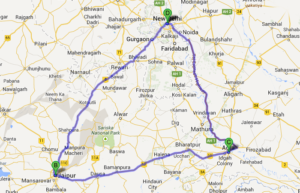 Next, venture into the ChandiniChowk Market, the busiest market of Old Delhi and Paharganj, a neighbourhood of Central Delhi, which sells almost everything you want; a paradise for budget shoppers as well.
The 17th century Red Fort, a UNESCO World Heritage Site, built by the great Mughal emperor Shahjahan, is a must–see historical monument, in addition to its two famous entrances: the Delhi Gate and Lahori Gate. The India Gate, a war memorial dedicated to 82,000 soldiers of the undivided Indian Army who laid down their lives during the First World War in the period between 1914 and 1921, is also a major tourist attraction.
If you are in Agra, travel to the Tomb of Mirza Ghiyas-Ud-din or Ghiyas Beg or Itimad–Ud–Daulah, another mausoleum similar to the famous Taj Mahal. Another UNESCO World Heritage Site, the Itimad-Ud-Daulah is also called as ‘jewel box’ and ‘Baby Taj’.
The Taj Mahal in Agra is no dearth of wonders. A classical example of Mughal architecture, the Taj is a colossal mausoleum complex built by Emperor Shahjahan to house the remains of his favourite wife Mumtaz Mahal. The construction work that started in 1632 took 25 years to complete with the help of 20,000 artisans.
Jaipur, popularly known as the ‘pink city’ of India, is the capital of the state of Rajasthan. You can find that almost every building in the walled historic city sports the colour of terracotta pink. Major attractions that you couldn’t afford to miss out include the Hawa Mahal, the Observatory and the City Palace. Next in the list of must–see places is the Amber Fort, nestled in the Aravalli Hills. The fortress that is honey–coloured lends a panoramic view of the adjoining areas. Also, Sheesh Mahal in Jaipur, the fabulous glass palace in Amber Fort, is a reflection of the elegant and regal lifestyle of the Rajput Kuchwada.
Are The Havelis Of Old Delhi Disappearing In The Tides Of Time?
Splendid Havelis that once dotted the lanes of Old Delhi were known for their impressive doorways, stunning marble arches, and eminent occupants. But time has its own terms! Time unleashed destruction and with no hopes of the restoration of palatial homes, the grand structures, today, are left to oblivion barely identifiable. It goes without saying that official supineness and financial constraints are destroying the capital’s heritage bit by bit.
The shambles of several grand and spacious homes in Chandni Chowk echoes the sentiments of the stately palace of the bygone era. Zeenat Mahal, constructed in 1846, bears the name of the favorite wife of Bahadur Shah Zafar, the last Mughal emperor of India. The biggest mansion in the area, adorned with jharokhas with jaali work, intricate murals, and lively colors, has seen the distinctive times of history.
Old Delhi, built by the Mughal emperor Shahjahan, is a walled city known as Shahjahanabad that has eight gates Kashmiri, Nigambodh, Kabuli, Mori, Ajmeri, Lahori, Delhi and Turkman gate which stands formidable and tall to this day. However, the walls that connected the various gates are no longer found here.
Chandini Chowk, one of the main streets of Shahjahanabad was designed and constructed by Jahanara Begum, one of the most talented Mughal princesses and daughter of Shahjahan. A canal ran through the entire city and as it reflected moonlight brilliantly, it earned the name of “Chandni Chowk” (or Moonlit Square)
There is the Bazaar Sita Ram in irremediable ruin. The Haksar haveli, where Jawaharlal Nehru, India’s first Prime Minister, tied the knot with Kamala Kaul is in a dilapidated state.
An interesting structure in the Katra Neel section is the Chunnamal haveli, a three-story building, which, at one point of time had 128 rooms. This looks like the only structure that is kind of well preserved compared to the other havelis in the area.
Other places of attraction include Namak Haram haveli, Fatehpuri Masjid and Queens Garden (also known as Jahanara ka Bagh or Begum ka Bagh). This place used to be quite famous for maalishwalas. Another historic landmark is Hardayal Municipal Library, strangely named after the Hardayal, the man who hurled a bomb at Lord Harding, a British officer during the freedom struggle.
Walking through these battered lanes one can sense the embers of a once free-flowing Indo-Islamic heritage and culture. The haveli quarters that vanished in the sands of time offer you a peep into a glorious past that will be forever remembered as the golden period of Indian medieval history.
