
Business Travel is the key to professional success – Part 1
Business Travel is not for everyone, or in other words, not every executive gets to travel abroad. Nonetheless, business travel is gaining prominence not just at the enterprise level, but many startups too recognize the need to travel extensively to bag high-value projects. Though waiting for the borders and the skies to open up can be excruciating, given that the pandemic has unleashed a fresh wave of onslaught on humankind all over the world, there is still hope left with the majority of the people getting vaccinated to travel from one country to another, as a pandemic protocol. Business travel has had its ups and down ever since the outbreak of the pandemic, where travel restrictions were in place for the most part of the year. Business travel too, like all travel segments, suffered considerably under the weight of travel restrictions.

All said business travel is instrumental in forging new business ties, making new connections, maintaining existing clients accounts and learning new cultures. The aforementioned reasons are compelling enough for millennials to travel to foreign destinations. A new genre of travel known as ‘bleisure’, a combination of business and leisure, is fast gaining popularity amongst the millennials.
Business travel is important as it helps gain trust with clients especially for long-term projects and on-site activities. This is because personalised attention and one-on-one meets with the client sustain the status quo of relationship. This is important from a trust point of view. Tough questions are dealt with and fear is mitigated. Challenges are met and ongoing issues are fixed. New ideas and solutions are discussed. Long-term planning is charted out and the possibilities of execution are presented. Personalised meets with clients on-site go a long in defining the way business is conducted, and therein lies the success of business travel or ‘bleisure’. We will elucidate the importance of business travel in the subsequent posts.
How travel can change the way you think?
The outbreak of one of the worst pandemics in the history of mankind has made the world to rethink travel in every sense. Travel & tourism, the worst affected sector by a long way, has every reason to worry about in the immediate future. When COVID-19 was successfully able to change the very face of Travel, what hasn’t really changed is the way travel can change the way you think.
In a world, in all its complexities and divides, don’t you think that travel is not unifying humanity irrespective of race, nationality, caste, creed and religion? Travel, since the dawn of civilization, has brought the world together. When globalization was the most talked about subject in the last decade of the 20th century, and when all nations were gearing themselves to take stock of globalization, the travel and tourism sector expanded rapidly adding strength to the impact of globalization in a new ‘borderless’ world. It reiterated the point that the ‘world is a global village’, and after all it’s not a bad place to stay!
Travel, over the years, has killed isolation and boredom, and the resultant depression out of it. There is a reason why a traveler is also a wanderer. It is actually the mind that wanders from one place to another, of course besides the physical displacement. For an ardent traveler, learning and absorbing new cultures, traditions and practices is fun, and form a part of his or her learning edifice. For instance, to study the different types of coffee in India, one has to travel across the length and breadth of the country and visit Coorg, Kodagu and Chikmagualur in Karnataka or the lovely hill stations of Wayanad in Kerala or the Nilgiris in Tamilnadu or the coffee plantation gardens of Tripura. Diverse it may sound in terms of geography and history, but learning (in the right way) never stops. Travel opens the door to learning on a deeper level. We will continue discussing more in the subsequent part of the blog.
A fierce COVID second wave dashes hopes of a tomorrow for tourism
Just when we thought that the COVID-19, in the form of a first wave is all over, a rather unexpected second wave of COVID-19 and third wave in some countries has squashed the dreams of the tourism industry looking to recuperate in the immediate future. With the tourism industry left with limited options to cross the business hurdles caused by reckless COVID containment measures, as laid down by the Government, including frequent lockdowns, social distancing, deployment of sanitization and strict adherence to COVID-19 protocols, besides near 50% of cut down of capacity in hotels and restaurants, there seems to be a long and arduous road for the industry to travel past the crisis!
It all started with the bookings first cancelled due to the increased restrictions on travel and containment zone establishments. Apart from the tour operators and travel agencies, there are literally many who have invested in renovation of homestay facilities and refurbishment of houseboats and other properties in the expectation of extra income during the summers, generally the peak season for travel planning. The travel ecosystem is facing the roughest patch this year, and the situation is no different from last year around the same period. Those who made additional investment to recover the losses are going to be severely affected this year, and probably will have lesser chances of economic recovery in the current situation.
From the highest strata in the travel ecosystem to the lowest segment which include those who eke out a living by selling homemade food to domestic and international tourists, near tour facilities are engulfed by the crisis of the ongoing pandemic scare. As per the Tourism Department officials, tourism facilities managed by the State government are also crisis-hit with steadily declining revenues as public parks, museums, beach destinations and ecotourism spots mostly remain closed. This will impact revenue generation in the form of entry fee and other extra charges.
Impact of COVID-19 Vaccine on future travel – Part 2
We were discussing the effects of COVID-19 vaccine on future travel. But the question is how long will it take to vaccinate eligible individuals who want to travel in the immediate future? In this context, Vaccination passports, in progress, may be required for travel, according to industry experts. Just like a passport is mandatory to travel abroad, a vaccination passport, be it digital or otherwise, is doing the rounds. Providing the proof of vaccination, organizations such as Mayo Clinic, Salesforce and Microsoft have already joined the bandwagon of creating the Vaccination Credential Initiative (VCI), which is working to create a digital COVID-19 vaccination passport.
Experts tell that the process entails making a flight reservation in the usual manner, and at the point of check-in, passengers will be required to undergo a physical check of a digital passport that may either be an app or a physical document with a QR code on it, or something similar that allows passengers to proceed with their trip. Today, bookings are based on two important criteria: number of COVID cases and the rate of vaccination. Different parts of the world have different vaccination rates. For example, New Zealand is turning out to be a popular destination for travel due to the high rate of vaccination post-pandemic.
India, being a highly populous country, has a low vaccination rate, and therefore foreign tourist arrivals in India is at an all-time low. Only 2.4% of population in India has been fully vaccinated, according to public data released by the Government of India (at the time of writing this post). Vaccine shortage in most parts of the regions highly affected by the pandemic has also contributed to the low vaccination rate.
To conclude, experts feel that travellers may feel at ease and travel with a greater peace of mind to destinations with higher vaccination rates. With the vaccination distribution underway in India, the future of tourism poses a lot of questions.
Impact of COVID-19 Vaccine on future travel – Part 1
We have seen in our previous posts how COVID-19 has been denting tourism leading to a 70% dip in international tourist arrivals starting from the January of 2020. The devastating pandemic has ensured the borders are sealed completely. The COVID-19 pandemic has brought untold suffering to different sections of the society, and has raised many serious questions on the future of the industry. The pandemic brought the global tourism industry to its knees in 2020. As the entire world expected the roll-out of vaccines against COVID, which eventually came to public use in India in the beginning of this year, the shortage of vaccine in several regions of the country only worsened things further. Now when international travel can actually resume in the immediate future is a question that will haunt the travel and tour operator and agencies world over.
Even before COVID-19, there was a hue and cry for tourism given a large picture than life (read as planet). There was even a pressing demand to scale back tourism for an environmentally sustainable earth and support overly touristed destinations turning more resilient to crises. The beginning of March in India saw a sudden spike of COVID cases, especially in Maharashtra, Delhi, Gujarat, Uttar Pradesh, Tamilnadu, Madya Pradesh, Bihar, Karnataka among others. Inter-state travel especially to states highly hit by the pandemic is restricted. Therefore, domestic travel in India is still in jeopardy.
Even as we discuss this, states such as Tamilnadu, Kerala, Maharashtra and others have been imposed partial to full lockdown to bring down the daily increasing COVID-19 cases. The struggle to restore normalcy is on, but a daunting task indeed, with mounting deaths a concern for the government. The government has also been urging people to wear face masks, maintain social distancing and use sanitizers regularly, in addition to increasing vaccination drives for breaking the chain and saving people’s lives. Will vaccine do the trick in restoring travel operation? Let’s find out in the subsequent series of the blog.
Honeymoon Travel can wait!
The pandemic has unleashed waves of uncertainty into our everyday lives, and couples that had tied knots during the pandemic have to play the waiting game until the pandemic is all over before they plan for their wedding honeymoon again. Undoubtedly, the usual fervour of the ‘big fat’ Indian marriages is clearly missing replaced by downsized mini ceremonies this year. This said the love for traditional wedding is far from over. With the international borders shut indefinitely, the Australian Government had even passed strict orders to even jailing passengers flying from India.

As per the Wedding Tourism Report by MRSS India in 2019, the size of the wedding market in India was estimated to be INR 110,000 crore of which nearly INR 23,438 crore accounts for destination wedding. This number was slated to double at a staggering rate to INR 45,000 crore by the end of the year 2020, growing at 25-30% per year. However, things changed dramatically post pandemic; honeymoon vacation and tours hit an all-time low. With no clue when this uncertainty will end in the near future, travel and tour operations have come to a screeching halt ever since the outbreak.
Come 2021, so what are the trends that will dominate in this space post the second wave of the pandemic? Drivable destinations are turning out to be a hot favourite among honeymoon vacationers to avoid long distance travel. The trend is driving travel and tour operators to tailor two- to three-day getaways packages to scenic hill stations, historical and adventure destinations. For a lot of couples, luxury resorts, home villas and rental properties promise a great deal of security as health and safety protocols are strictly followed. Also, honeymoon vacations that are usually full of itineraries have shrunk down to simpler and limited activities and planning for the day.
All said and done, if you’ve tied the nuptial knot, don’t rush to your favourite holiday destination, honeymoon travel can still wait.
Beginning of the second wave of COVID 19 – so what next for the travel industry? – Part 2
As we discuss the impact of the second wave of COVID-19 on the travel industry, it is likely that the industry may well take several months to restore to normalcy, assuming that the pandemic restrictions, including state-wide lockdowns, social distancing, RT-PCR tests and 50 percent capacity, are gradually relaxed. Even before the vaccination, the travel economy was slowly picking up. The recovery phase was mainly due to travel operations in the northern and eastern states of India.
States including Maharashtra in the west and Kerala down south were still recovering from the first pandemic wave, though the number of Corona cases were comparatively low in the beginning of this year against last year. Non-metro routes had higher passenger demand than metros due to the sudden surge of COVID cases, and travel restrictions as a result of it.
Nonetheless, the demand for travel will not be much until overseas travel stages a comeback. Though the developed countries, including Europe and the US, have been able to vaccinate a large chunk of their population, it still remains to be seen how it will actually help the inbound travel sector in the immediate future. If you take India, the US and Europe make only 16 per cent of international inbound and outbound passengers. Even the task of vaccinating 50 per cent of the Indian population can prove challenging in itself, and further delaying (with a confluence of travel policies and restrictions) can only push the travel industry to the brink of an existential crisis. When it comes to the travel trade, the ground situation doesn’t paint a rosy picture yet. The biggest question confronting travel operators is how they could get their business back, with now everything coming to a near standstill.
Beginning of the second wave of COVID 19 – so what next for the travel industry? – Part 1
The second wave of the COVID has started to spread its ugly tentacles again. Businesses are going through the motions, with most of them considerably affected during the first wave. The travel industry has been driven to the wall, and finding it difficult to survive in these pandemic times. So what’s in store for the travel & hospitality industry, especially in India?
There was that hue and cry for COVID vaccines from all quarters everywhere. Loud and deafening it may be, the optimism was short-lived, as another severe wave rocked the entire nation, and ensured more daily infections than the first wave last year. The past few weeks of the travel and tourism industry has been quite tough as the COVID situation has directly impacted the recovery process, particularly the aviation sector. The sudden spikes in Coronavirus cases in India has deteriorated the confidence of the flyers indicating that there is still going to be a big wait ahead.
If a recent report by brokerage Motilal Oswal is anything to go by, the daily passenger demand fell sharply by nearly 13 percent in the last week of March 2021 against the last week of February 2021. Similarly, demand further declined by close to 5 percent from March’s last week average.
Interestingly, the decline in travel demand is felt sharply in cities and states where the government has made RT-PCR test compulsory. It has been seen that there is nearly 10-15 percent correction in future travel bookings spanning the travel sector (flights and hotels) against the month of February. Also, people do not want their kids to voluntarily undergo RT-PCR tests as the process can be painful for them. Industry sources further state that though the cancellations have not increased spectacularly, it is likely that future travel bookings will increase in the months to come when COVID can hit the peak.
How travel will change in 2021 and beyond? – Part 2
The travel trends that influenced the way travel was conducted last year will dominate 2021 and the rest of the year too. Seemingly so, low cost airlines will do everything to get more passengers on board planes without charging any exorbitant cancellation or change of flight charges. Before committing to booking a trip, travellers will want assurance that cruise, hotel or tour cancellation can be made without penalties. Last-minute getaways will be on the rise. Thus, the time taken to book a big vacation in advance will be reduced considerably compared to pre-pandemic period. This obviously is due to the uncertainty looming in at large.
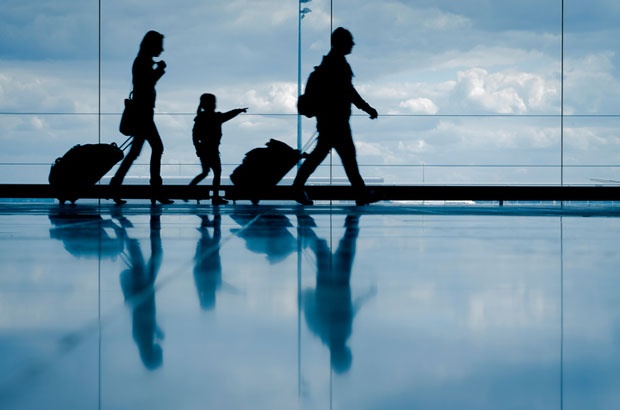
Proofs of COVID-19 Negative and Vaccination shots will be required at travel points or corridors in airports and cruise to avoid quarantine mandates. These corridors will continue to operate through the first half of the year or may be beyond. With time they will be more about travellers getting vaccinated and less about testing. Like airlines, some cruise lines are also considering whether passengers should be allowed onboard only after their furnishing proof of vaccination.
While getting COVID vaccination is one thing, entry into states that are moderately to highly COVID-affected, thus mandating e-passes is another. Whilst state governments all over India are digitalizing the process using apps and websites, it is still a matter of concern for general citizens undertaking inter-state travel by bus, train or air. Private players too are developing apps that will allow travellers to save verified test reports or vaccination results on their mobile.
Choice of local destinations is a new trend that is catching up especially with the millennials who don’t want to travel to cosmopolitan and metro cities but rather escape into the nearby forest, natural rivers, mountains, and waterfalls.
Finally, technology will play a positive role in first curbing the pandemic and then facilitating travel operation, ranging from contactless and hands-free technology to AI booking and communication tools. To conclude, 2021 will be a year of endless possibilities to innovate and explore whether you’re a traveller or tourist.
How travel will change in 2021 and beyond? – Part 1
Our previous blogs that dealt with the change factors likely to impact travel & tourism in 2021 and beyond highlighted an important point that travel is never going to be the same. Or in other words, travel is fundamentally undergoing a radical shift and this cannot be taken lightly, at least not in the immediate future.
Needless to mention, nobody knows exactly what the future unfolds because of the prevailing uncertainty involving the COVID-19 or Coronavirus pandemic which brings us to the point that we won’t be able to travel as freely as we used to do pre-pandemic period, of course without considering our health conditions. Travel industry by itself is a rapidly changing one but the dynamics of how it will be conducted this year promises a new chapter in its annals. Governmental regulations, by large, will have a huge impact in determining when travel operation will return to normalcy, given that people all over the world are rising up to the challenges created by the “new normal”. Mind you it’s a very determined effort coordinated to fight the unprecedented changes brought about by the unprecedented outbreak.
Next comes health awareness which has gained greater precedence over everything else. People may travel but not without considering the risk factors in perspective. Today’s social media provide them the information that will help them decide their travel plans along with the risks that accompany them. Interestingly, ardent travellers don’t seem to mind about the travel budget as long as they are at ease travelling once again with reduced exposure to COVID-19. It is only the fear of uncertainty that is likely going to impact travel operations. But this no doubt has triggered the travel ecosystem to adapt and innovate in novel ways beyond the traditional realms. We’ll continue to discuss what’s in store for the future of travel in 2021 and beyond in the subsequent blog.
