
How do Travel Agency Tour packages make a Stress free Vacation?
Before dealing with the Benefits of Travel Agency Tour Packages and how they make Vacation stress-free, you must first understand who these travel agencies are and what their Travel Services are in detail.

Before dealing with the Benefits of Travel Agency Tour Packages and how they make us stress free Vacation, you must first understand who these travel agencies are and what their Travel Services are in detail.
Who is a Travel Agency?
A Travel Agency is a company that retails travel packages, offers, and deals to customers looking to travel or plan their trip. Most unorganized travel agents, in general, help with generic tours and packages, i.e., a holiday trip or vacation travel. However, an established and professional travel agent will cater to all types and specialties of tourism, including holiday tourism, eco-tourism, medical tourism, education tourism, wildlife tourism, heritage tourism, etc.
Is it better to rely on a Travel Agent? Or do it yourself?
When all of us are mechanized with our jobs and household chores, we don’t find time and energy to plan our vacations. Moreover, personally scouting for vacation destinations, shortlisting various travel agency packages, and then finalizing one among them is a laborious process and makes us stressed amid other deeds. Thus, it is always better to rely on a travel agent. Indeed, they take more effort than us to get the best itinerary for our vacation. Ultimately, you get stress free family vacation and can save time for the family or other priority tasks on the list.
What are the competitive Advantages when choosing Travel Agency Tour Packages?
In the last section, we briefly saw why choosing a travel agent for planning your vacation is better than doing it yourself. In this section, let’s see in detail the Benefits of a Travel Agency and its Travel Agency Packages and services.
- End-to-end Travel support
Gone are the days when the role of Travel Agents ended when they were done with their bookings and reservations. Today, their services have evolved by leaps and bounds.
- Before Travel: Preparing personalized itinerary, giving advice on best tourist destinations, suggesting economical packages, booking tickets for commutation, making reservations at hotels or resorts, etc
- During Travel: Assisting with airport transfers or car rentals, arranging guides or travel experts, advising on the best places to visit based on current affairs, etc.
With all these burdens off your head, you can even plan for hundreds of similar Stress free Vacations with the help of a Travel Agent.
- Help in emergencies
You can 100% trust your Travel Agent when you go through an emergency during your vacation. They will assist you 24/7 and rescue you and your travel partners by reaching out to the respective tourism associations.
- Effortless travel processes
- Foreign currency exchange: Money exchange could be daunting if you’re a full-time employee and want to do it personally. First, you have to calculate how much money you need for the trip. Second, find a trusted vendor. Third, exchange for a better price while waiting in the queue. Instead, count on travel agencies; they can save a lot of money for you despite saving your time.
- Visa requirements: When you apply for a tourist visa on your own, you may not know the nuances of getting your application through and also end up spending more on unwanted services. On the other hand, a travel agent knows how to get your visa approved and can offer this service as a compliment when choosing their tour packages.
- Travel insurance: Travel or tour operators are experts in understanding your travel needs and recommending the right travel insurance. Get maximum insurance coverage at discounted prices with the help of travel agents!
Customized packages
Experienced Travel Agencies are well-versed in Domestic and International tourist places, the cost of travel, the things to do, etc. In addition, a full-service Travel Agency assigns a personal travel expert who is well-organized, well-aware of various travel packages, and able to suggest the right tour package for your customized needs.
So, be it a Business Trip, Honeymoon Trip, Biodiversity Trip, or, in the worst case, if you’re looking for a cruise-specific package, they can make it happen on your behalf. Every part of your package is personalized and worthwhile when you choose the right travel agent with years of experience and a legacy in this field.
Benefits of choosing Emperor Traveline, the Leading Tour Operator in India!
Since its inception in 1980 by the aspiring duo brothers, Mr. K. Chandran and Mr. K. Rajendran, Emperor Traveline has been flying high as one of the leading tour operators in India. It is a unique, self-styling travel organization with a huge set of advantages to benefit from:
An active member of almost all travel associations. Strong relationships with the finest star hotels and luxury vehicles for commutation.
An authorized agent for Southern Railways and all domestic and international airlines. Provide competitive ticket fares when compared to other tour operators or travel companies.
Help with skilled guides at Important Tourist Destinations. Moreover, the employees at Emperor Traveline are qualified, trained, and competent enough to provide travel guidelines and prepare the best itineraries for you.
All about the Birla Mandir in Hyderabad
- Birla Mandir is a gleaming white structure adorning the skyline of the city of Hyderabad
- It is located to the south of Hussain Sagar Lake in Hyderabad, atop the Kala Pahar, a twin hummock of Naubath Pahad.
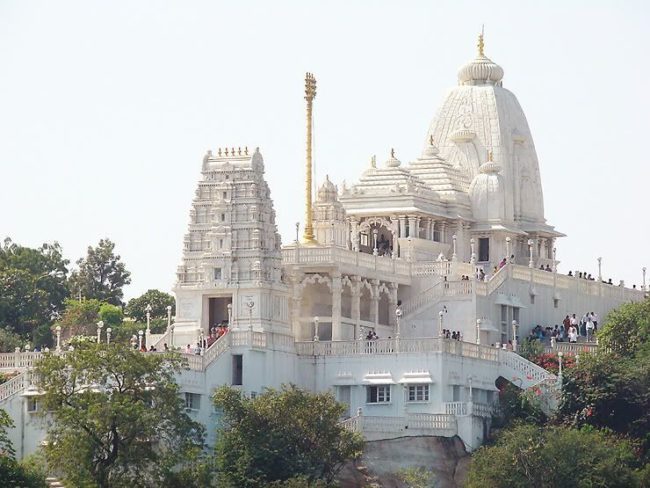
- Birla Mandir, situated at a height of 280-feet above sea level, was built by the Birlas in 1976 on a 13-acre land; the glistening white marbles used in the construction of the temple were sourced from Rajasthan.
- The construction, which took nearly a decade to complete, was later sanctified by Swami Ranganathanda, a Hindu swami of the Ramakrishna Math order. There are similar temples constructed all across the country by the Birla Foundation, patron of Birla Temple at Hyderabad too.
- The main deity of the temple is Lord Vishnu or Sri Venkateswara, made of granite, and is 11-feet tall. The temple plays kirtanas of Annamayya, Tyagaraja and Ramadasu every day bringing in a strong spiritual vibration.
- The temple’s architectural style is a combination of South Indian and Utkal (Oriya): the main shrine also known as the Jagadananda Vimanam depicts the Oriyan style, whilst the Rajagopuram is reflective of the South Indian architectural style.
- The two great Indian epics of Ramayana and Mahabharata are depicted in the intricately carved marbles. The design of Garbha Gudi (sanctum sanctorum) which is 42-feet high was inspired by the world-famous Venkateshwara temple at Tirumala.
- The temple has separate shrines for the consorts of Swami Venkateswara: Padmavati and Andal. Interestingly, the Birla Mandir complex is also built with a temple dedicated to Lord Buddha, with his life events portrayed through fresco paintings. The temple complex also houses separate shrines for worshipping other Hindu gods including Hanuman, Ganesh, Shiva, Brahma, Saraswati and Saibaba.
- Birla Mandir, which is open from 7AM -12AM and 3PM – 9PM on weekdays and weekend respectively, is a truly spectacular sight when illuminated at night
- The temple is highly accessible from all parts of the city, thanks to the State transportation facilities. You can take a bus, and get down near Ravindra Bharathi, which is only 200m away from the temple.
Interesting facts on the Droog Fort in Coonoor
- One of the most popular tourist destinations in Coonoor in Tamilnadu, Droog Fort is a ravishing beauty of a place with its stunning backdrop, guaranteed to attract tourists in large numbers during the peak seasons of the year.
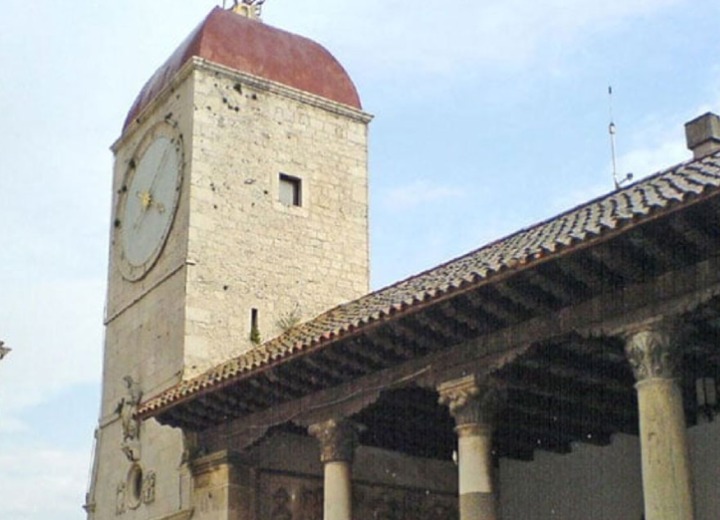
- Surrounded by the jaw-dropping view of the Western Ghats, the fort, some 30 kms away from Nilgiris, the Queen of hill stations, is a delight whether you’re a history lover or solitary wanderer or an amateur bird watcher as this area is a natural habitat for exotic varieties of bird species and animals including flying foxes and few Malabar squirrels.
- Alternately known as Bakasural Malai due to the legend of a demon residing at the fort several centuries ago, this 18-th century fort is located at an altitude of 6000 ft above the sea level.
- It is widely believed by local historians that the famous Mysore ruler Tipu Sultan used the Droog Fort to monitor the day-to-day activities of the neighbouring rulers and their kingdoms.
- Therefore, this fort is strategically built for carrying out military activities in the bordering areas, in addition to sharing vital communication on planned and on-going military activities in and around these areas.
- The Droog Fort offers a panoramic view from the watchtower, and is known to have hidden tunnels for the safety and protection of kings from foes during surprise attacks in the case of a siege. The fort also has a sole wall which is another attraction for tourists here.
- Filled with the minty scent of eucalyptus and the strong aroma of coffee, this place is frequented by bisons and other wild animals especially at night. Therefore, you need to be extremely careful while making a trip to the fort.
- Nearby attractions include the Nonsuch tea estate through which you can walk your way up the fort, Law falls, a scenic cascade waterfall of the hill station.
Tourism sector is key to revival of Indian Economy: From the founder’s desk – Part 1
Someone asked me the other day if travel is really that important when people are literally scared to venture outside of their homes. The argument basically revolved around the point that key industrial sectors including manufacturing, construction, education and agriculture are awaiting impatiently for a revival of sorts so as to stabilize the economy. But the fact remains that the travel and tourism sector which has contributed substantially to the country’s GDP and job generation cannot be easily discounted. Just for the numbers, the tourism value chain contributes upwards of 9 per cent to the country’s GDP. For a $3 trillion economy, it accounts for a massive $270 billion. The numbers can be higher if we include the demand for food and beverage, fuel as well as how the manufacturing (auto and aviation) and services (construction, real estate and logistics) are impacted. A fourth of this can be stripped of if we fail to implement the right steps now. For instance, almost 12 per cent of Kerala’s GDP is through tourism revenue. A dozen states in India depend largely on tourist cash.
I do agree that people simply don’t have the cover to spend on travel and luxury, but if you take the broader spectrum of things, the time is ripe to restart tourism, given its compound effect on the jobs, economy and people, both psychologically and socially.
If people decide to take short vacations, they can break the ominously threatening viral chains on the economy, serving as the vehicles of growth for the post COVID-19 pandemic recovery phase. If physical barriers are traversed, they can undo restrictions on the movement of labour. This can revitalize factories, considered imperative in the fight against the virus. More on this in the subsequent blog.
What are the ways by which the travel sector can revive its prospects post COVID-19 pandemic?
The world has been reeling down under the deadly effects of COVID-19 or Corona virus. Lives lost, hopes shattered, jobs axed and businesses in the doldrums, the world is going through the motions. The travel sector, of all business sectors, has taken the most punches left, right and centre. And it seems as if there will be no respite from it. But there are ways by which travel sector can revive itself and emerge stronger.

The need of the hour is a standard travel policy to facilitate travel by air, sea or road. It is imperative that travellers and tourists follow the guidelines and travel policies religiously to safeguard themselves from the effects of COVID-19 in future. The guidelines must cover social distancing, hygiene and protocol followed in public places such as airports, railway stations, bus stops, travel booking and support centres, etc.
Next comes hygiene, the protocol must stress the importance of hygiene as only proper personal and public hygiene, in addition to cleanliness can keep COVID-19 and other infections at bay. Is wearing a face mask essential at all times? Should travellers carry hand sanitizers with them? What should the COVID-19 travel kit contain? What are the safety and precautionary medical tests that will be in place at public places? What are the medical tests that the traveller has to undergo to ensure travel permit? What are the documents that are required for travel permit from a COVID-19 perspective? Do kids require special permit to travel? If so, what are the regulations that will be in place? These are some of the questions and more that the travel policy should encompass for future travel prospects post COVID-19 crisis.
Finally, what are the safety and hygiene standards to be followed by hotels and restaurants? What are the standards to be adopted by the hotel staff and employees? What are the standards to be followed in the commercial kitchen of hotels and restaurants? Does the hotel or the restaurant need to adopt takeaway as a mandatory feature and more. Online/Mobile booking and digital payment modes must be promoted by the Government for public to stay away from infection.
10 points on how the Indian Travel & Tourism industry is affected by COVID-19 crisis
1. Foreign tourist arrivals (FTA) last month declined by 9.3% month-on-month and 7% year-on-year, according to reliable government sources.
2. The number of FTAs in February 2020 were 10.15 lakh against 10.87 lakh during the same period in 2019. The number of FTAs in January 2020 were found to be 11.18 lakh.
3. The number of visitors to the newly built Statue of Unity in Gujarat dropped by over 38 % during January and February.
4. As a result, the revenue collection during the same period declined by approximately ₹5 crore.
5. A report by the Archaeological Survey of India (ASI), the total revenue from ticketed monuments was INR 247.89 crore in FY18, INR 302.34 in FY19 against INR 277.78 crore in FY20 between the months April and January.
6. According to a reliable report by an Archaeologist of ASI, Agra Circle, at the Taj, the number of tickets sold at the Taj during the month of March fell over by 6,000 tickets compared to the period between January and February.
7. Two days prior to the first shutdown during the month of March, the authorities at the Taj were hardly able to sell 8,000 tickets, according to the ASI reports.
8. As per the report by the Federation of Associations in Indian Tourism & Hospitality, about 70% out of a total estimated workforce of 5.5 crore (direct and indirect) that is over 3.8 crore could go jobless.
9. Tourism Industry is one of the biggest sectors, and the ongoing COVID-19 could impact 10% of the total GDP of the country.
10. The recovery phase for the travel and tourism sector of the country is estimated to be 8-10 months, even if the government were able to fight the COVID-19 crisis successfully.
10 points on how the global Travel & Tourism industry is affected by COVID-19 crisis
1. The World Travel and Tourism Council has warned that the ongoing Corona virus could axe 50 million jobs all over the world in the travel and tourism sector.
2. Of all regions, Asia is likely to be the most affected. Wuhan province in China is believed to be the source of this worst pandemic affecting almost every region of the world.
3. The council has also mentioned that it would take at least 10 months for the travel and tourism industry to recover and revive its prospects.
4. As the tourist industry currently makes for 10% of the global GDP, the COVID-19 pandemic has put 50 million jobs in danger, with travel expected to slump by a quarter later this year. Asia will take a heavy punch due to this slump.
5. Around 8, 50,000 people travel every month from Europe to the US, which pumps in $3.4 billion every month to the US coffers.
6. Of the 50 million job loss estimated, Asia accounts for nearly 30 million jobs lost, Europe 7 million; the US makes for 5 million job loss and the rest in other parts of the world.
7. The slump in global travel in three months is estimated to cause job reduction between 12% and 14%.
8. The council has warned that the restrictions in place in many countries could only make matters worse for travelling medical experts and delivery of medical equipment and essential supplies.
9. The International Air Transport Association has estimated that Airlines’ passenger revenue will fall by $314 billion in total or 55 percent from the previous year.
10. A report by the United Nations’ World Tourism Organization mentions that a total of 217 nations and territories all over the world have imposed stringent travel restrictions to fight the spread of COVID-19 pandemic.
Facts on Nishani Motte Trekking in Coorg
The Nishani Hills is one of the lesser-known trekking trails in Coorg in the district of Karnataka. You will instantly fall in love with the splendid views of the expansive landscape from green covered meadows on the trail. If that isn’t enough, you can spend your night dining and camp firing before hitting the pillow.
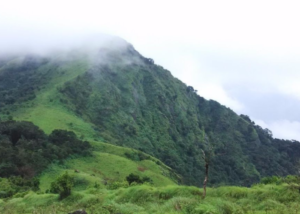
If you want to slacken your tired shoulders a bit and take a breather, you wouldn’t be looking beyond Nishani Motte in Coorg, fondly known as the “Scotland of India”. This roughly 15km moderate-trek begins from Bhagamandala Forest range (about 284km from the city of Bengaluru) and threads through the fields of paddy to the lush green coffee estate and into the wondrous Wildlife Reserve area finally making its way up towards the steep hilltop.
You can spend a day or two in the hills losing yourself in the beauty of the lush vegetation that envelops the Nishani Hills. The trekking trail lies within the Talakaveri Wildlife Sanctuary which is a popular spot for leopard and elephant sightings and extensive flora and fauna. The trail is an impassable pathway so it is better to have a trained guide to help you around. The path can lead you to the thickly covered Shola forests and areas of rolling meadows and verdant pasture. It will take about half a day to climb atop the hill. Once you reach the highest point, you can take a panoramic view of the entire landscape around the Nishani Hills. Take as many selfies or capture those poignant moments as much as you would like to; there’s nothing stopping you.
You can have fun around a cozy campfire once you walk down to the base camp. Even if stargazing isn’t in your bucket list, you can still spend some time looking at the marvels of creation. So, what are you waiting for? It is the best part of the year to hit this place up.
