
Things to do in New Zealand | New Zealand Tours from India

New Zealand is housed in the southwestern region of the vast Pacific Ocean and close to the middle of the water hemisphere on Earth. Declared to be the sixth largest island country, it has two main islands and more than seven hundred smaller islands. Together, the two main islands (North and South) have diverse tourist attractions to admire.
Besides, the country has fourteen national parks with rich indigenous biodiversity. Notably, most species (above 80%) are tagged as endemic due to dispersal. In this blog post, based on the places to visit in New Zealand, let’s find out what the best things to do in the country are.
Discovering New Zealand by Tourist Places
When hearing about New Zealand, you must have heard of Auckland too, one of the popular cities in New Zealand. Still, Wellington is its capital city. Apart from these two, the other famous cities include Napier, Rotorua, Christchurch, Taupō, Queenstown, and Mount Cook. With no further ado, let’s explore the top New Zealand tourist attractions.
Auckland
Indeed, it is a must-visit city in the North Island, New Zealand. Surrounded by rainforests, harbors, and volcanoes, there are a hundred places to visit and a hundred things to do in this beautiful destination. Highlighting a few of them here:
- Exploring the cuisines and signature dishes at restaurants and roadside eateries. Britomart, Devonport, and Mission Bay are the best places for this activity.
- Dive into the arts and culture of New Zealand at Auckland Museum, Auckland Art Gallery, Aotea Square, National Maritime Museum, Motat, etc.
- Stargazing at the Stardome Observatory & Planetarium is one of the things to do in Auckland.
- Do not miss visiting Auckland Botanical Gardens, Kelly Tarlton’s Underwater World, and Butterfly Creek. You can explore the wonderful marine life, insects, plants, etc., here in these places.
- Whale- & dolphin-watching is also a must-do activity. You can do this by taking a cruise from the harbor.
Need help with passport/visa services, travel, or accommodation reservations? Contact us!
Rotorua
The two important to-dos in Rotorua are:
- Knowing Māori culture—the Aboriginals: Learning about this Māori culture enables you to learn a lot about the New Zealand aboriginal people, their traditions, etc. If you are more interested, you can plan for a one-night stay at Tamaki Māori Village.
Important note: These two things to do in Rotorua are entirely unique to New Zealand and you cannot find them in any other countries or tourist places. Hence, they hold significance among tourists.
- Bathing in therapeutic waters: The Rotorua natural waters are considered one of the world’s best therapeutic waters due to hot geothermal conditions. Hence, you have to take a bath in the natural waters of Rotorua or enjoy relaxing at the spas in and around the region.
Aoraki or Mount Cook
Located on the South Island of New Zealand, it is the highest mountain in the country. Though the mountain is surrounded by icy glacial lakes, trekkers and mountain climbers never miss an opportunity to visit here.
Taupō—one of the must see places in New Zealand
Water enthusiasts must visit Taupo, as it has gushy waterfalls and cascades to mesmerize you. Taupo Lake and the sparkling Waikato River are to be cherished at least once in a lifetime.
Wellington
Though the city is squeezed at the southern end of the North Island of the country, it has many places to see, like Te Papa Museum, Oriental Bay, Wētā Cave (must-visit for ‘The Lord of the Rings’ fandom), etc. Some of the major things to do in Wellington New Zealand, are:
- Riding the cable car
- Sculpture Walk
- Taking a ferry or kayak ride
- The famous Remutaka Cycle Trail
- Admiring the three-eyed Kiwi
- If lucky, experience the concerts and live theatres
- Touring the renowned vineyards
Which long weekend in 2024 is comfortable for you to tour New Zealand?
Stewart Island

This is the best spot for bird and nature lovers. You can see amazing endemic bird species, including kiwis, albatross, and weka. Have you seen a walking track with more than two hundred kilometers in length? That’s here on this astonishing island. These tracks take you in between and around the beaches and rainforests, which keeps you curious every moment of strolling.
Queenstown
If adventure is going to be your important thing to do in New Zealand, Queenstown is your destination. From the famous bungy jumping to river rafting, from surfing to boating, from quad biking to canyon swings, every activity is an adrenaline rush.
Other Places to See in New Zealand
- Hokitika Gorge for witnessing the real turquoise waters
- Limestone-made Waitomo Caves for a thrilling journey
- Mackenzie Basin for sheep farming
- Fiordland National Park for hearing magical sounds
- Abel Tasman Coastal Track for hiking
Are you planning to travel to New Zealand from India?
Planning a trip to New Zealand with a personalized itinerary and cost-effective travel is easy now with the leading tour operator in India—Emperor Traveline! They can guide you with the best tourist spots, things to do, foods to eat, etc., in addition to crafting a perfect budgeted itinerary that meets your needs.
Best Foreign Trip With Family From India
According to a recent article by Booking.com and McKinsey, in 2022, Indian travelers took more than 1.5 billion holiday trips. But it is pathetic that only 1% of those were international trips. Of course, it is a post-covid period, yet the percentage is negligible. There are a lot of international destinations ..
According to a recent article by Booking.com and McKinsey, in 2022, Indian travelers took more than 1.5 billion holiday trips. But it is pathetic that only 1% of those were international trips. Of course, it is a post-covid period, yet the percentage is negligible. There are a lot of international destinations with similar beauty, like India. So, this blog can be an eye-opener to those Indian travelers looking for the best foreign trip with family in the coming days.
Also, the places curated in this blog post are multifaceted to engage an Indian family. There are temples, beaches, theme parks or zoos, sightseeing, adventure activities, water sports, etc. Undoubtedly, the best places to visit and the things to do in these foreign destinations are enticing and cover all generations, i.e., grandparents, parents, and children. So, let’s get started!

List of budget-friendly countries from India:
Singapore
A stunning must-visit island to travel with your family! There are direct flights to this country from most metro cities. Do not miss the dolphin lagoons here.
Thailand
A wonderful choice for nightlife-loving families. There are floating markets, trekkable mountains, elephant tourism, etc.
Malaysia
A truly Asian country with lots of admirable sky-scraping buildings and diverse communities. This is the straightforward answer to your question, “Which is the cheapest foreign destination from India?”.
Srilanka
This country is known for its lush green landscapes, clear beaches, ancient temples, and heritage sites. It is considered another economical destination for budget-conscious families.
Kenya
One of the unique and far-away foreign countries from India, unlike the above choices. Enjoy zebras, rhinos, lions, etc. on the wildlife side. It is perfect for families with kids who love animal safaris. You can also enjoy the cheapest flight tickets when booking a round trip.
For more details on these affordable trips, click here!
Luxury travel destinations with families:
United States
It has diverse places to visit, eat, and cherish. But you have to pick the right state. Each state is unique in its geography and has historical significance to uncover.
Switzerland
Most tourists presume this is a honeymoon destination. But more than that, it is a full-package family destination with chocolates, cheese factories, and zoos to impress your children.
Mauritius
This country never fails to instill in you its beautiful lagoons, pristine beaches, national parks, children’s leisure parks, and, most importantly, innumerable activities.
Japan
Do you want to teach your children about terrific history and rich culture? Take them to Japan—an amazing international travel destination with a wide range of adventurous activities.
Dubai
Of course, no one will deny standing in front of the Burj Khalifa. Take your family to this stunning location with museums, zoos, viewpoints, a dolphinarium, etc.
Explore the standard international family package for each of these destinations
Note: All the above-listed countries are the most visited international tourist spots by Indian travelers. So, don’t worry that you’re the only Indian traveling to the place. In fact, you can choose your favorite after referring to a lot of travel vlogs, blogs, etc. available on social media. However, if you want to personalize your itinerary, contact Emperor Traveline, the leading Tour Operator in Coimbatore, India.
Frequently asked questions:
1. Which country is best to visit with family from India?
Thailand, Kenya, Indonesia, the United Kingdom, Malaysia, Singapore, Mauritius, Egypt, the United States, UAE, Japan, etc. are some of the best choices to visit with your family.
2. How do I effortlessly plan an international family trip?
Researching where to go, eat, stroll, etc. in international tourist places is truly a daunting task. Thus, it is always better to trust tour operators to plan the best itinerary for your family. They can perfectly cater to your personalized needs.
3. What is the minimum duration recommended for foreign trips?
A foreign trip should last at least 3 or 4 days. A trip of less than 3 days will be a waste of time, as you might spend the most time on to-and-from travel and commutations between the tourist spots.
4. What are the top international honeymoon destinations to travel to from India?
Sri Lanka, Bali, Fiji, Paris, Thailand, etc. are major honeymoon destinations outside India. Nevertheless, the tourist options presented in this article are also worth your honeymoon time. So, choose your destination wisely.
5. What is the average cost to visit foreign countries from India?
The lowest starting price for a foreign trip should be INR 20,000 and there is no upper limit as a few families opt for luxury trips. At large, the statistics say the average price per passenger to travel to foreign countries from India is between INR 35,000 and INR 50,000.
How to plan a family trip during Covid-19?
Planning a family trip during COVID-19 is not without risks. Experts advise against making family trips during the pandemic. However, when planning such trips, great care has to be taken, especially with kids and senior citizens usually with low immunity levels around, to avoid direct exposure to infection. Here is how one can plan a family trip safely and enjoy the happy moments in nine essential steps.

- Check with the local laws first if you need to travel within the country or the law of the land regarding COVID-19 if you wish to travel abroad. Avoid travelling overseas as much as possible as several European and Asian countries are facing a second wave of pandemic, and consequently forced lockdowns to prevent public movement.
- Talk to your doctor regarding your family’s health and determine risk factors if any. Elderly people should talk to specialists if they’re suffering from diabetes, hypertension or blood pressure. It is important to get a clearance letter from the doctor before travel to avoid health complications.
- It’s important to understand the health risk profiles of individual members in a family before travel, and it is always a recommended practise to share the details with the family in the case of an emergency for preparedness.
- Avoid travelling to COVID-19 hotspots to avoid maximum exposure of infection. It is recommended to talk to your travel agency and get the ground details of COVID-19 of a particular touring destination including staying in quarantine, lockdown restrictions (if any), and the general rules and regulations of pandemic relief programs that apply in the region.
- Avoid over-crowed hotels and restaurants; check for a remote hotel to avoid mixing with other teams or hotel guests. Use touchless operation wherever required including contactless check-in.
- It is safe to travel in a car or cab to cover short distances than to travel by train or take a flight. As flight bookings are marked by uncertain timeliness, it is pertinent to check the booking and cancellation policies to avoid disappointments and save on unnecessary costs.
- Don’t forget to carry COVID-19 essentials such as hand sanitizer, disinfecting wipes, face masks, a thermometer, gloves, hand soap and health insurance cards.
- Plan only for outdoor activities. This is because visiting public places (not all follow safety protocols) can put you at greater risk of infection.
- And finally, it is important to keep your kids completely safe during the travel by educating them on pandemic guidelines during the tour.
How to plan a safe honeymoon trip during COVID-19?
The big fat Indian wedding season is underway, and with the COVID-19 having done the damage already this year, we’re going to see an extended summer wedding season later next year. Indian weddings are all about fun, food and frolic, and you just can’t take travel out of it. Planned honeymoon trips are very much part of the nuptial process. So how should the newlywed plan a safe and memorable honeymoon even with COVID-19 doing the rounds? Read on…
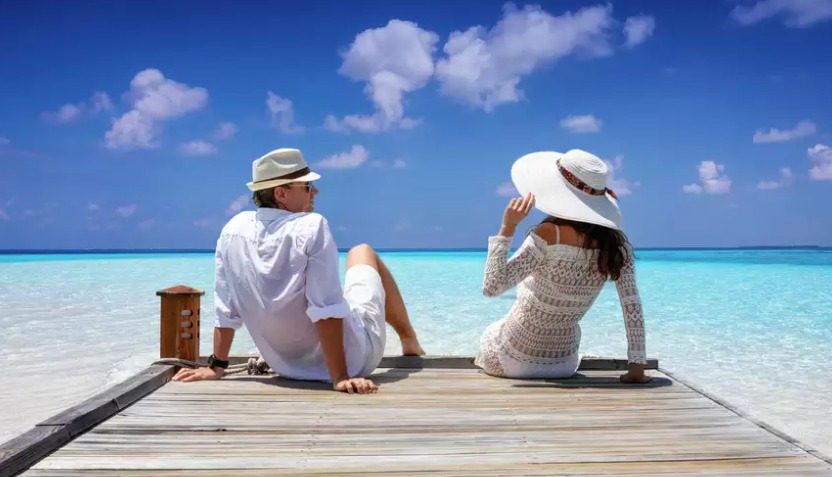
Do your homework:
Before travelling to the place, it is important for the honeymooners to know the scale of COVID-19 and existing number of cases. A reliable travel operator may know the ground situation and advice for or against travelling to a particular destination. Also, public places including historical monuments, parks, zoos, museums, palaces, forts, mausoleums, etc have been locked up from public access for the most part during the pandemic. Work with a travel agent who can help you prepare the right travel itinerary of accessible locations to stay safe throughout the trip.
Open communication:
A safe travel for honeymooners during the pandemic may require an open communication with their travel agency. It is pertinent to ask the right questions everything from travel itinerary, booking, accommodation, insurance (if required) among others. Most restaurants and hotels post lockdown relaxation have come up with offers of up to 50 percent discount as incentives for travellers. Some even offer waiver on normal fees for cancellation or postponement. The key is right communication to get as many answers you will want.
Stay local:
Travel as locally as possible to avoid exposure to virus. Embrace the familiar and don’t take chances by travelling outside of the country until the COVID is finally over. This is probably the best piece of advice for honeymooners travelling during the pandemic marked by an uncertain timeline. This said go and stay outdoors where nature is at its purest. This is to avoid mixing with the crowd and increasing your chances of getting COVID infected.
Use technology to the maximum:
Use payment apps that facilitate contactless payments. Check for hotels and restaurants that encourage the same. Furthermore hotels adopting innovative technologies including robotic cleaning, contact tracing, sanitization, and health screening are preferable compared to those that don’t.
COVID-19 and what it means for the frequent traveller
If you’re a frequent traveller or have been one pre-COVID outbreak, the feeling of tied down to home for a fairly long period should have been an excruciating experience, to say the least. For a travel freak, travel is an expression of one’s freedom, creativity and a longing to explore the unknown and cohabitate with the known. The COVID-19 has cast a dark spell upon the possibilities of travelling normally mainly due to the uncertainties surrounding the crisis, for the thrill-seeker is not withered by the storm gathering or blowing his wit away. He scales peaks, beats the rain at its game, runs towards sunlight and encourages others to follow him. He doesn’t stick to the rules of the games, and often breaks away from how it is traditionally played. He may carry the burden of travel as light as a feather, which he feels he is already part of. So how did COVID-19 affect the frequent traveller? From temperature to luggage, challenges, far too many, were flung at him at will.

The rules of travel kept changing, fuelling the feelings of despair, the last thing he’d want is a total lockdown, which will prevent him from moving out of his home, a phenomenon rife in almost every part of the world where life existed. Flights were happy to remain in the hangars until the travel ban was revoked. The anxiety levels of the frequent traveller remain unchecked as the lover may have in the longing for his beloved.
Expectations of relaxing lockdowns kept growing with every passing day though there wasn’t any respite whatsoever. The race for the first COVID-19 vaccination in the world didn’t enthuse the die-hard traveller as nothing significant emerged out of the findings. Here we go, an imminent second wave of the pandemic shattering the hopes of the traveller whether you’re a soul searcher or the frequent weekender will only extend the wait until the COVID is over.
Why Travel can be good for you post-COVID-19 lockdown?
The COVID-19 crisis has unleashed a paralysis of sorts in all spheres of life. Businesses have shut down, either temporarily or permanently, with normal life coming to a standstill and uncertainty looming in at large. Of all the business sectors, the travel and tourism industry is the worst hit sector as the general public mostly stayed indoors, advised not to step out of their homes until necessary. With a second wave of the pandemic rocking several European and Asian countries, the travel and tourism sector has to wait until a successful vaccination programme is in place. This brings us to the question: what good can travel do to the mind and body after a rather long hiatus? Though the long-term advantages of travelling can be myriad, here is how you can benefit from travelling.

- Travel is a stress-buster. Needless to say, a bit of travel to your favourite destination will make you feel more relaxed and stay focussed on your goals and aspirations. People who don’t travel much feel the heat of life’s pressure and struggles. So get a life, travel to the known and the unknown, the familiar and the unfamiliar.
- Travel helps you to reinvent the wheel. Yes, it gives you fresh insights towards executing your most cherished goals. It can help you broaden your awareness and be open to new things. Learning different cultures through travel opens up a new realm of possibilities. Travel forces you to think independently and evaluate your own principles and values.
- Travel increases the happiness quotient, says a recent study. This basically is a result of travel killing boredom and idealness. Because travel is a shift away from the mundane and the monotonous, it essentially makes the traveller happy. The change of mood happens when the minds starts to appreciate the possibility of a new belief.
- If you want to toughen up your mental muscles and develop more adaptability and resilience in life, you need to travel…and a lot of it. Travel at times may not turn out as planned, and lot of adjustments have to be made and alternate plans charted out, especially in a new location, where finding resources can be can be next to impossible.
- Travel is a great means to enhance your cognitive abilities. For many, travel is a creative channel for responding to an entirely different situation. So, when have you planned to travel when the COVID is finally over?
All about the Albert Hall Museum in Jaipur
- The beauty of Jaipur in Rajasthan, as a tourist destination, is simply unrivalled. The best way to study the culture of a region is to visit the local museum. The Albert Hall Museum in Jaipur serves as the gateway to learning the cultural traditions and various art forms of the “Pink city”.

- Built in 1876, first as a concert hall and later as Town hall in 1880, the Albert Hall got its name from London’s Victoria and Albert Museum because of its strikingly similar architecture. The building’s foundation was laid out in 1876, when the Prince of Wales visited the city.
- It was Maharaja Sawai Madho Singh II, the ruler of Jaipur, who suggested that Albert Hall be used as a museum for industrial arts.
- The hall was later used for exhibiting masterpieces of local craftsmen and artisans. The museum, by 1881, was opened to public that even bought artwork, handicrafts and other masterpieces on display. However, the museum wasn’t fully constructed until 1887. Later, valuable antiques were added to the modern artefacts collection.
- The architecture of the building is Indo-Saracenic in style and holds unique stone ornamentation. The museum’s corridors stock Persian paintings, mural paintings, among others. The murals on view vividly express the ancient civilizations of Babylonians, Chinese, Greek and others.
- The museum houses 16 galleries in total that display a spectacular collection of antiques, artefacts and artworks in the following categories: Arms & Armour, Pottery, Sculptures, Miniature Paintings, Clay Works, Marble Art, International Art, Ivory, Jewellery, Woodwork & Furniture, Coins, Musical Instruments, Garments, Carpet, and other miscellaneous collections. In addition to these, there is an exclusive ‘gallery of the month’ which displays unique collections.
- The museum, which is open from 9AM to 5PM on all days, is well connected with all the other parts of the city. Located nearby the Merta Road Junction Railway Station, the Albert Hall Museum can be reached via local train, cab or public transportation.
All about the Chhatrapati Shivaji Maharaj Vastu Sangrahalaya in Mumbai
- The Chhatrapati Shivaji Maharaj Vastu Sangrahalaya (CSMVS) is one of the important arts and cultural museums in Mumbai in the state of Maharashtra.

- This museum has been preserving some of India’s most treasured historic relics for over a century which makes it a landmark destination for locals and tourists in Mumbai.
- The museum was born after some of the eminent personalities and distinguished citizens of Mumbai decided to build a public museum, first as a memorial, to commemorate the visit of the Prince of Wales (later King George V) in the year 1905
- The building was initially used as a military hospital throughout the First World War. It was opened to public view only in 1922 after being inaugurated by Lady Lloyd, the wife of the then Governor of Bombay.
- The design of the museum is a combination of Saracenic and Indian architectural forms. It was George Wittet, the famous Scottish architect known for his design of the Gateway of India, who designed the museum.
- It is said that he was inspired by the building design of the Gol Gumbaz in Bijapur and the Taj Mahal in Agra.
- The museum’s wide range of collection has archaeological artefacts and finds of the rich civilization and cultural values of the Indian subcontinent the Indus Valley Civilization, the Mughal rule and the Marathas among others.
- The museum’s different galleries include cultural aspects of Nepal-Tibet, natural history, European history, etc. The arms and armour galley has the private armour of the Mughal ruler Akbar.
- CSMVS, in collaboration with institutions like the Jehangir Art Gallery, has immensely contributed to the advancement of the neighbourhood of Kala Ghoda as a place for artistic studies.
- It actively hosts many public programs such as seminars, workshops and documentary film screenings for students and general public.
- The museum even conducts post-graduate diploma courses in heritage studies and conservation and museology and conservation.
When have you planned to visit Amer or Amber Fort in Rajasthan?
- A 16-th century fort, it was raised by Maan Singh, a trusted general of the Mughal Emperor Akbar.
- The Amer or Amber Fort is located in the city of Amber, situated at a distance of 11km from the capital city of Jaipur in the state of Rajasthan.
- Amer was later ruled by Maan Singh, according to a decree by Akbar. Amber Fort today is one of the major tourist destinations of the state.

Places to visit in Amer Fort:
- Diwan-e-Aam or Hall of public audience is a grand hall that is supported by two rows of pillars, each of which is delicately ornamented. This hall, a major attraction for its mosaic work, is open on three sides.
- Sheesh Mahal or the Mirror Palace, built for the queen of the fort, is marked by grandeur. This palace is the shooting spot for many Bollywood movies. The ceilings and walls in this palace are beautifully carved with intricate flowers and fine glass paintings.
- The Mughal Gardens or Kesar Kyaari is located on Lake Maota on front of the Amer Fort. Shaped like a star, the garden is said to have been planted with saffron flowers, though climatic conditions aren’t actually conducive to growing saffron flowers.
- A special light show on the history of Jaipur city and the Amer fort is conducted every evening. A 50-min video in both English and Hindi, it throws light on the sovereigns, historical significance of the palace, and other details.
- SukhNiwaas or SukhMandir or residence of pleasure is a hall made with ivory and sandalwood. Situated straight opposite to the Diwan-e-Aam, you will find a small channel carrying cold water, a traditional method that helps keep the place cool. Interestingly, it is not a temple, but a relaxation place for kings and queens.
Things to do: Elephant ride around the fort; night-time Light Show; panoramic view of the entire city from Char garden; classical dance program; enjoying traditional songs and puppet shows of local artists; visiting a unique Turban museum; visiting the Siladevi temple; savouring a meal at Surabhi restaurant; watching the brightly illuminated fort from the foot of the hill when the sun is down.
All about the famous Diwan-i-Khas in Fatehpur Sikri
- Diwan-i-Khas, or more popularly known as the Hall of Private Audience, is located in the northeast corner of the royal complex, constructed with a massive and splendidly carved pillar in the centre.
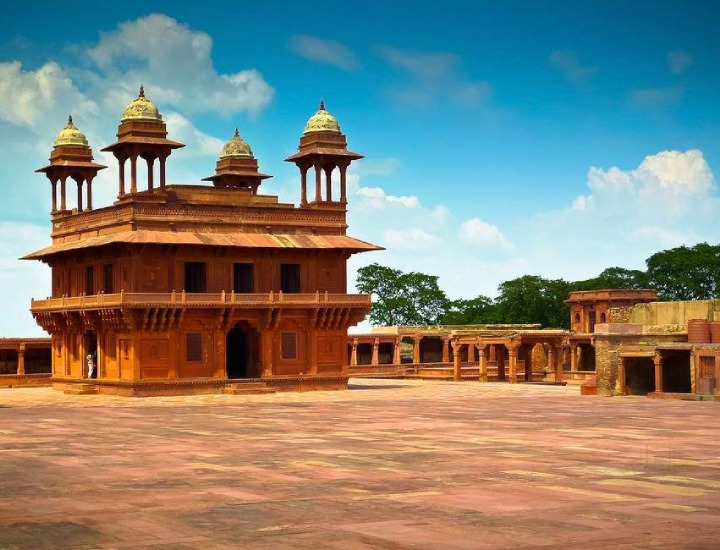
- There is a central platform that is attached to the pillar. This is believed by many to be the seat of the powerful Mughal emperor with the diagonal galleries the seat of the nobles and ministers entertained in the court.
- However, there are others who believed that because the galleries were too narrow to house all the courtesans and ministers at once, the building actually served as the storehouse for the valuable treasures of the royalty including gems and jewels that were inspected by the Emperor himself.
- According to the historian Abul Fazl, the Mughal ruler Akbar had three treasuries located close to each other and only one among them was used to store the priceless possessions.
- As this building is nearby the ‘Ankh Michauli’ or the storehouse of gold and silver, it is widely believed to be the treasury for jewels.
- There are four double-storeyed facades in this square red sand stone structure. You will find no huge dome or superstructure here typical of Islamic architecture but four impressive kiosks at every corner of the building that are octagonal-shaped, crowned by a circular dome with an inverted lotus mounted on the top elevating the overall height of the structure.
- The interior arrangements are unique in design. The main hall comprises an elegantly designed capital constructed by linking 36 brackets emerging from the pillars in three tiers that are circularly shaped. The building isn’t known for ornamentation unlike other Islamic architecture around the world. However, the imposing situated in the centre is definitely one of the towering examples of the Mughal architecture.
