
Why Travel can be good for you post-COVID-19 lockdown?
The COVID-19 crisis has unleashed a paralysis of sorts in all spheres of life. Businesses have shut down, either temporarily or permanently, with normal life coming to a standstill and uncertainty looming in at large. Of all the business sectors, the travel and tourism industry is the worst hit sector as the general public mostly stayed indoors, advised not to step out of their homes until necessary. With a second wave of the pandemic rocking several European and Asian countries, the travel and tourism sector has to wait until a successful vaccination programme is in place. This brings us to the question: what good can travel do to the mind and body after a rather long hiatus? Though the long-term advantages of travelling can be myriad, here is how you can benefit from travelling.
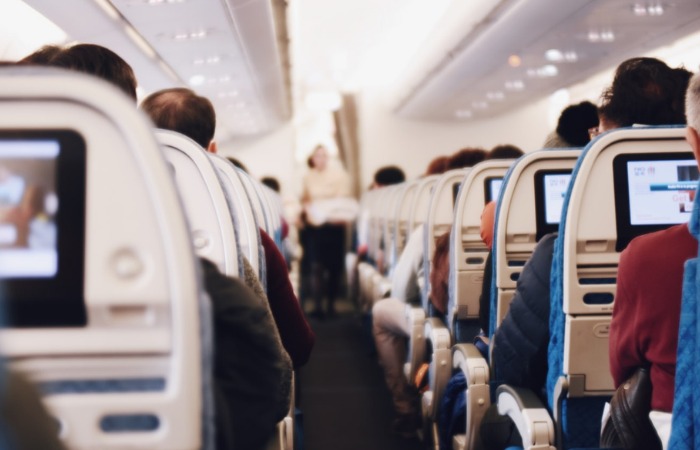
- Travel is a stress-buster. Needless to say, a bit of travel to your favourite destination will make you feel more relaxed and stay focussed on your goals and aspirations. People who don’t travel much feel the heat of life’s pressure and struggles. So get a life, travel to the known and the unknown, the familiar and the unfamiliar.
- Travel helps you to reinvent the wheel. Yes, it gives you fresh insights towards executing your most cherished goals. It can help you broaden your awareness and be open to new things. Learning different cultures through travel opens up a new realm of possibilities. Travel forces you to think independently and evaluate your own principles and values.
- Travel increases the happiness quotient, says a recent study. This basically is a result of travel killing boredom and idealness. Because travel is a shift away from the mundane and the monotonous, it essentially makes the traveller happy. The change of mood happens when the minds starts to appreciate the possibility of a new belief.
- If you want to toughen up your mental muscles and develop more adaptability and resilience in life, you need to travel…and a lot of it. Travel at times may not turn out as planned, and lot of adjustments have to be made and alternate plans charted out, especially in a new location, where finding resources can be can be next to impossible.
- Travel is a great means to enhance your cognitive abilities. For many, travel is a creative channel for responding to an entirely different situation. So, when have you planned to travel when the COVID is finally over?
How has COVID-19 changed Business or Corporate Travel?- Part 1
The devastating effects of COVID-19 have stalled business operations worldwide. Industrial operations have come to a standstill, and there really seems to be no respite for business owners as such. The travel industry has been grinded to a halt with lockdown after lockdowns in place, though they cannot be maintained indefinitely. While the pandemic is not yet over, most corporate employees have been asked to work from home and hold meetings virtually. As a result, corporate travel, which includes planning a business trip, conducting a corporate event, or other related activities for the corporate traveller, has been severely hit.

How do the current T & E numbers stand?
The Global Business Travel Association (GBTA) published a report that 98 percent of its member companies had put off international business trips, and 92 percent cancelled all or most domestic trips. However, the survey conducted during the month of Month later had it that more than 50 percent of its respondents had wanted to resume travel in the coming months. These numbers shouldn’t actually surprise you, given the gravity of business travel activities. Furthermore, Certify, a leading T & E report management solution provider, estimates that 445 million business trips happen every year, valued at around $251 billion. GBTA estimates the same to be around $345 billion for T&E.
An Oxford Economics study puts it that every dollar invested in business can generate as much as $12.50 back in revenue. If you put it all together, the corporate firms are losing revenue big time, as well as the travel tour operators, agencies and the travel management companies (TMCs) owing to the travel ban in the prevailing pandemic situation.
Another survey conducted by Oliver Wyman has it that about three-quarters of business travellers expect to travel in the same frequency or even more post-pandemic, due to resurgence in economic activity, comparatively low travel costs with the easing of lockdown, and pent-up demand after hosting virtual meetings for several months. Even after lockdown is over, and when business will eventually pick up, business travellers will think twice before travelling internationally to stay away from infection. Let’s see how travel business travel will look up post COVID-19 situation in the subsequent blogs.
Tourism sector is key to revival of Indian Economy: From the founder’s desk – Part 2
Now, let us view the scenario from another angle employment. The central tourism ministry mentions that tourism, either directly or indirectly, accounts for the employment of almost 90 million people. Add to this the 100 million-odd people who are employed in the travel sector and you can understand its significance. Now here’s the bad news: 20 million jobs can be put to immediate risk if the travel sector fails to come out of this dire situation, while some experts estimate it a notch higher at 50 million.
Kerala, as discussed in the previous blog, churned out INR 28,000 crore from foreign and domestic tourism in 2018. Tourism contributed to a quarter of the state’s employment figures. The same rings true for Kashmir, Sikkim, Goa and Rajasthan. Not to mention Tamilnadu (that is manufacturing-focussed) and Uttar Pradesh (mainly an agrarian economy) depending on tourism for revenue. The two added up to more than a third of India’s total tourist visits in 2018.
This is the story in most states that are dependent upon the travel sector. As for Kerala, the current situation can prove havoc for specific regions and districts. And Kashmir, Uttarakand, Bihar and Rajasthan are no different as per some ground reports. Reports show that 95 per cent of hotels and guest stays, and almost 80 per cent of tour operators are closed temporarily citing losses. Needless to say, more number of people will be actually affected by the ongoing economic crunch fuelled by lockdown after lockdowns than the pandemic.
There have been several unsuccessful attempts in the past to kick-start tourism, thanks to the growing COVID-19 cases in most states of India. I feel there has to be an integrated effort at the policy-making level both by the Central and state governments as well as by the stakeholders and industry participants to revisit the long-term perks of reviving the travel and tourism sector. The sector has to be viewed as an integral part of the bigger economic and social ecosystem. All said and done I admit that there are few man-made complications that hamper the mobility of people and transport system. We will continue our musings in the next part of the blog series.
