
A world without Travel – From the desk of Emperor Traveline
“The world is a book, and those who do not travel read only a page.” – Saint Augustine
These lines inspired us to start our travel operations back in 1980, first with domestic travel programme. In the beginning of the 21st century, there was much hype about the phenomenal growth of India’s economic and scientific prowess; thanks to the vision of former President of India and one of the country’s brightest scientific minds, Dr. APJ Abdul Kalam. The promising hopes of the year 2020 reverberated with the youth of India due to Dr.Kalam tagging it, talking and writing endlessly about it and even publishing a book for the inspired youth. He even envisaged the role of travel and tourism in bringing the world together.
Come 2020, the world is witnessing a world without travel. The international borders have been insulated, people isolated and quarantined, hopes shattered, dreams broken and lives consumed. As the world is gearing itself to adjust to the ‘new’ normal at least for the next six months, it will undergo waves of transformation hitherto never seen.
Travel and tourism is the most affected sector by a long way. Not to mention the education, business and medical sectors which depend on travel for operation and efficiency. For most of us fear will be the single most demotivating factor that can thwart the prospect of travelling as COVID-19 will continue to haunt air travellers especially for a good couple of years from now. How we, as travellers, cope with our unremitting fears and reservations is a challenge within.
With mental health levels of people going from bad to worse during the lock down period, travel is the only known panacea that can alleviate people out of mental issues like depression, anxiety, isolation, loneliness, restlessness and other unwarranted fears due to COVID-19 pandemic.
An update from Emperor Traveline on COVID-19
For the first time ever, We, at Emperor Traveline, advises you not to travel! And that’s the biggest irony. And if Government regulations are anything to go, you need to stay safe indoors. We are in the midst of a global crisis owing to the outbreak of COVID-19 or Novel Corona Virus, which has transformed the world, as we are approaching towards a ‘new’ normal. The adverse impacts of the COVID-19 are unprecedented as the world is waking up to the news of rising deaths and increasing number of COVID -19 positive-tested patients every single day.
The business climate is gloomy and the worst is anticipated in the days to come as every Government has imposed nation-wide lockouts in almost every part of the world. Videos surfacing of wild creatures roaming scot free on the roads in many parts of the world are doing the rounds online. Several reports have emerged that mentions the role of the ongoing virus crisis in improving air quality and stalling climate change momentum.
Furthermore, emissions from factories, air pollution due to vehicles, and water pollution caused by irresponsible industries have gone down considerably. We cannot but only concede that every crisis, big or small, presents its own challenges, threats as well as ample opportunities.
The uncertainty of COVID-19 is bewildering, to stay the least. Even more baffling is the fact that there is no proven cure or tested vaccine available to curb the spread of the virus. However, what is more heartening to see is that almost every government has preferred to save precious human lives over the falling economy, which again can put many lives at stake later.
We, at Emperor Traveline, have completely adhered to the guidelines and modalities of the regulations laid down by both the State and Central Government during this crisis. We have also ensured that none of our staff or team member has to undergo financial grind. Let’s all pray sincerely for the safety of the world and for normalcy to restore at the earliest.
Kanakakunnu Palace in Trivandrum, Motley of Heritage and Ecology
- The Kanakakunnu Palace in Trivandrum was once the venue for stately events of the erstwhile royal family of Travancore
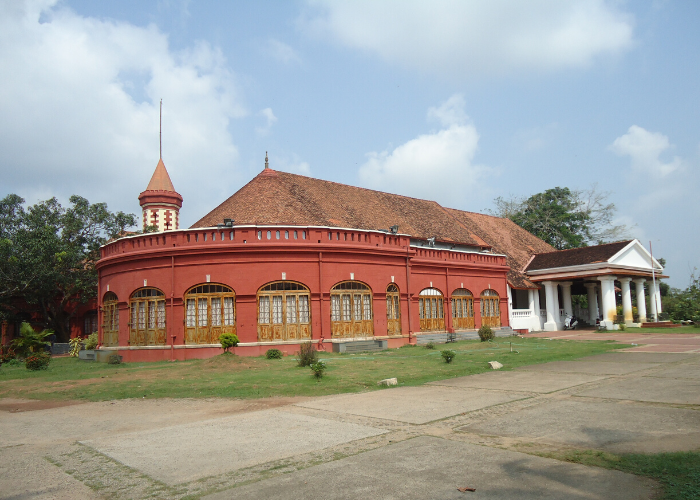
- Listed by the Indian National Trust for Art and Cultural Heritage as a heritage monument, the Kanakakunnu Palace in Trivandrum today is motley of history and ecology.
- The palace, constructed during the reign of King Sree Mulam Tirunal (1885-1924), was used for royal banquets. Swati Tirunal gave a complete makeover of the palace, and even built a tennis court on its premises.
- Opened first to public view in the 1960s as a venue for marriages, the splendid edifice, the jewel on the ridge of a hillock laden with landscaped green meadows, bamboo thickets and blossoming shrubs have become a favourite among the locals and tourists. There are many events that are conducted here in its stately halls.
- Members of walking & laughing clubs, yoga practitioners, in addition to college students, nature lovers and senior citizens hang out in large numbers. The rare trees here are another attraction.
- This place is also used to hold government-sponsored events and other cultural events. But the increasing number of commercial activities in and around the building has posed several challenges to the Tourism Department which takes care of it.
- The locals are opposed to the idea of using this place for trade fairs and exhibitions, considering the significance of its cultural, historical and architectural values.
- The significance of the Kanakakunnu Palace is also felt in its role in micro-climate amelioration and regulation and curbing emission of greenhouses gases, as a lush green, open space in the busiest part of the city.
- The meadows in the hill terrain if properly maintained can turn out to be a natural herbal peak with Dasapushpam’s and other precious flora, making it a nature’s herb museum, and for people to just relax and walk, and kids to play on the premises.
- Locals also suggest that it should be made a heritage zone, and that a nominal entry fee can be collected for maintaining the park sublimely green.
All About the Plettenberg Bay in South Africa
The town of Plettenbergy Bay is situated almost on the edge of Eastern and Western Cape. Built on the hillside, most part of the town is located on a steep slope descending all the way into the sea. Once you are at the Plettenbergy Bay, you’ll be treated to the scintillating views of the bay and surrounding mountain ranges and hills. There are a numbers of upmarket resorts and hotels to self catering, to budget Bed & Breakfasts and accommodation here.
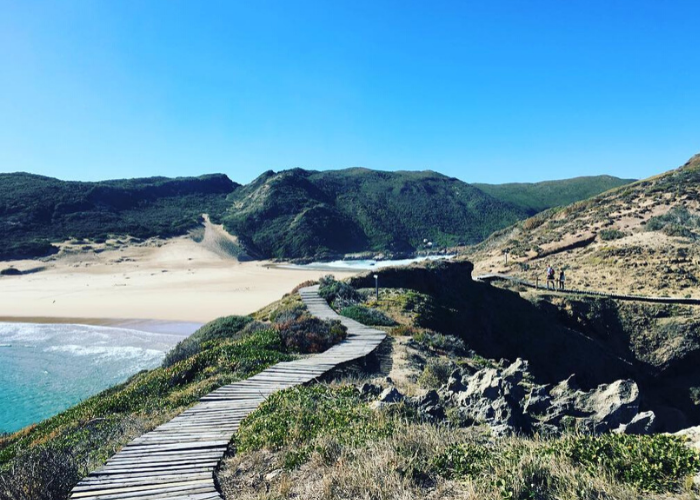
The Plettenberg Bay, once a quaint town, was visited by European explorers from Portugal and the UK. The remnants of the Gonzales Wreck in town; Old Rectory, constructed by the Dutch East India Trading Company in 1776 and Forest Hall, a stately home that was privately owned, established in 1864 by William Henry Newdgate stand tall to this day.
Popular tourist activities include yachting at the Keurbooms River mouth and marina and playing polo at Kurland. You can indulge yourself in water sports and swimming in the clear and serene waters. There are many pristine beaches worth a visit, and if you want to boost your adrenaline performance, there are a host of activities including hiking, charter boat cruises, abseiling and canoeing. Another popular attraction is the Monkeyland Primate Sanctuary, a one of its kind multi-species, free roaming primate sanctuary. You can also make a trip to the Witblits distillery and Mampoer.
Don’t go away, there’s lot more: you can take a short trip on the N2 moving towards Port Elizabeth, across the border into the Eastern Cape, and return to the Bloukrans Bridge. An engineering wonder, it is where the world’s highest commercial bungee jump site is located. Situated at 216 metres, it is not for everybody to take a plunge from the purpose-built observing platform bordering the gorge.
If you are done with the above activities, visit the Khoisan Village to take a glimpse of the lives of the indigenous peoples of the area, and enjoy buying local arts and crafts.
Everything you need to know about the Dolmen Circle in Kodaikanal
- Are you burned out and knackered this summer and wanted to take a breather? One of the best places in Tamilnadu to be this summer is the charming hill station of Kodaikanal that has about 40 tourist attractions. One of the lesser known places in Kodaikanal, though popular, is the Dolmen Circle.
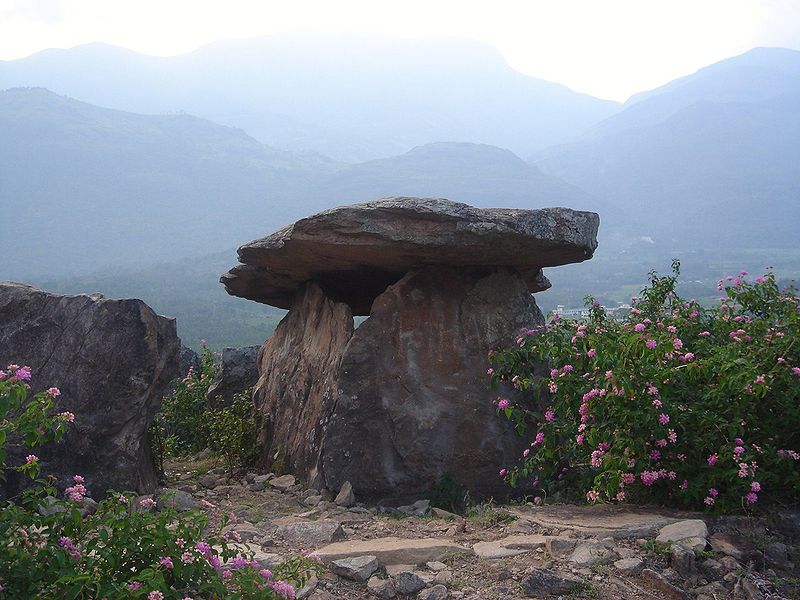
- The Dolmen Circle is about 8km from Kodaikanal Lake and 18km from Berijam Lake. It is one of the most important places among anthropologists. A pre-historic site, the Dolmen Circle dates back to 5000 BC.
- This place is believed to be the dwelling place and burial site of the pre-historic man who belonged to the Iron Age and Stone Age. They are known as dolmens and Kistavens.
- Situated nearby the Parvatha Vihar and the Pannikadu village, the dolmen is raised out of two huge erect slabs covered by a huge flat slab.
- The sands of time brought destruction to several dolmens, so only two survive now. One is found at the Ghat Road near Periyakulam and another 2 km away from the hamlet of Pannaikadu.
- It is located on the highest point before you descend to Pattiveerampatti still standing rock-solid without significant damage.
- The place is the remains of pre-historic inhabitants in addition to models of dolmens and burial urns. The ruins and remains of the place can transport you right to the pre-historic living.
- Research also shows that these were used as hideout for the pre-historic man. It is also widely believed that this site served as a safe haven for people to hoard their valuables. Site excavations in the past unearthed several copper and brass ornaments in addition to the utensils. On the other hand, Kistavens were used as burial grounds.
All about the Itimad-ud-Daulah Tomb – The Baby Taj Mahal in Agra
- The Itimad-ud-Daulah Tomb in Agra is also known as the ‘Baby Taj Mahal’, a precursor to the Taj Mahal. It was constructed by Noor Jahan for her father Mirza Ghiyaz Beg or Itimad-Ud-Daulah or ‘the pillar of the state’.
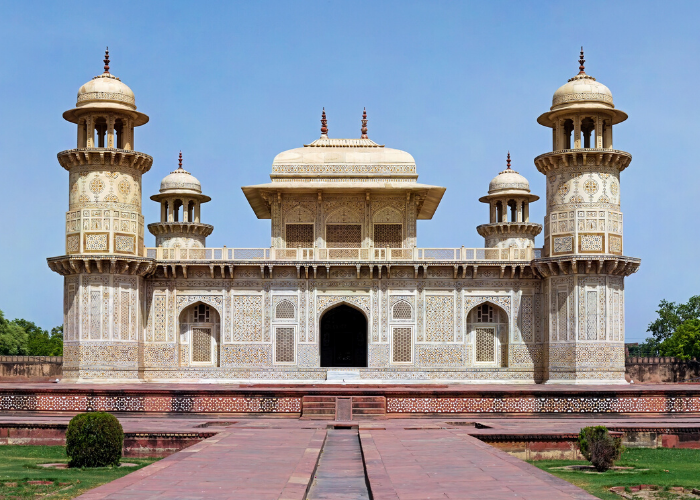
- Built in the years 1662-1628, five years before Taj Mahal was built, it is worth a visit when you are done visiting the iconic structure of the Taj in Agra.
- The extensive use of intricate inlays and white marbles makes it unique in terms of design and architecture, although it’s smaller in size compared to the Taj.
- Many historians believe that Emperor Shahjahan wanted to build something more significant and on a much grander scale than the Itimad-ud-Daulah Tomb, and thus built the Taj Mahal later.
- It is also believed a family feud led to the building of Taj Mahal which actually overshadowed the splendour and grandeur of the ‘baby’ Taj Mahal.
- The inside of the Itimad-ud-Daulah Tomb was kept relative simple without any superfluous embellishment or ornate decorations in line with the principles of the religion of Islam.
- There are fake tombs or cenotaph above the ground that are partially decorated and on display for visitors. In comparison to the exterior decoration, the interiors are neither dour nor flamboyant but stick to the principles of simplicity.
- There are inlays and geometric patterns at every turn. The linings of the walls in every chamber and corridor are filled with colorful paintings.
- The Baby Taj is open on all days. Security is pretty much tight here. Food, large bags, water, drinks, video camera and other electronic gadget except a camera are strictly disallowed.
All about the Bryant Park in Kodaikanal
Kodaikanal is a popular hill station in the Palani Hills in Tamilnadu. One of the most beautiful tourist destinations in the state, Kodaikanal has a handful of places to explore at least once in your lifetime. Bryant Park, a famous botanical park, is located on the eastern side of Kodaikanal Lake. This place, in fact, has been a boon to Botany students and bliss to the general public for several decades. The park is full of flowers, and hybrids. You can also find cut flowers of export quality in the park. The park houses a wide range of flowers which makes it a popular hangout in the hill station.
The park, built-in 1908 by HD Bryant, a forest officer from Madurai, draws thousands of visitors during the month of May when the annual summer festival is conducted in the park. The show that is organized by the Department of Horticulture displays several types of flowers and vegetables that are sourced locally. With over 325 species of shrubs, trees, and cacti, the park organizes a flower expo contest to encourage exhibitors and growers.
Furthermore, the Bryant Park doubles up as a practical learning center and demonstration center for Ornamental Horticulture. Out here the students of Horticulture are taught advanced methods of pruning, training, grafting, budding, potting seed collection and several other techniques. The park is a great place to spend a few moments of solitude by distancing yourself from the hustle and bustle of everyday life amidst the lush greenery.
Bryant Park is a well-maintained park considering the sheer size of the park. There is a large area of the park dedicated to nearly 740 varieties of roses. You can also find a eucalyptus that dates back to 1857 and a Bodhi tree, adding to the religious sentiments of the public. There is a nursery that sells Ornamental plants. A glasshouse contains a broad range of ferns, flowers, and other ornamental plants. The entrance fee to the park is very nominal and is open all around the year for public view.
All you need to about the Khan Market in Delhi
The Khan Market is one of the most popular markets in the country’s capital with a rich culture and history of its own. This market, established in 1951, named after Khan Abdul Jabbar Khan’s brother of Khan Abdul Gaffar Khan, draws thousands of customers and shoppers almost every day. It has been continually named as one of the world’s most expensive high-end markets.
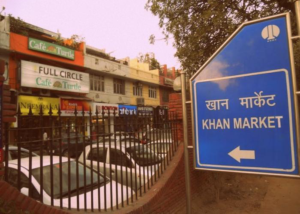
Constructed in a U-shape, the market space has a capacity for 74 flats and 154 shops. Furthermore, it served as the home for immigrants from the North Western Frontier Province after the country’s partition in 1947. These migrants set up the first shops and aptly named it after Khan, as he was instrumental in helping them settle down here providing them a new lease of life.
The market’s first floor served as the home to the shop owners even until the late 1908s. Actually, the market enclosed only middle-class shops, brands, outlets, and neighborhood grocery shops in the beginning. With the turn of time, it primarily served the upmarket clients from Golf Links and other neighboring societies. And when many shop owners saw good business potential, they started shifting out of their houses in Khan Market.
Today, Khan Market is found to be one of the costliest commercial real estate locations in the country’s capital. Further, in 2011, as per a Cushman & Wakefield ranking report, Khan Market was rated as the 21st costliest shopping market in the world.
All about the Pagoda Point at Yercaud, TamilNadu
Yercaud is a popular hill station next only to Ooty and Kodaikanal in Tamilnadu. Yercaud located in the district of Salem has a handful of tourist destinations that are frequented by both locals as well as tourists, both domestic and overseas. Pagoda Point aka Pyramid Point is a viewpoint situated on the eastern side of Yercaud Hills. It is believed to be constructed by the local tribes. This place also has a Rama Temple now built between the stones.
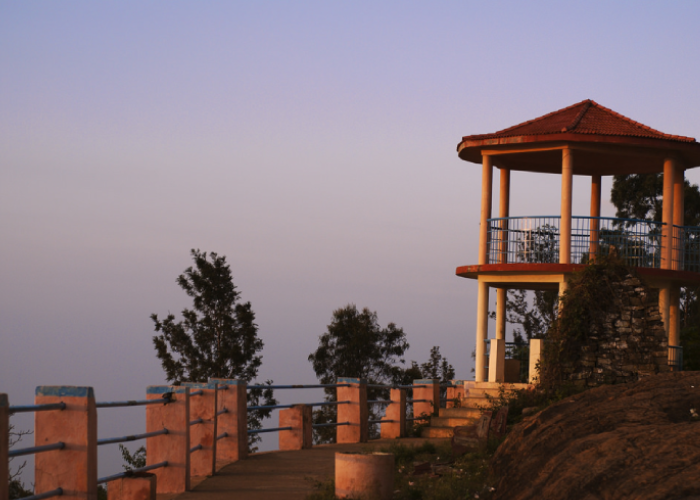 The name of the place is derived from the hill tribes when four piles of random stones were placed in the form of a Pagoda or Pyramid reportedly to observe some community events. You can also take a panoramic view of Ayodhaypattanam and Attur from this spot. It is situated at a distance of 5km from the town of Yercaud. If you are an amateur or someone obsessed with taking selfies, then this is the place to be. Get a good view of the city of Salem and a little hamlet called Kakambadi from the hilltop. This spot also features towering cliffs delighting many a rock climber and daring trekkers. About the ridges of the crest, you’d be able to find four cairn stones that resemble temple towers (or Pagodas).
There is also a shrine held sacrilegious by the loyal Malayalis, built of two anionic stones in the center of the open space. One can also view all the 21 hairpin bends of Yercaud swirling and wriggling through the hills from this point. Though there are transportation facilities, local busses are few to get here; therefore, you can trek through the lush green estates to reach the Pagoda Point. You can thoroughly enjoy the gorgeous view of the cliffs all from a single point, particularly in the early mornings and when the sun goes down.
What are the best places to do shopping in Malaysia?
When you are shopping in Malaysia, you’ll be inundated with a plethora of options ranging from electronics to fashion. It’s still fine even when all you wanted to do is window shopping. Malaysia is a happening place for luxury brands, street style shops, local goods sold in flea markets where you can find slashed prices for everything. And there is Langkawi that can pull in any shop alcoholic with duty-free shopping. Other top tourist destinations include Cameron Highlands and Kuala Lumpur. Here are some of Malaysia’s top shopping markets and what you’ll be happy buying from each of them.
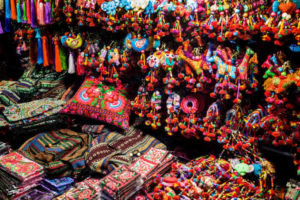 1. Petaling Street:
Street shopping in Kuala Lumpur lending a Chinese touch. Specialties here at Petaling Street include bag tags, apparel and colorful artificial flowers, electronics among others.
2. Central Market in Kuala Lumpur:
Located in Kuala Lumpur, the Central Market is the best place to check handicrafts, Souvenirs, bags and fashion accessories.
3. Suria KLCC:
Another shopping mall in the Petronas Towers housing all the luxury brands including Salvatore Ferragamo, Gucci, Louis Vuitton, and Marc Jacobs, you can look for fashion apparel, footwear, bags, and other accessories.
4. Pavilion Kuala Lumpur:
Located at Bukit Bintang District in Kuala Lumpur, the Pavilion KL is a Mecca for shoppers where you can check out garments and related fashion accessories.
5. Berjaya Times Square:
Considered to be one of the world’s biggest shopping malls, the Berjaya Times Square Mall has everything for you to pamper and spoil yourself. Must-check out items here include candies, cosmetics, footwear, and apparel.
6. Langkawi Parade:
One of the largest malls in Langkawi, it houses fashion products, souvenirs, electronics, and even liquor all at duty-free prices.
7. Langkawi Fair Shopping Mall:
With over 100 retail outlets, the duty-free Langkawi Fair Shopping Mall gives you handicrafts, souvenirs, and apparel sourced from some of the best brands without burning a hole in your pocket.
8. The Zon Shopping Paradise:
The Zon Shopping Paradise in Langkawi is located next to the popular Underwater World. Things to check out here include perfumes and liquors at prices ten to forty percent lesser compared to other shopping malls.
9. Cameron Highlands:
Cameron Square, one of Cameron Highland’s most popular shopping destinations, is great for shopping souvenirs, mobile gadgets, and apparel.
10. Central Market:
Known as the “Jewel of Kedah”, the Central Market of Cameron Highland is known for housing quality local produce, tea, strawberries, flowers and handicraft by skilled local artisans.
