Interesting facts on the Droog Fort in Coonoor
- One of the most popular tourist destinations in Coonoor in Tamilnadu, Droog Fort is a ravishing beauty of a place with its stunning backdrop, guaranteed to attract tourists in large numbers during the peak seasons of the year.

- Surrounded by the jaw-dropping view of the Western Ghats, the fort, some 30 kms away from Nilgiris, the Queen of hill stations, is a delight whether you’re a history lover or solitary wanderer or an amateur bird watcher as this area is a natural habitat for exotic varieties of bird species and animals including flying foxes and few Malabar squirrels.
- Alternately known as Bakasural Malai due to the legend of a demon residing at the fort several centuries ago, this 18-th century fort is located at an altitude of 6000 ft above the sea level.
- It is widely believed by local historians that the famous Mysore ruler Tipu Sultan used the Droog Fort to monitor the day-to-day activities of the neighbouring rulers and their kingdoms.
- Therefore, this fort is strategically built for carrying out military activities in the bordering areas, in addition to sharing vital communication on planned and on-going military activities in and around these areas.
- The Droog Fort offers a panoramic view from the watchtower, and is known to have hidden tunnels for the safety and protection of kings from foes during surprise attacks in the case of a siege. The fort also has a sole wall which is another attraction for tourists here.
- Filled with the minty scent of eucalyptus and the strong aroma of coffee, this place is frequented by bisons and other wild animals especially at night. Therefore, you need to be extremely careful while making a trip to the fort.
- Nearby attractions include the Nonsuch tea estate through which you can walk your way up the fort, Law falls, a scenic cascade waterfall of the hill station.
Interesting facts on the Raj Ghat in New Delhi
This week let’s check out an important political centre, though a lesser known tourist place, in New Delhi namely the Raj Ghat.
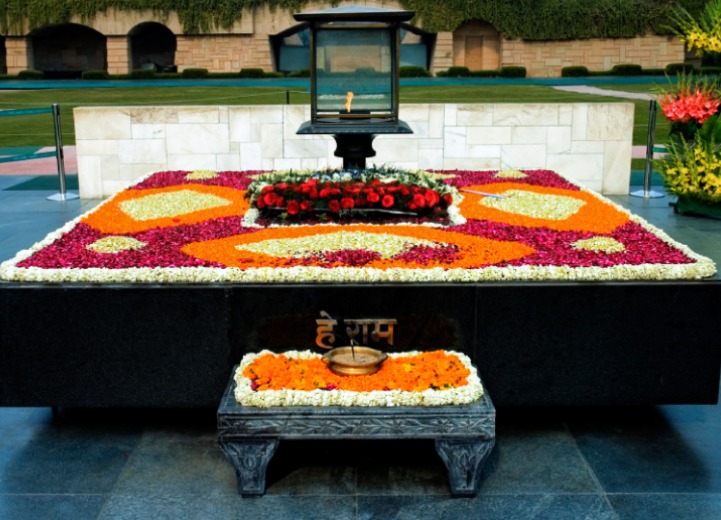
- The Raj Ghat, which is located on the Delhi’s Ring Road, carries a lot of political significance as it is the memorial dedicated to Mahatma Gandhi.
- This is the very site, a shiningly black marble platform, where Gandhiji is cremated. It is an open to the sky platform.
- There is an external flame placed at one end of the platform. The Delhi’s Ring Road is also popularly called the Mahatma Gandhi Road.
- The site features a stoned footpath and on either sides, there are lawns. This footpath takes you to the memorial.
- In addition to the Raj Bhat, you can add several places such as the India Gate, the Lotus Temple, the Red Fort, et al to the bucketlist of tourist destinations in New Delhi.
- The best time to visit the Raj Ghat is during the winter months, as the summers are generally hot and humid in the capital.
- The natural milieu of the Raj Ghat area is also filled with trees planted by public figures and other distinguished personalities.
- Mahatma Gandhi when assassinated on 30th January 1948 was cremated at this place. Previously known as Shajahanabad, a big Ghat of Old Delhi, the memorial was later renamed as the Raj Ghat.
- The Raj Ghat is also resting place of several other leaders including that of Jawaharlal Nehru known as the Shantivan, located to the north of the Raj Ghat, and situated close to it is the cremation site of K R Narayan, the 10th president of India, called Ekta Sthal.
- Alick Percy-Lancaster, who was the Superintendent of Horticultural Operations, GOI, undertook the landscaping of the area. Interestingly, he was the last Britisher to occupy this post.
How has COVID-19 changed religious travel and pilgrimages? – Part 2
Prior to the deadliest pandemic since the new millennium viz. the COVID-19, religious and pilgrimage travel was business big time predicted only to get bigger and better by travel industry pundits. But a storm of change hurled things off the root, and proved all industry prophecies wrong. Just before the pandemic outbreak, an estimated 600 million religious and spiritual voyages were recorded, with 40 per cent of it taking place in Europe and over half of it in different regions of Asia, whilst the annual pilgrimage to Karbala in Iraq, one of the most sacred sites for Muslims after Mecca and Medina and Jerusalem, pulled in over 25 million pilgrims.

Saudi Arabia was not without hope for the annual Hajj this year. The Hajj and Umrah pilgrimages contribute a staggering $12 billion to the Saudi economy under normal circumstances, and this is equal to 20 per cent of the country’s non-oil GDP and 7 per cent of the kingdom’s overall GDP. It is expected that the Hajj and Umrah revenue generated will hit $150bn by 2022. It started on a positive note by enhancing the travel experience for both pilgrims as well as international tourists by pumping money into transport and luxury hotels. In 2019, 1.8 million pilgrims from around the world completed the annual Hajj, whilst tens of millions arrived for the Umrah.
India, the land of spirituality, home to the greatest religions of the world, where people of diverse religions, communities and race have thrived with a great sense of oneness, pride and unity, had all its temples, churches and mosques closed indefinitely. It should be noted that the famous annual Amarnath Yatra that attracts thousands of Hindu devotees, scheduled to begin on June 23 and end up on August 3, on the day of Shravan Purnima had to be cancelled in an effort to curb the spread of COVID-19 in the region.
The health concerns everywhere in the world, as seen above, clearly outweigh the prospects of travelling to pilgrimage sites in the immediate future.
How has COVID-19 changed Business or Corporate Travel?- Part 3
The third part of the blog gets more interesting as we discuss another key parameter that will have a huge bearing on the how business or corporate travel will be conducted in the near future. Did we mention safety hygiene? Hygiene, both personal and communal, and in everything we do, has turned out to be a life-saving virtue throughout the pandemic, in addition to maintaining social distancing and equipping ourselves with a proper safety gear. Not surprisingly, customers will display a greater sense of loyalty towards hotel and restaurant brands that practise hygiene religiously, in line with the already existing safety standards and protocols.

Duty-of-care policy:
Now, if you are a corporate or business travel manager, you are in for a spot of bother. The duty-of-care policy adopted by a company is traditionally a documentation of the safety protocols required to protect the welfare and well-being of the employees and staff during business travel. The company has a moral responsibility to safeguard their employees against COVID-19 and other impending virus infections in the future via the duty-of-care policy, and more importantly ensure the employees are fully compliant with the guidelines prescribed.
The travel manager, therefore, has to ensure that majorly hygiene does the talking in the selection of travel vendors including hotels, restaurants , cabs, etc. No longer will cost control alone dictate terms in the selection criteria, but also safety, in addition to other factors such as risk assessment and compliance. It goes without saying that traveller safety, along with comfort, can directly impact productivity at the end of the day. This also includes avoiding travelling in jam-packed planes and overcrowded airports. The firm should also guarantee medical response and security of the employee in the wake of an emergency, well aware of the potential risks. All said and done these are tough times if you are a business owner, and both caution and care must be exercised in order to protect the safety interests of your travelling employees.
Tourism sector is key to revival of Indian Economy: From the founder’s desk – Part 2
Now, let us view the scenario from another angle employment. The central tourism ministry mentions that tourism, either directly or indirectly, accounts for the employment of almost 90 million people. Add to this the 100 million-odd people who are employed in the travel sector and you can understand its significance. Now here’s the bad news: 20 million jobs can be put to immediate risk if the travel sector fails to come out of this dire situation, while some experts estimate it a notch higher at 50 million.

Kerala, as discussed in the previous blog, churned out INR 28,000 crore from foreign and domestic tourism in 2018. Tourism contributed to a quarter of the state’s employment figures. The same rings true for Kashmir, Sikkim, Goa and Rajasthan. Not to mention Tamilnadu (that is manufacturing-focussed) and Uttar Pradesh (mainly an agrarian economy) depending on tourism for revenue. The two added up to more than a third of India’s total tourist visits in 2018.
This is the story in most states that are dependent upon the travel sector. As for Kerala, the current situation can prove havoc for specific regions and districts. And Kashmir, Uttarakand, Bihar and Rajasthan are no different as per some ground reports. Reports show that 95 per cent of hotels and guest stays, and almost 80 per cent of tour operators are closed temporarily citing losses. Needless to say, more number of people will be actually affected by the ongoing economic crunch fuelled by lockdown after lockdowns than the pandemic.
There have been several unsuccessful attempts in the past to kick-start tourism, thanks to the growing COVID-19 cases in most states of India. I feel there has to be an integrated effort at the policy-making level both by the Central and state governments as well as by the stakeholders and industry participants to revisit the long-term perks of reviving the travel and tourism sector. The sector has to be viewed as an integral part of the bigger economic and social ecosystem. All said and done I admit that there are few man-made complications that hamper the mobility of people and transport system. We will continue our musings in the next part of the blog series.
Travel Industry will reach pre-pandemic levels by 2023 – Part 1
The world has been reeling down under the weight of COVID-19 or the Novel Corona Virus, as businesses struggle to pick up post-outbreak of the deadly pandemic crisis. The travel and hospitality sector by far has been the worst hit sector. Experts opine that for the travel sector to revive its fortunes, it should put technology at the heart of operation. And rightly so, other industry sectors have started innovating in novel ways hitherto never seen. Experimentation at the technological front is already paying rich dividends.
The travel industry devastated by the spiraling effects of COVID-19 will see a revival mode in 2021, and expected to achieve the pre-pandemic crisis level by 2023 with more flights in action.
It is estimated that the travel industry and aviation sector will shrink by 25% and 50% respectively in 2020 to grow steadily by 2021, and hit the pre-crisis level by 2023. The aviation sector worldwide suffered over 20% during the month of May which further declined to 80% in June. Many experts expect world aviation to improve by 30% to 35% in July going by the recent numbers; however, there is a big concern of more than 10 major countries including the US being badly hit.
The US had pumped $50 billion into the global aviation industry, as a bail-out package, while England and Japan had offered about 20% of their GDP. All said and done, India has failed to rise up to its full potential with Air India, one of the major Indian air carriers, facing the heat. So, what is the road ahead? We will continue our discussion in the subsequent blog.
Travel will live on….From the founder’s desk of Emperor Traveline – Part 2
I am more than excited to discuss more on why Travel will live on…and better than ever before. I may sound all optimistic, but that is how Emperor Traveline was able to take on even the roughest of tides smoothly and with a lot of grace. As I am writing this, I am hearing more and more of Touchless travel doing the rounds everywhere from airport curbside to hotel check-in. No matter how strict the cleaning protocol is, touching surfaces and exchanging travel documents through check-in, border enforcement, security, and boarding can still pose infection threat to both the travellers as well as staff.

Automation of the travel sector will know no bounds. That, for me, will be the new normal. Biometrics will play a vital role than ever before in the area of identity verification and their use will ensure fingerprint and hand scanners are the first routine-tests that travellers have to undergo and pass through. Not just these, touchless options will emerge including the likes of contactless fingerprint, in addition to face and iris recognition all serving at the frontline of COVID-19 battle.
The role of touchless data entry solutions such as touchless document scanning, gesture control and voice commands can turn out to be indispensible. Great care must be taken to make sure these technologies are inclusive, and to get rid of the risk of potential biases. From Touchless Entrance Solutions including converting sliding doors to revolving doors, contactless entry, retrofitting air curtains, and integrating external access control system, there are always new ways to invest in innovation to check the spread of COVID-19 and other potential infections in the future, and mitigate health risks involving Corona virus. Other takeaways include lowering building energy waste and costs, and secure and faster access to destination.
Travel will live on….From the founder’s desk of Emperor Traveline – Part 1
I wrote a blog previously on a world without travel, and the response I received from the users made me write a sequel to it. There were many I would call them pessimists during the ongoing COVID-19 lockdown who asked me if the travel industry would ever survive after taking so many punches left, right and centre. I would still say, perhaps even more vociferously than before, that the best is yet to come. Patience holds the key to unlocking the revival of the industry within. Yes, let me repeat, within. What lies ahead lies in how the travel industry will shape itself in the days to come.
Technology, for instance, can play such a huge role in turning the tables on. Now, ask me how. There will be a paradigm shift to touchless or contactless travel and a new health safety regime, backed by digital tools will emerge for the safety of the travelers.
Say even if borders reopen, travelers must have full confidence that boarding a plane is absolutely safe and that they will make it to the destination without any hassle. New health safety protocols aided by innovative system needs to be configured in places, though these are yet to be defined. As governments and industry brace themselves to adapt to this fundamental shift in traveller behaviour, the use of biometric and digital identity technology will prove to be indispensible. Only this can restore and instill a sense of confidence whilst also ensuring travellers experience a seamless journey.
All said and done, effectiveness is felt only if the user data is protected. Privacy, data transparency governance and consent may go a long way in ensuring the digital transformation of travel industry is seamless.
Don’t go away; there is more to come. But that’s for another day. Until then, stay indoors and stay safe.
What are the ways by which the travel sector can revive its prospects post COVID-19 pandemic?
The world has been reeling down under the deadly effects of COVID-19 or Corona virus. Lives lost, hopes shattered, jobs axed and businesses in the doldrums, the world is going through the motions. The travel sector, of all business sectors, has taken the most punches left, right and centre. And it seems as if there will be no respite from it. But there are ways by which travel sector can revive itself and emerge stronger.

The need of the hour is a standard travel policy to facilitate travel by air, sea or road. It is imperative that travellers and tourists follow the guidelines and travel policies religiously to safeguard themselves from the effects of COVID-19 in future. The guidelines must cover social distancing, hygiene and protocol followed in public places such as airports, railway stations, bus stops, travel booking and support centres, etc.
Next comes hygiene, the protocol must stress the importance of hygiene as only proper personal and public hygiene, in addition to cleanliness can keep COVID-19 and other infections at bay. Is wearing a face mask essential at all times? Should travellers carry hand sanitizers with them? What should the COVID-19 travel kit contain? What are the safety and precautionary medical tests that will be in place at public places? What are the medical tests that the traveller has to undergo to ensure travel permit? What are the documents that are required for travel permit from a COVID-19 perspective? Do kids require special permit to travel? If so, what are the regulations that will be in place? These are some of the questions and more that the travel policy should encompass for future travel prospects post COVID-19 crisis.
Finally, what are the safety and hygiene standards to be followed by hotels and restaurants? What are the standards to be adopted by the hotel staff and employees? What are the standards to be followed in the commercial kitchen of hotels and restaurants? Does the hotel or the restaurant need to adopt takeaway as a mandatory feature and more. Online/Mobile booking and digital payment modes must be promoted by the Government for public to stay away from infection.
10 points on how the Indian Travel & Tourism industry is affected by COVID-19 crisis
1. Foreign tourist arrivals (FTA) last month declined by 9.3% month-on-month and 7% year-on-year, according to reliable government sources.
2. The number of FTAs in February 2020 were 10.15 lakh against 10.87 lakh during the same period in 2019. The number of FTAs in January 2020 were found to be 11.18 lakh.
3. The number of visitors to the newly built Statue of Unity in Gujarat dropped by over 38 % during January and February.
4. As a result, the revenue collection during the same period declined by approximately ₹5 crore.
5. A report by the Archaeological Survey of India (ASI), the total revenue from ticketed monuments was INR 247.89 crore in FY18, INR 302.34 in FY19 against INR 277.78 crore in FY20 between the months April and January.
6. According to a reliable report by an Archaeologist of ASI, Agra Circle, at the Taj, the number of tickets sold at the Taj during the month of March fell over by 6,000 tickets compared to the period between January and February.
7. Two days prior to the first shutdown during the month of March, the authorities at the Taj were hardly able to sell 8,000 tickets, according to the ASI reports.
8. As per the report by the Federation of Associations in Indian Tourism & Hospitality, about 70% out of a total estimated workforce of 5.5 crore (direct and indirect) that is over 3.8 crore could go jobless.
9. Tourism Industry is one of the biggest sectors, and the ongoing COVID-19 could impact 10% of the total GDP of the country.
10. The recovery phase for the travel and tourism sector of the country is estimated to be 8-10 months, even if the government were able to fight the COVID-19 crisis successfully.