
Travel will live on….From the founder’s desk of Emperor Traveline – Part 2
I am more than excited to discuss more on why Travel will live on…and better than ever before. I may sound all optimistic, but that is how Emperor Traveline was able to take on even the roughest of tides smoothly and with a lot of grace. As I am writing this, I am hearing more and more of Touchless travel doing the rounds everywhere from airport curbside to hotel check-in. No matter how strict the cleaning protocol is, touching surfaces and exchanging travel documents through check-in, border enforcement, security, and boarding can still pose infection threat to both the travellers as well as staff.

Automation of the travel sector will know no bounds. That, for me, will be the new normal. Biometrics will play a vital role than ever before in the area of identity verification and their use will ensure fingerprint and hand scanners are the first routine-tests that travellers have to undergo and pass through. Not just these, touchless options will emerge including the likes of contactless fingerprint, in addition to face and iris recognition all serving at the frontline of COVID-19 battle.
The role of touchless data entry solutions such as touchless document scanning, gesture control and voice commands can turn out to be indispensible. Great care must be taken to make sure these technologies are inclusive, and to get rid of the risk of potential biases. From Touchless Entrance Solutions including converting sliding doors to revolving doors, contactless entry, retrofitting air curtains, and integrating external access control system, there are always new ways to invest in innovation to check the spread of COVID-19 and other potential infections in the future, and mitigate health risks involving Corona virus. Other takeaways include lowering building energy waste and costs, and secure and faster access to destination.
Travel will live on….From the founder’s desk of Emperor Traveline – Part 1
I wrote a blog previously on a world without travel, and the response I received from the users made me write a sequel to it. There were many I would call them pessimists during the ongoing COVID-19 lockdown who asked me if the travel industry would ever survive after taking so many punches left, right and centre. I would still say, perhaps even more vociferously than before, that the best is yet to come. Patience holds the key to unlocking the revival of the industry within. Yes, let me repeat, within. What lies ahead lies in how the travel industry will shape itself in the days to come.

Technology, for instance, can play such a huge role in turning the tables on. Now, ask me how. There will be a paradigm shift to touchless or contactless travel and a new health safety regime, backed by digital tools will emerge for the safety of the travelers.
Say even if borders reopen, travelers must have full confidence that boarding a plane is absolutely safe and that they will make it to the destination without any hassle. New health safety protocols aided by innovative system needs to be configured in places, though these are yet to be defined. As governments and industry brace themselves to adapt to this fundamental shift in traveller behaviour, the use of biometric and digital identity technology will prove to be indispensible. Only this can restore and instill a sense of confidence whilst also ensuring travellers experience a seamless journey.
All said and done, effectiveness is felt only if the user data is protected. Privacy, data transparency governance and consent may go a long way in ensuring the digital transformation of travel industry is seamless.
Don’t go away; there is more to come. But that’s for another day. Until then, stay indoors and stay safe.
What are the ways by which the travel sector can revive its prospects post COVID-19 pandemic?
The world has been reeling down under the deadly effects of COVID-19 or Corona virus. Lives lost, hopes shattered, jobs axed and businesses in the doldrums, the world is going through the motions. The travel sector, of all business sectors, has taken the most punches left, right and centre. And it seems as if there will be no respite from it. But there are ways by which travel sector can revive itself and emerge stronger.

The need of the hour is a standard travel policy to facilitate travel by air, sea or road. It is imperative that travellers and tourists follow the guidelines and travel policies religiously to safeguard themselves from the effects of COVID-19 in future. The guidelines must cover social distancing, hygiene and protocol followed in public places such as airports, railway stations, bus stops, travel booking and support centres, etc.
Next comes hygiene, the protocol must stress the importance of hygiene as only proper personal and public hygiene, in addition to cleanliness can keep COVID-19 and other infections at bay. Is wearing a face mask essential at all times? Should travellers carry hand sanitizers with them? What should the COVID-19 travel kit contain? What are the safety and precautionary medical tests that will be in place at public places? What are the medical tests that the traveller has to undergo to ensure travel permit? What are the documents that are required for travel permit from a COVID-19 perspective? Do kids require special permit to travel? If so, what are the regulations that will be in place? These are some of the questions and more that the travel policy should encompass for future travel prospects post COVID-19 crisis.
Finally, what are the safety and hygiene standards to be followed by hotels and restaurants? What are the standards to be adopted by the hotel staff and employees? What are the standards to be followed in the commercial kitchen of hotels and restaurants? Does the hotel or the restaurant need to adopt takeaway as a mandatory feature and more. Online/Mobile booking and digital payment modes must be promoted by the Government for public to stay away from infection.
10 points on how the Indian Travel & Tourism industry is affected by COVID-19 crisis
1. Foreign tourist arrivals (FTA) last month declined by 9.3% month-on-month and 7% year-on-year, according to reliable government sources.

2. The number of FTAs in February 2020 were 10.15 lakh against 10.87 lakh during the same period in 2019. The number of FTAs in January 2020 were found to be 11.18 lakh.
3. The number of visitors to the newly built Statue of Unity in Gujarat dropped by over 38 % during January and February.
4. As a result, the revenue collection during the same period declined by approximately ₹5 crore.
5. A report by the Archaeological Survey of India (ASI), the total revenue from ticketed monuments was INR 247.89 crore in FY18, INR 302.34 in FY19 against INR 277.78 crore in FY20 between the months April and January.
6. According to a reliable report by an Archaeologist of ASI, Agra Circle, at the Taj, the number of tickets sold at the Taj during the month of March fell over by 6,000 tickets compared to the period between January and February.
7. Two days prior to the first shutdown during the month of March, the authorities at the Taj were hardly able to sell 8,000 tickets, according to the ASI reports.
8. As per the report by the Federation of Associations in Indian Tourism & Hospitality, about 70% out of a total estimated workforce of 5.5 crore (direct and indirect) that is over 3.8 crore could go jobless.
9. Tourism Industry is one of the biggest sectors, and the ongoing COVID-19 could impact 10% of the total GDP of the country.
10. The recovery phase for the travel and tourism sector of the country is estimated to be 8-10 months, even if the government were able to fight the COVID-19 crisis successfully.
All about the Fort Aguada – the Fortress of Strength
- Goa, the smallest state in India in terms of area and word length, synonymous for the spectacular beaches, stunning parties and ultra modernity has lot more to offer in terms of heritage and culture in addition to its exciting touring destinations popular the world over.
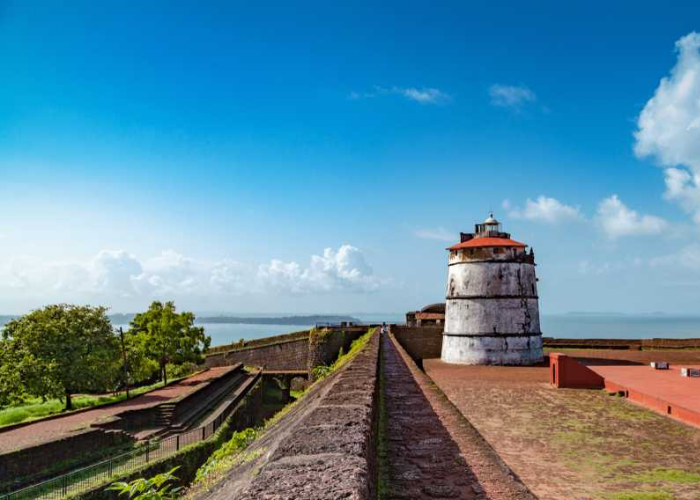
- A stark reflection of the state’s colonial history, the Fort Aguada is built in 1510 after the Portuguese conquered it comprehensively.
- The fort that stands stall is located on the Sinquerim beach at the mouth of the Mandovi River facing the Arabian Sea.
- Built between the years 1609 and 1612, the name of the fort comes from ‘agua’ meaning ‘water’. There is a spring within the fort that enabled the crews of passing ship to top up their freshwater sources.
- The fort was bifurcated into two sections: the upper part functioning as a watershed, and a fort well insulated by a deep dry moat. The lower part served as a safe hour for the Portuguese vessels to hoard and top up their supplies, in addition to being a bastion, gun powder room and a clandestine escape passage during emergency.
- Besides the huge cistern of the fort could store up to 2, 30,000 gallons of water. The high fort served as a citadel against invading forces during the Portuguese rule.
- Main attractions of the fort include a four-storey lighthouse, one of the oldest in Asia, which was raised in 1864. However, it has remained out of use since 1976.
- Interestingly, huge bonfires were lit on the ‘Hills of Pilot’ just above the site of the Church of Immaculate Conception in Pune to guide the sailing ships into safety.
- It was under the administration of Antonio de Oliveira that he turned the lower part of the fort into prison, and protestors who demanded that Goa be handed back to India were imprisoned here. Today, it is more popular as Goa’s central jail housing those accused of trafficking and narcotics-related offenses.
- Much of the fort today is acquired by the Taj group of Hotels as a Heritage hotel. Get yourself transported back to the time where the angry waves rolled the ships into its sheltered harbour. Definitely, worth a visit.
Everything you need to know about the Dolmen Circle in Kodaikanal
- Are you burned out and knackered this summer and wanted to take a breather? One of the best places in Tamilnadu to be this summer is the charming hill station of Kodaikanal that has about 40 tourist attractions. One of the lesser known places in Kodaikanal, though popular, is the Dolmen Circle.
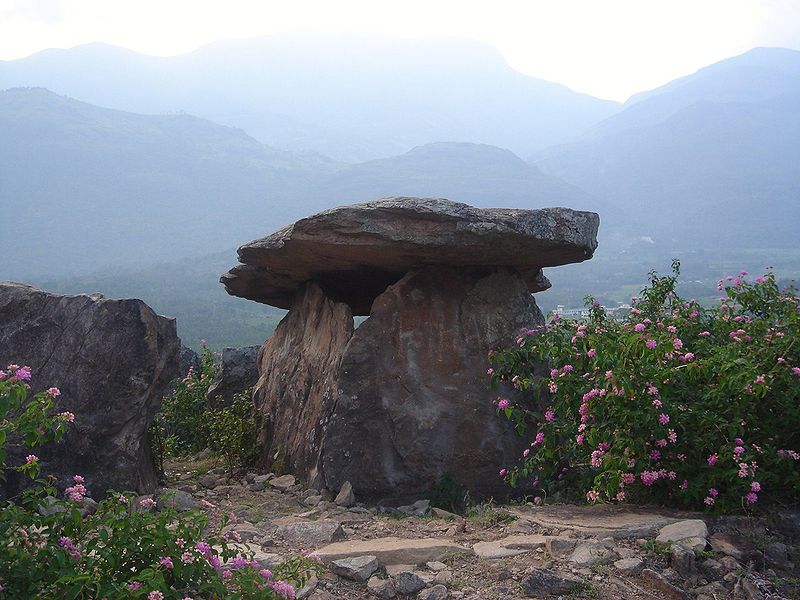
- The Dolmen Circle is about 8km from Kodaikanal Lake and 18km from Berijam Lake. It is one of the most important places among anthropologists. A pre-historic site, the Dolmen Circle dates back to 5000 BC.
- This place is believed to be the dwelling place and burial site of the pre-historic man who belonged to the Iron Age and Stone Age. They are known as dolmens and Kistavens.
- Situated nearby the Parvatha Vihar and the Pannikadu village, the dolmen is raised out of two huge erect slabs covered by a huge flat slab.
- The sands of time brought destruction to several dolmens, so only two survive now. One is found at the Ghat Road near Periyakulam and another 2 km away from the hamlet of Pannaikadu.
- It is located on the highest point before you descend to Pattiveerampatti still standing rock-solid without significant damage.
- The place is the remains of pre-historic inhabitants in addition to models of dolmens and burial urns. The ruins and remains of the place can transport you right to the pre-historic living.
- Research also shows that these were used as hideout for the pre-historic man. It is also widely believed that this site served as a safe haven for people to hoard their valuables. Site excavations in the past unearthed several copper and brass ornaments in addition to the utensils. On the other hand, Kistavens were used as burial grounds.
A dream ride into the hills of Ooty – The Nilgiri Mountain Railways’ (NMR) Toy Train – Part 2
Ooty had been an unchartered territory until 1820 and it had inconsistent boundaries of forest terrain. It is said that Ooty was an accidental find by the British who found the place to be stunningly beautiful and the weather to be clement throughout the year. Thus, they gave birth to a hill station that boasted eternal beauty and charm. The then district collector John Sullivan at once decided to transform it into a lovely hill station in the 1820s and founded Ooty, building two stone-houses one, Kal Bangla, which turned out to be the official residence of the Principal of the Government Arts College and was given a new makeover.
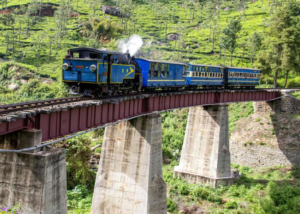 A railway line was first commenced in 1854 but it took no less than 40 years to get it done. In 1873, the train to Coimbatore underwent extension up till Mettupalayam and one has to take the ghat road before the laying of the tracks. The NMR, now the lifeline of Ooty’s economy, became world heritage in 2005. The rail-trails cover various activities including trekking along the railway tracks, exploring tunnels and viewing how the signal-systems work and other milestones.
The Nilgiri Mountain Railway makes its way through plains for the first 5 miles. In the next 12, it makes an ascend spectacularly up to 4363 ft passing through nine tunnels, lending you splendid views of the eastern slopes of Ooty. You can take non-stop selfies and photo-ops, moving to the left. A mystifying spectacle beholds you when the train hustles and whistles though Wellington, Coonoor, Lovedale and stops near the Ooty Lake.
Other attractions include the longest rail bridge across River Bhavani near the Mettupalayam station, Coonoor station (built-in stone), Fernhill station (now closed and made ‘rest’ guesthouse), track/tunnel-walk through tunnel no. 16 that is 4-km long and unique masonry or rock-cut tunnels. The toy train featured in the 1984 David Lean-directed ‘A Passage to India’ movie. At least three chief ministers of South India have had their movie songs shot here. As there’s no pantry car on the train, you need to carry your own food while traveling. There’s a tree planted at the Government Arts College compound by Sullivan which you can add to your sightseeing bucket list.
News – Ooty (Nilgiris) To Get A New Botanical Garden On A Sprawling 80 Acres Of Land Soon
Ooty, or Udhamagamandalam, as it is popularly called in Tamil Nadu, is one of the most popular hill stations in India. This charming hill station receives maximum visitors during the summer season. The cool and salubrious climate, well complemented by the lush and fertile greeneries, in Ooty, has attracted tens and thousands of tourists on their holiday vacation every year. The botanical garden, opened in 1847, has been a major tourist destination ever since. The Tamil Nadu Horticultural Department is entrusted with the responsibility of maintaining it all around the year.
 The Queen of Hill Stations will get its second botanical garden soon on a sprawling 80acres land, as per an announcement made by the Tamil Nadu Government. The Tamil Nadu Tourism Development Corporation is buoyant that Ooty’s second botanical garden will see more tourist influx during the summer season.
The chief minister of Tamil Nadu, Mr E. Palaniswami, brought smiles to many when he made the announcement in accordance with Rule 110 in the Assembly House that a second botanical garden will be set up at Ooty. He followed it up with the allocation of the project cost of 10 crores for establishing the 200th year Evergreen Grassland at Ooty.
Large crowd hits the picturesque hill station of Ooty during the annual Flower show organised with great fanfare; the second botanical garden would add to the overall attraction. Another famous park in Ooty is the Rose Park, which receives over 10 lakh tourists a year, resulting in traffic congestion during the peak season and lack of adequate parking space for the vehicles. The Chief Minister also announced that a permanent parking space that can put up as many as 500 vehicles will be opened at an outlay of Rs 3 crores here.
Tourists in TajMahal Can Enjoy Aerial View With The New Heliport in Pipeline
For tourists looking to enjoy an airborne view of Taj Mahal, India’s finest monument and one of the seven world wonders, the long wait is finally over. Thanks to the construction of a heliport by the tourism department of Agra on the Agra–Lucknow Expressway that would reduce the travel time considerably from the heliport to the 17th-century monument Taj Mahal, constructed by the great Mughal emperor Shah Jahan as a resting place for his favourite wife Mumtaz Mahal, as reported by ANI.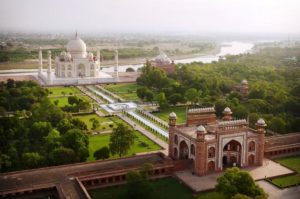
Mr Amit Kumar, deputy director of UP tourism, believes that the construction of a heliport will not only offer an aerial view of the monument but also that of the entire historical city of Agra. The helicopter, he added, would transport them to the site in just about 10–15 minutes.
Mr Kumar said that the helicopter operation would commence soon as the required land grants to construct the heliport have been approved by the Government authorities. He further added that lands have also been earmarked and would be granted approval soon for the heliport scheme in Mathura, Lucknow, Varanasi and Allahabad, in addition to Agra.
This will be a sort of different experience for the average tourist, who would have viewed the Taj Mahal only from the ground level an ariel view would warrant fun and adventure for all. This may also help the physically challenged, elderly and children who can take a panoramic view of the Taj Mahal below. It can be a tough ask to take children and the elderly around the entire complex. The heliport scheme can make light work of viewing the monument, in addition to saving travel time. As what will be a fillip to the tourism of the city, the heliport service comes as a relief to tourists who have less time to spare.
To Visit Tajmahal at very Low cost, Emperor Traveline is Providing a best and cheap tour package offers.
Sightseeing in Gulmarg
Gulmarg, the popular hill station and skiing destination, can rightly be called the crown of Kashmir. It is the perfect picnic spot and has featured in several Bollywood films like Bobby, Jab Tak Hai Jaan, Yeh Jawaani Hai Deewani, and Highway, to name a few.
Gulmarg, the popular hill station and skiing destination, can rightly be called the crown of Kashmir. It is the perfect picnic spot and has featured in several Bollywood films like Bobby, Jab Tak Hai Jaan, Yeh Jawaani Hai Deewani, and Highway, to name a few. Adventure seekers, nature lovers and spiritual seekers will never run out of place to visit in Gulmarg. Here is a list of some of the must-see sightseeing spots in Gulmarg for a Stress Free Vacation.
Gulmarg Golf Course
Gulmarg Golf Course with its irregular curves is one of the largest 18-hole golf courses in the country. It was in the early 1920s that golfing began in the reign. Thanks to the British who chanced upon the golfing possibilities of the place while spending their summers here. It has now become one of the most popular golfing destinations in India.
Gulmarg Biosphere Reserve
Gulmarg Biosphere Reserve, which is home to a lot of rare species of avifauna, fauna and flora, is spread over an area of 180 sq km. Here you will find biodiversity in its richest form. It is situated at a height varying between 2400 and 4,300 metres above sea level.
Shrine of Baba Reshi
This is a popular religious haunt, which is known for its architectural splendour, built in the 13th century. It is dedicated to Baba Reshi, a Muslim saint, who is believed to have meditated here. People from all walks of life visit the shrine to seek blessings. The shrine is built in old Kashmiri architectural style and is a symbol of fine craftsmanship.
St. Mary’s Church
St. Mary’s Church built in Victorian style of architecture in the early 20th century is a major tourist attraction in Gulmarg. The church has grey stone walls and a steep green roof with wooden trimmings. It is surrounded by tall alpine trees and soaring mountains, which are covered with snow during winters.
Strawberry Valley
If you are visiting Gulmarg in the summer you are in for a delight. You get to taste the best strawberries you have ever tasted in Gulmarg’s Strawberry Valley. A walk to this unexplored part of Gulmarg will be certainly a walk to remember.
Apharwat Peak
Situated at an altitude of almost 4200 m above the sea level, the Apharwat Peak is one of the most stunning peaks in the country. It is located just a few kilometres away from the Line of Control (LOC). It receives heavy snowfall and is covered with snow all year round. This makes it an ideal spot for skiing. You can take a cable car ride to reach the spot.
Ferozepur Nallah
Between the beautiful Chinamarg and Nurpur Pass lies Ferozepur Nallah, an enchanting mountain stream flowing through lush valleys. It is surrounded by pine trees, verdant pastures and soaring snow-capped mountains. It is the picnic spot of your dreams. The place is also a popular fishing spot.
So, while planning a holiday to Gulmarg, make sure that you include all these charming places in your itinerary with the Best Travel Agency Tour package.
