
All about the Fort Aguada – the Fortress of Strength
- Goa, the smallest state in India in terms of area and word length, synonymous for the spectacular beaches, stunning parties and ultra modernity has lot more to offer in terms of heritage and culture in addition to its exciting touring destinations popular the world over.
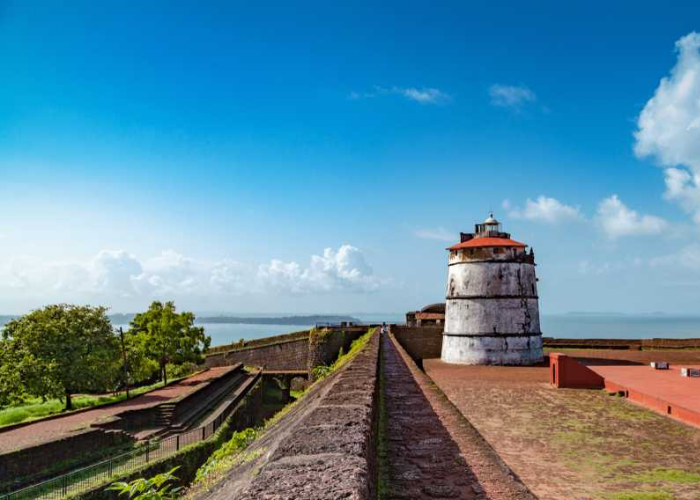
- A stark reflection of the state’s colonial history, the Fort Aguada is built in 1510 after the Portuguese conquered it comprehensively.
- The fort that stands stall is located on the Sinquerim beach at the mouth of the Mandovi River facing the Arabian Sea.
- Built between the years 1609 and 1612, the name of the fort comes from ‘agua’ meaning ‘water’. There is a spring within the fort that enabled the crews of passing ship to top up their freshwater sources.
- The fort was bifurcated into two sections: the upper part functioning as a watershed, and a fort well insulated by a deep dry moat. The lower part served as a safe hour for the Portuguese vessels to hoard and top up their supplies, in addition to being a bastion, gun powder room and a clandestine escape passage during emergency.
- Besides the huge cistern of the fort could store up to 2, 30,000 gallons of water. The high fort served as a citadel against invading forces during the Portuguese rule.
- Main attractions of the fort include a four-storey lighthouse, one of the oldest in Asia, which was raised in 1864. However, it has remained out of use since 1976.
- Interestingly, huge bonfires were lit on the ‘Hills of Pilot’ just above the site of the Church of Immaculate Conception in Pune to guide the sailing ships into safety.
- It was under the administration of Antonio de Oliveira that he turned the lower part of the fort into prison, and protestors who demanded that Goa be handed back to India were imprisoned here. Today, it is more popular as Goa’s central jail housing those accused of trafficking and narcotics-related offenses.
- Much of the fort today is acquired by the Taj group of Hotels as a Heritage hotel. Get yourself transported back to the time where the angry waves rolled the ships into its sheltered harbour. Definitely, worth a visit.
Kanakakunnu Palace in Trivandrum, Motley of Heritage and Ecology
- The Kanakakunnu Palace in Trivandrum was once the venue for stately events of the erstwhile royal family of Travancore
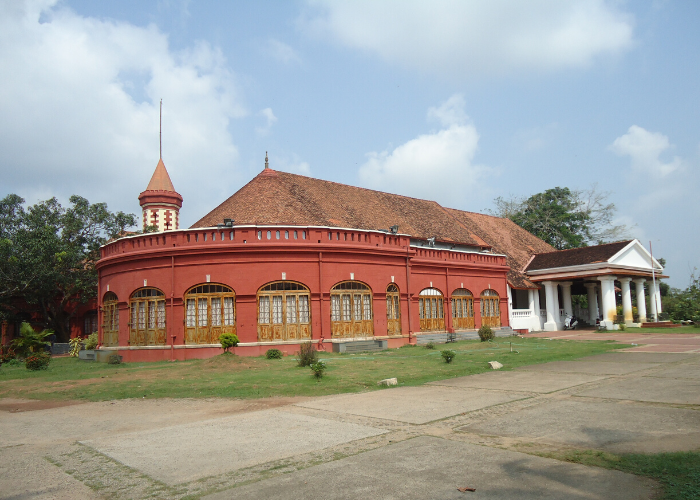
- Listed by the Indian National Trust for Art and Cultural Heritage as a heritage monument, the Kanakakunnu Palace in Trivandrum today is motley of history and ecology.
- The palace, constructed during the reign of King Sree Mulam Tirunal (1885-1924), was used for royal banquets. Swati Tirunal gave a complete makeover of the palace, and even built a tennis court on its premises.
- Opened first to public view in the 1960s as a venue for marriages, the splendid edifice, the jewel on the ridge of a hillock laden with landscaped green meadows, bamboo thickets and blossoming shrubs have become a favourite among the locals and tourists. There are many events that are conducted here in its stately halls.
- Members of walking & laughing clubs, yoga practitioners, in addition to college students, nature lovers and senior citizens hang out in large numbers. The rare trees here are another attraction.
- This place is also used to hold government-sponsored events and other cultural events. But the increasing number of commercial activities in and around the building has posed several challenges to the Tourism Department which takes care of it.
- The locals are opposed to the idea of using this place for trade fairs and exhibitions, considering the significance of its cultural, historical and architectural values.
- The significance of the Kanakakunnu Palace is also felt in its role in micro-climate amelioration and regulation and curbing emission of greenhouses gases, as a lush green, open space in the busiest part of the city.
- The meadows in the hill terrain if properly maintained can turn out to be a natural herbal peak with Dasapushpam’s and other precious flora, making it a nature’s herb museum, and for people to just relax and walk, and kids to play on the premises.
- Locals also suggest that it should be made a heritage zone, and that a nominal entry fee can be collected for maintaining the park sublimely green.
All About the Plettenberg Bay in South Africa
The town of Plettenbergy Bay is situated almost on the edge of Eastern and Western Cape. Built on the hillside, most part of the town is located on a steep slope descending all the way into the sea. Once you are at the Plettenbergy Bay, you’ll be treated to the scintillating views of the bay and surrounding mountain ranges and hills. There are a numbers of upmarket resorts and hotels to self catering, to budget Bed & Breakfasts and accommodation here.
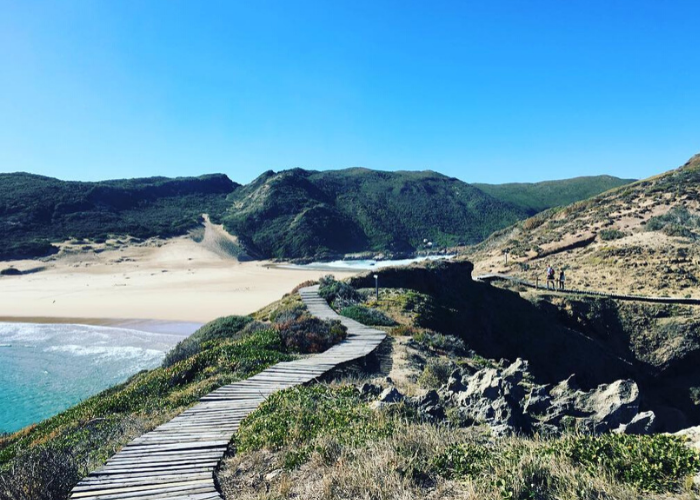
The Plettenberg Bay, once a quaint town, was visited by European explorers from Portugal and the UK. The remnants of the Gonzales Wreck in town; Old Rectory, constructed by the Dutch East India Trading Company in 1776 and Forest Hall, a stately home that was privately owned, established in 1864 by William Henry Newdgate stand tall to this day.
Popular tourist activities include yachting at the Keurbooms River mouth and marina and playing polo at Kurland. You can indulge yourself in water sports and swimming in the clear and serene waters. There are many pristine beaches worth a visit, and if you want to boost your adrenaline performance, there are a host of activities including hiking, charter boat cruises, abseiling and canoeing. Another popular attraction is the Monkeyland Primate Sanctuary, a one of its kind multi-species, free roaming primate sanctuary. You can also make a trip to the Witblits distillery and Mampoer.
Don’t go away, there’s lot more: you can take a short trip on the N2 moving towards Port Elizabeth, across the border into the Eastern Cape, and return to the Bloukrans Bridge. An engineering wonder, it is where the world’s highest commercial bungee jump site is located. Situated at 216 metres, it is not for everybody to take a plunge from the purpose-built observing platform bordering the gorge.
If you are done with the above activities, visit the Khoisan Village to take a glimpse of the lives of the indigenous peoples of the area, and enjoy buying local arts and crafts.
Everything you need to know about the Dolmen Circle in Kodaikanal
- Are you burned out and knackered this summer and wanted to take a breather? One of the best places in Tamilnadu to be this summer is the charming hill station of Kodaikanal that has about 40 tourist attractions. One of the lesser known places in Kodaikanal, though popular, is the Dolmen Circle.
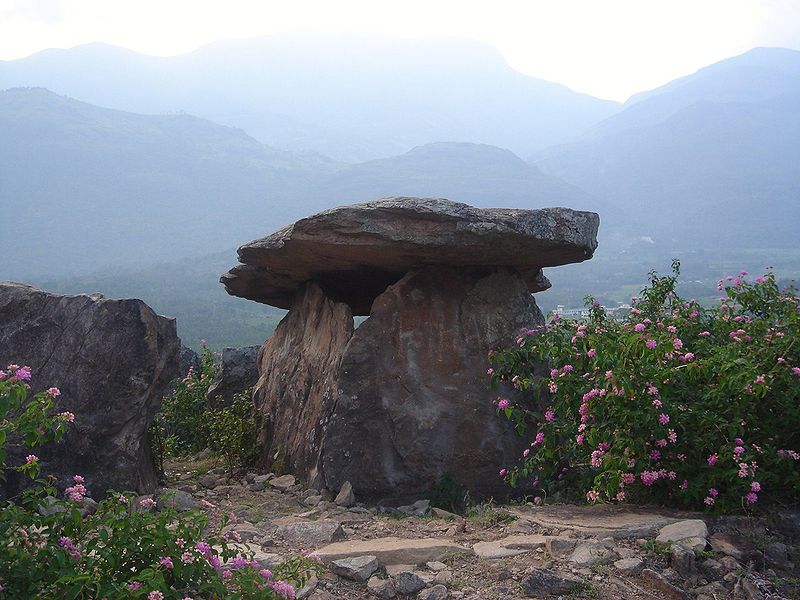
- The Dolmen Circle is about 8km from Kodaikanal Lake and 18km from Berijam Lake. It is one of the most important places among anthropologists. A pre-historic site, the Dolmen Circle dates back to 5000 BC.
- This place is believed to be the dwelling place and burial site of the pre-historic man who belonged to the Iron Age and Stone Age. They are known as dolmens and Kistavens.
- Situated nearby the Parvatha Vihar and the Pannikadu village, the dolmen is raised out of two huge erect slabs covered by a huge flat slab.
- The sands of time brought destruction to several dolmens, so only two survive now. One is found at the Ghat Road near Periyakulam and another 2 km away from the hamlet of Pannaikadu.
- It is located on the highest point before you descend to Pattiveerampatti still standing rock-solid without significant damage.
- The place is the remains of pre-historic inhabitants in addition to models of dolmens and burial urns. The ruins and remains of the place can transport you right to the pre-historic living.
- Research also shows that these were used as hideout for the pre-historic man. It is also widely believed that this site served as a safe haven for people to hoard their valuables. Site excavations in the past unearthed several copper and brass ornaments in addition to the utensils. On the other hand, Kistavens were used as burial grounds.
A dream ride into the hills of Ooty – “The Nilgiri Mountain Railways” (NMR) Toy Train – Part 1
If you’re looking for the ride of a lifetime, then the Nilgiri Mountain Railways (NMR) Toy Train is a must-try experience for memories to cherish on and on, whether you find yourself on the celebrated toy train or at the Fernhill station.
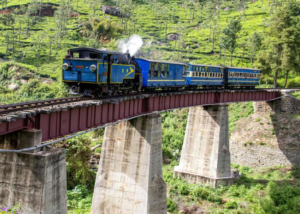 This almost 5-hour long travel up and down a scenic route is packed with unbridled romance, relaxation, adventure, exotic trails and turns, nature and some adrenalin booster material.
Get onboard the Nilgiri Mountain Railways’ toy train that would take you down the memory lane where the most recently included compartment is just 50 years old, and the oldest is about 80 years! The good times will cease to fade out even if the train happens to break down in the middle of the trip. And don’t grouse even if it does so as you will get some extra time to enjoy the picturesque settings including misty valleys, mountains, forests, tiny falls, and the cool weather. When the train inches up between 1069 and 7228 ft, you may get down out of it to surprise your loved one with flowers, view the big tusker staring at you from a distance, capture a lovely Hoopoe in flight, wonder about the deep gorge shrouded in darkness, or shout at the top of your voice every time the train passes through the dark tunnel. Its charm is unparalleled the train has been huffing and puffing through the valley since 1899 originally from Mettupalayam to Coonoor, and from Fernhill to Nilgiris since 1908 it’s a unique journey across 250 bridges and through 16 tunnels. Most of them have been re-constructed except the Breeks Memorial School whose heritage features have been preserved to a nicety.
Although the NMR has stood the test of times, many stops en route to Ooty have now become ghost stations. A few structures are strewn with flora and are eroding fast. They have become inaccessible due to wild animals prowling nearby. The train, however, hasn’t changed the way since Swiss inventor Riggenbach had originally engineered it. It still sports the original yellow and blue color and has bench-seats without any cushioning in an era of comfort and luxury. With the train’s coaches remaining open, there are no curtains, glass or even windows!
Everything you need know about the Meiji-jingu Shrine in Tokyo
- The Meiji-Jingu Shrine in Tokyo, the capital city of Japan, is enveloped by lush green woods located right in the heart of the city.
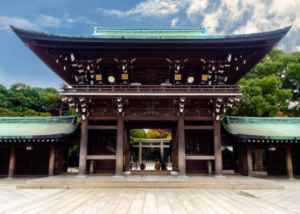
- The Shinto grand shrine is built in the memory of Emperor Meiji (1852-1912) and Empress Shoken, first emperor and empress of modern-day Japan.
- You can well put Meiji-Jingu at the top of your bucket list, in addition to visiting the busy Shibuya or Harajuku with a calm walk down the well-trodden pathway to the front gate of the shrine.
- Major attractions include the Treasure House filled with royal artifacts and antiques of the past; the traditional Inner Garden, a spiritual spot and the Spring Grand Festival of the shrine held during April – May.
- Come 2020, the shrine will commemorate its 100th anniversary, just before the Tokyo Olympics.
- You can find over 1,20,000 trees in the forest bordering the Meiji Jingu and Yoyogi Park. They cover a range of different species, which came as donations from all over the country.
- You can find English signage all over the place to help you take part in traditional Shinto rituals including giving offerings and doing prayers at the main hall, writing down your wishes on an ema amulet, and picking a protective charm or fortune.
- There are the iris gardens which were a favorite spot among emperors and empresses, and this tells you why Meiji-Jingu was constructed here.
- Although the garden involves an entrance fee, it’s well maintained comprising a lovely labyrinth of picturesque forest walks, traditional iris flowerbeds and there is that ritual Japanese tea house too.
- Kiyomasa’s Well got its name after the military general who dug it 400 years ago. Today, it is regarded by many as a ‘power spot’, a site visited by people to receive positive vibes and healing energy.
- The Meiji-Jingu Shrine grounds are a host to several festivals all along the year including Nikku-sai beginning on New Year, considered a ritual of good fortune, concluding as Joya-sai or ‘end-of-the-year-ritual’ on December 31st. The Spring Grand Festival is celebrated during April-May. Not to mention the traditional Shinto weddings happening during the same period, food fairs, modern fests, and traditional music and cultural performances.
To Visit Meiji-Jingu Shrine in Tokyo contact Emperor Traveline for Cost-Effective Tour Package.
Discover Japan’s New Golden Route with Emperor Traveline
If you’re a first-time traveller who wanted to experience the multitude of fabulous sights that Japan, the land of the rising sun, has to offer, then the New Golden Route of Japan is all you can ask for. The Golden Route of Japan runs from the capital city of Tokyo and Kyoto taking through bustling cities, ancient historic sites and quaint, scenic destinations. Following this truly fabulous route is nothing short of the holiday of a lifetime as it supposedly promises travellers. Here is all you need to make the perfect plan for the Golden Route Japan trip.
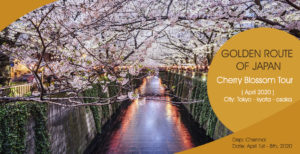 It is recommended to spend at least 10 days to 2 weeks to discover some exotic destinations on the trip. But if time is of the essence, you can afford to spend one week and skip a few places by the way and visit the top destinations alone. But that would be just like, kind of hustling a little bit. The best time to make the Golden Route of Japan trip is between April and May, especially when the cherry blossoms flutter and the temperature is nice and warm.
The old Tokaido road which links the city of Tokyo and Kyoto is several centuries old used by samurais, merchants and pilgrims to move from city to the next. Today it’s one of the most popular touring destinations. The Golden Route of Japan covers some of the best exotic sites including Greater Tokyo Area; Mount Fuji, a UNESCO World Heritage Site; mountainous area of Hakone; temple city of Nara; Osaka, the third-largest city of Japan and Kyoto, the cultural centre of the country. The trip, if properly planned, should help you visit the hot springs of Hakone and Kyoto’s geisha district among several other touring attractions.
Emperor Traveline provides you with an excellent opportunity to tour Japan’s New Golden Route from the 1st of April to 8th April 2020 with All Nippon Airways (ANA) scheduled to leave from Chennai. Hurry, as the seats are fast filling!
5 best places to visit near Sujangarh, India
Alwar
Alwar is 239 kms away from Sujangarh. It offers you a mix of architecture, history, and nature, and is a perfect weekend getaway. It is home to the grand City Palace, the wonderful Sariska Tiger Reserve, the stunning Siliserh Lake, and also the Government Museum. You can book a safari in the Sariska Tiger Reserve. The reserve is home to the Bengal Tiger, Indian Jackal, Indian Leopard, Wild Boars and Sambhar. Another lovely spot is the Siliserh Lake where you can enjoy a lovely boat ride.
Pushkar

Pushkar is 139 kms away from Sujangarh. It is full of culture, colour, joy and warmth! The colourful streets lined with small shops are the first thing that attracts one to Pushkar. There are lovely markets, numerous temples and a serene lake. The best time to visit the Pushkar Lake is during the evenings. Next to the lake there is also a small temple. You can explore the market next to the temple, and also the lake. At the market you will get stunning silver jewellery apart from salwaar suits and saris.
Bundi
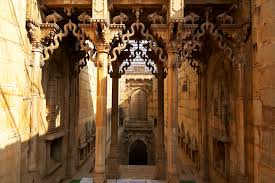
The City of Rajputs, Bundi, is 284 kms away from Sujangarh. It is a captivating city that is home to a number of forts and palaces, and surrounded by hills on three sides. The Garh Palace is a must visit. It is a monument that has stood the test of time. The manicured gardens and walls with contemporary paintings make the fort or palace a spectacle in itself. The strong engineering skills from centuries ago are well displayed in the many stepwells, which was built for harvesting rainwater. There are many tall pillars, colossal forts and more to visit in Bundi. The Bundi Palace is also a must visit. It houses many frescoes and murals. If you want a royal stay at Bundi, Nawal Sagar Palace is perfect. This quaint town is just right for a relaxing getaway as it is not very crowded like other cities.
Bikaner

To enjoy the true spirit of Rajasthan you must visit Bikaner (132 kms away from Sujangarh). This medieval city is outlined by a maze of fort walls, narrow streets, and old Havelis. The holiest temple here is the Karni Mata Temple where rats are fed and worshipped. In this desert city with palaces, forts, and temples built with yellow and red sandstone Rajput art and architecture shines in all its glory. Some of the heritage hotels are palaces for eg. the Laxmi Niwas Palace and Lallgarh Palace. The Junagarh Fort is a must visit. The grandiose lifestyle of the past Maharanas is preserved in the many museums here. There are also a couple of notable Jain temples to visit. You can have authentic Rajastini delights, go for dune camping and even camel rides in Bikaner.
Ajmer

Ajmer is 141 kms from Sujangarh, and is surrounded by the Aravali hills. The shrine of Khwaja Moinuddin Chisti is a very popular tourist attraction here. The city presents a mix of Islamic and Rajput architecture. A must-see is the splendid Taragarh fort located on the top of the Taragarh Hill. The tomb of Khwaja Moinuddin Chisti – the Ajmer Sharif Dargah – is at the foot of this hill. You can also visit the Akbar Fort and Museum, and several Islamic, Hindu, and Jain religious sites. For shopping visit the women’s market.
Corporate Tour Packages
Companies have a wide variety of options to choose their travel destination, both internationally and domestically according to their financial limitations.
Vacations always have an invigorating and rejuvenating effect on each and every one of us. This profound effect of vacation is because it is the time when everyone will leave their mundane work schedules behind and they will be free to concentrate about spending the valuable time with the people whom they travel with. Vacations can be with family, friends or even with our co-workers. Companies these days have realized the importance of organizing corporate tours, because this helps to build an employee friendly work environment and it also greatly helps in increasing their retention ratio. These tours help the employees to be energized, refreshed, motivated and it also contributes immensely towards the team building activities of an organization. Companies have a wide variety of options to choose their travel destination, both internationally and domestically according to their financial limitations.

International Destinations
USA
This place has always been a fascination for most of the people; this is because of the exotic cities where the employees can witness the blend among various cultures and traditions. The list of the cities to be visited includes Los Angeles, New York, Washington D.C, Miami, Las Vegas and much more.
Europe, UK
This is a place which has the roots of the modern western civilization. The major attractions include colorful bays, museums, galleries, beaches and parks.
Switzerland
The people of Switzerland enjoy high quality of living which is envied by most of the nations. The place has massive mountains, picturesque lakes and perfect weather conditions, making it more attractive to the tourists.
South Africa
It is situated in the only continent which still has a major portion of the place remote and wild. This place will be the first on list for any nature lover.
Domestic Destinations
Ooty, Tamil Nadu
This place is the famous summer destination for most of the people due to its cool and pleasing weather conditions. It is also the home of the famous Nilgiri Mountains.
Yelagiri
Yelagiri is a beautiful hill station which is famous for its tea planation and comforting weather. The famous Puganoor Lake is located at this place.
Yercaud
Anyone can make their vacation plans to this wonderful place which is blessed with rich flora and fauna mainly due to its affordability. The beautiful Yercaud also has many famous locations for hiking and trekking.
Munnar, Kerala
This place is located in Kerala which is famously known as the ‘God’s own country’. Munnar is surrounded with colossal mountains and spectacular views of beautiful valleys.
